
REVIEW: Dear Friends, EP (Sol)

"Dear Friends, EP" (Sol)

(Note: This review also appears on national hip-hop blog abovegroundmagazine.com.)

Sol’s debut album, The Ride, blazed onto the scene in February of this year and was met with a very welcome reception. The young rapper’s beyond-his-years confidence on the mic and particular brand of intellectualized battle-rap was a welcome addition to Seattle’s hip-hop landscape. The LP was aptly titled too, as it made a perfect riding companion whether creeping along Alki Beach or whipping northbound on I-5.

Now, Sol has decided to jump on the Free Download Bandwagon with the release of his Dear Friends, EP (get it here), a brief, six-shot to the dome dose of new material that succeeds in the same way The Ride did, with straight-forward, driving beats paired with Sol’s razor-sharp flow that can be as cold and technically proficient as Mariano Rivera in the ninth inning.

Dear Friends doesn’t fully represent a true musical progression, as the acoustics remain mostly in the same vein as The Ride. It’s all good, though, because the formula is a pleasing one. “Hyyy” finds Sol musing about his nascent success as a rapper over a hazy, chronic-induced interlude. “Millions” (featuring Scribes and Philharmonic) seems like it was made for the radio with a melodic, understated hook and repetitive piano lick that sounds a little like what KUBE was playing in 1997 (that may sound like a bad thing, but here it works just fine). The best track is “Cash Rules!”, Sol’s blatant but still dubious ode to the almighty dollar. The track has a thumping, sparse beat and tense string arrangement; it’s by no means groundbreaking, but still goes hard in the most satisfying of ways.

At this point in Sol’s career, the shorter EP format works to his advantage. The beats on The Ride were dope in a familiar but not-quite-fantastic sort of way which, after 16 tracks, ultimately led to a slight tediousness that never totally crossed the line into boring repetition. A six-song EP doesn’t allow the content to become diluted and Dear Friends stays fresh because of its length. The complaints over Sol’s music at this stage seem petty when considering the huge amount of talent and potential he still possesses. Dude is only 20 years old, and his voice is still emerging. Everything from Sol thus far suggests even better and brighter things are on the horizon.
Album Reviews Downloads

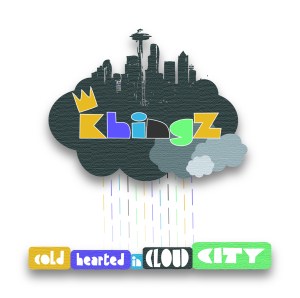
REVIEW: Cold Hearted In Cloud City (Khingz)

Cold Hearted In Cloud City (Khingz)

(Note: This review also appears on national hip-hop blog abovegroundmagazine.com.)

In previous posts I’ve championed Khingz and his music because of the overarching sentimentality that drives it. Whether it’s an unabashed embrace of his sci-fi nerd tendencies, fastidious examination of his race, or total lack of fear over expressing the fact that he’s in love (be it with the woman of his dreams, or a fraternal love with his homies — minus the bullsh*t “no homo”/”pause” bigotry that poisons the hip-hop lexicon). Honesty in music breeds quality product. This has been the consistent ethic throughout Khingz’s career, and to his credit he’s achieved it without ever coming off as self-righteous. He’s walking a tightrope over mainstream hip-hop with his self-respect, principles, and integrity balanced on his back; and he seems to be doing it with ease.

Khingz is also having the most prolific year, musically, he’s ever had. From Slaveships to Spaceships jumped out of hyperspace in the first half of the year to a hungry Seattle hip-hop scene that I personally don’t think was ready for an album of such heavy-handedness. Folks around The Six were too busy taking their clothes off at Mad Rad and Fresh Espresso concerts, acts that feed the debaucheric tendencies of Seattle’s most over-caffeinated scenesters. Not saying there isn’t a time and place for that, but in a town that prides itself on being “conscious” and “progressive,” you’d hope an album like Slaveships would be gobbled up by those same scenesters who are, by-day, members of the supposed coffee-shop intelligentsia. Endless ruminations followed by due shine in the local press would hopefully have followed. In the Weekly’s Best of Seattle Reader’s Poll, Khingz was named “Best MC,” which is certainly a strong statement considering how saturated the local hip-hop market is, but simply being dubbed “one of Seattle’s wittier wordsmiths” in the brief write-up didn’t exactly speak to the complexities of Khingz’s album. No matter. If hip-hop culture trends toward justice (and I believe it does), From S to S will endure the test of time and ultimately be realized as a local hip-hop classic.

Now enter the follow-up to From Slaveships to Spaceships, Cold Hearted in Cloud City. While not as fully realized conceptually as From S to S (a Star Wars/Khingz-as-the-Blaq-Han-Solo theme loosely holds the sci-fi element together), this record may represent more of a transition in musical styles for the emcee. Gone is the frantic urgency of previous beats, and taking that place is a far mellower vibe. It is, dare I say, more sonically “accessible.” The fact that his rhyme style still meshes well with the more delicate production, only confirms my argument that Khingz is one of the most versatile emcees currently active in Seattle. (Though to be fully accurate, I should qualify that statement by acknowledging he’s since relocated to Vancouver, BC.)

The shift in musical styles is also accompanied by a slight shift in subject matter. Gone is the powerful declaration of liberation, which Khingz presumably nurtured to fruition on Slaveships. Cold Hearted finds Khingz getting more comfortable with his current place in the rap game. He shows he can body wack rappers with ease on “Carbonite Flow;” he confidently declares his journey through hip-hop has been unlike any other on “Kessel Run;” and shows he will gladly rock a party if motherf*ckas just wanna dance on “Devilish Grin.” It’s all done with an undercurrent of trepidation, however, which never allows levity to fully embrace the record. Khingz knows there’s a poison goin’ on (in the world and the rap game; see: “Hybernation Siccness”), and he’s too much of an introspective soul to allow himself to forget it, even for a moment.

On his blog, Khingz says he’s still searching for his “true” sound. It seems Cold Hearted is a brief stopover on that trip. My impression of his last two albums is that he’s found his proper voice, but perhaps his creative muse hasn’t shown him/herself yet. Or, could be that Khingz will realize an entire career with various collaborators and never get comfortable with one particular “sound.” That would be okay with this listener. For a genre that so prides itself on progression and “changing the game,” it possesses few artists that actually deliver on those maxims. In Khingz, it seems hip-hop has found someone that can truly, and willingly, carry that banner.

Album Reviews

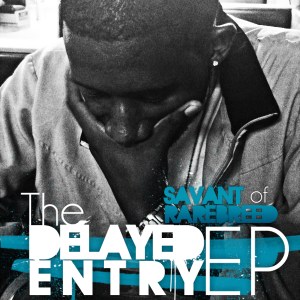
REVIEW: The Delayed Entry EP (Savant of RAREBREED)

(The emcee Savant is from Chicago and is part of a self-described “hip-hop alliance” called RAREBREED [the other member of the collective is his younger brother, Joey Downtown]. While 206up.com is a space primarily dedicated to Seattle hip-hop, I reserve the right to go rogue once in a while, as I’m doing with this Review. Though it’s not a total tangential exercise: Savant is connected to Seattle through a group called The Emprise so prepare to see him come through the Six and do his thing once in a while. Trust 206up.com will keep you up on Savant’s future movements through The Town. But for now, on with the Review of The Delayed Entry EP…)

"The Delayed Entry EP" (Savant)

On Late Registration‘s best track, “Gone”, Kanye says he wants to quit the rap game altogether and open a hip-hop school for aspiring emcees, a desire presumably stemming from his perceived lack of rappers properly representing. It’s typical Kanye: a romantic but somewhat misguided proposition considering it comes from a guy who isn’t exactly known for his ability to stay on task. I’d be okay enrolling my child at The Kanye West School of Hip-Hop, but only if Yeezy’s primary role was that of financier. The actual Emcee Professoring should be left to the rhyme virtuosos, those cats who find love and life in the art of rhyming (not in designing Louis Vuitton handbags). Chi-Town rapper, Savant, might be a worthy candidate for such a position. His first solo effort, The Delayed Entry EP (available for free download here), shines a musical spotlight on a budding rapper who seems hungry and focused on building his resume.

If Savant isn’t quite suited yet for the position of Emcee Professor, then he at least deserves a graduate assistant position or, better yet, maybe that of resident Rhyme Doctor. For nine tracks, Savant holds a clinic of sorts, displaying an ease and confidence on the mic that’s matched with an above-average ability to manipulate rhyme and word. From a technical standpoint, Savant bends tracks to his lyrical will. He displays uncommon dexterity on “Concrete Techniques” (featuring Three60) and on the RJD2-assisted “The Lyricist ThreeMix”. He’s often so focused on performing precise metric surgery on the beats that it comes as a pleasant (and welcome) surprise when he eases back and lets more personality show on the relaxed, “Illest You’ve Never Heard (Could We Go)” and summer-riding, “Bottom To the Top”. And, not surprisingly, Savant stands further out from the emcee crowd when he allows the subject matter to get heavier (see: “Marry a Memory”); it’s evident that dude is talented, but good lyrical content matters just the same.

Musically, Delayed Entry suffers a little from what many underground independent records suffer from: lack of innovation. Not that albums of this form and function should always be groundbreaking; hip-hop like this is generally meant to pay tribute to traditional aspects of the music and limited effort toward genre-bending sonic advancements is expected. In other words: that’s not the point here. But it would be nice to find more unpredictability. Not surprisingly, the best track is produced by the legendary RJD2 (the aforementioned, “The Lyricist ThreeMix”). Another standout is “Illest You’ve Never Heard” which employs a delicate but chopped-up Amel Larrieux sample. Savant’s rhyming generally overcomes any lackluster beats, which is both a testament to his lyrical prowess and cause for optimism for future releases that might feature more interesting production.

As Kanye, Jay, and Weezy continue to fly hip-hop’s flag high in mainstream America, it’s important to remember that the culture is forever tethered to artists like Savant. Folks like him fly mostly under the radar, yet are ultimately responsible for steering the Good Ship Hip-Hop through its rough (read: vapid and uninteresting) times. The underground set (an often fickle and skeptical bunch not affected by politics, popularity, or hype) will probably find The Delayed Entry EP a worthy, if not solid, first effort. It’s a type of recognition that is usually devoid of glitz — to say nothing of abundant financial reward. But acceptance by the underground masses is a sure sign that you’ve arrived. The impressions left in the discerning ears of those critics genuinely matter, as they’re the ones ensuring hip-hop stays healthy. And if the foundational elements of hip-hop are healthy, then the culture as a whole thrives. Savant’s The Delayed Entry EP proves that the emcee element is alive and breathing.

Album Reviews Downloads

REVIEW: Hear Me Out (Yirim Seck)

Hear Me Out (Yirim Seck)

Yirim Seck raps like most people drink water. Or breathe. You know those normal human activities we all do with such mandatory repetition that we forget we’re doing them? Some artists paint pictures, some authors write novels, and some athletes play sports in the same fashion. It just comes naturally. Those folks have muscles that most people don’t. Yirim Seck just happens to have the Emcee Muscle.

Which is why, considering how intensely hungry the 206 hip-hop scene is for music these days, it comes as a surprise (at least to this blogger) that it’s taken this long for Yirim Seck to release a full-length album. He’s mostly known around town as one-third of (now defunct?) Pyrate Radio, an act that, surprisingly for all its considerable talent, has also never released an album (at least to my knowledge). I’m sure the inner-workings of a hip-hop group are fraught with a myriad of reasons why they can’t get their collective act together (Pearl Dragon, after all, has got a pretty good thing going with Champagne Champagne), but the release of a Pyrate Radio record would be cause for celebration for many underground fans.

Instead, we get Hear Me Out from Yirim Seck. And, trust, it’s enough. Here Yirim separates himself, talent-wise, from his Pyrate Radio brethren. In fact, he separates himself from most local rappers completely. Dude is talented. The first time I heard him spit was on the Pyrate Radio track, “Hey You Say You” where I was struck by his effortless, nonchalant flow and clever wordplay. There’s even more of that on Hear Me Out. Yirim possesses that rare rapper’s ability to effectively express himself without sounding like he’s working very hard. It’s a style that draws you in naturally to the music, a voice that complements hip-hop’s indigenous breaks and boom-bap perfectly.

On the album, he puts his talent to good-use. Yirim wants listeners to know he’s a fully-arrived solo emcee who’s legit (“Check”). He also makes clear that his life is filled with very ordinary circumstances, from the unexpected birth of his first child (“Rebirth”), to the struggle of trying to make a living off his art (“Run It”), to the sexual temptations that f*ck-up relationships (“Trust”). Hear Me Out‘s main character is an everyman who says, “See, I have some of the same problems you do.” That this everyman can tell his stories and present his particular ethos more lyrically than others is to the benefit of hip-hop fans everywhere.

The production is generally straight-forward, traditional hip-hop. There are no grand histrionic sonic arrangements or overwrought musical experiments. What it lacks in relative spectacular-ness, it makes up for in well-executed convention, mostly a mixture of DJ Premier-cloned beats with straight-laced underground sensibilities. Yirim Seck doesn’t need fancy sh*t anyway, there’s enough raw personality and talent here to announce a welcome (re-)arrival of this emcee without superfluous musical flourish.

Just because the general public doesn’t know who Yirim Seck is, doesn’t mean he’s an unknown among the members of Seattle’s hip-hop community. He’s been down with The Physics and Gabriel Teodros for years. They all came up rapping together. To fans, however, he appears to be that dude on the low, waiting for an opportunity. Like the ballplayer who’s kicked around the minors for a few years developing his skills, and then all of a sudden he’s in the majors batting .350.

In actuality, Yirim Seck’s just been busy living real life. Very few local artists eat off rap, and those lucky enough to do so are probably both greatly thankful for the opportunity but tired from the constant and necessary grind. Yirim Seck is already worn-out from the hustle, and he hasn’t even “made it” in the music business yet. It’s cats like these, the hard-working underdogs whose talent often makes them more-deserving than those above them, that hip-hop roots for.

Album Reviews

REVIEW: Ali’Yah (D. Black)

Ali'Yah (D.Black)

The personal and musical metamorphosis of D. Black is a revelation around the 206 these days. In the span of time between the rapper’s debut album, The Cause and Effect, and his latest LP, Ali’Yah, a transformation seems to have taken place in the young man’s heart, mind, and soul which has much to do with assuming new grown-up responsibilities (marriage and the birth of a child) and, as Black has made very clear in recent interviews, a spiritual awakening that’s granted him new perspectives and motivations on why he does what he does.

Regardless of what you believe personally, the overarching force that gives Ali’Yah its potency is the same rare phenomenon that provides all great music their particular validations: honesty. On his new record, D. Black believes firmly in what he’s doing, which is making music for his children, family, and community without fear of contributing negatively to the advancement of those loved ones. He wants to make responsible music for the betterment of his people. In this sense then, Ali’Yah is a soaring achievement.

The seeds for this revolution were planted in The Cause and Effect which, for all its boastfulness, negativity, and hurt, still contained glimmers of both optimism and recognition of why the old D. Black was full of so much anger. That album’s best tracks were, by far, the introspective ones (“This is Why”, “Survive”) which seem to have paved the way for Ali’Yah, a record that can literally be played anywhere. I would feel equally comfortable bumping this album in my car, around small children, or even in church.

Positivity is the rule of the day here. There is no cursing. All the references to bullets flying are accompanied by a call to those responsible to put their burners down. Tales of graphic street violence are omitted and, in their absence, Black has put-forth challenges to the community to better itself (“Keep On Going”). Spiritual growth is also a major theme throughout Ali’Yah and, while not overtly preachy, Black isn’t ashamed to show reverence for the most high on “Close to Yah” (featuring Sportn’ Life labelmate, Fatal Lucciauno).

And, while Black doesn’t shy away from braggadocio, here it’s accomplished more humbly, less as a way to inflict gratuitous verbal beatdowns on wack-ass rappers (which, incidentally, isn’t necessary — it’s obvious D. Black is one of the best emcees in Seattle) and more as a way to progress his positive message. “The Return” is an edict that serves to announce his grand re-entrance to the game while simultaneously calling-out those fake studio gangsters that poison the art form and culture of hip-hop.

Musically, there isn’t one track that stands head and shoulders above the rest, which is actually okay. Albums that endure over time often stand on their conceptual completeness, a trait that Ali’Yah possesses. You probably won’t see a hit single come off this album but there is a satisfying cohesiveness that’s absent on most hip-hop records. Overall, the production is soulful, with a lot of sung hooks (local favorite Choklate blesses a track), but not at the expense of traditional boom-bap, which is to be expected from the likes of Jake One and Vitamin D who handle most of the arrangements.

It’s probably unfair to compare The Cause and Effect to Ali’Yah because they’re such starkly different albums, but the association is unavoidable. While The Cause contained all the traditional elements of aggressive, street-oriented rap, a secondary listen today — in light of what Black has accomplished on Ali’Yah — reveals a tired sound, an almost lethargic Black compared to the new version who is so obviously energized and excited about a new direction.

Perhaps the greatest accomplishment of Ali’Yah is that the rapper, even though he has so blatantly eliminated the guns, drugs, and women (aka, the “realness”), has not lost his credibility. In fact, he seems to have gained more of it. The word “ali’yah” means “ascent” in Hebrew. Here, D. Black has ascended beyond what other rappers have not, surpassed expectations built by his first album, and become a torch-bearer for what hip-hop music is truly capable of.

Album Reviews

REVIEW: Self-Titled (Champagne Champagne)

Champagne Champagne

The three dudes that make up the group Champagne Champagne (emcees Pearl Dragon and Thomas Gray, and DJ/Producer Gajamagic) must find themselves in a weird space these days. Their shows are usually populated by twenty-something hipsters of the fairer complexion, rocking out with their cocks out, overjoyed at being at a hip-hop show, and certainly proud to tell their unlucky (and much less-cool) co-workers the next day about how “real” the experience was. Yet there’s this verse, from “Soda & Pop Rocks,” the very first thing Pearl spits on Champagne Champagne’s self-titled debut album:

You can see me leapin’
My words creepin’
Slowly
Now they know me
When my whole influence was
“Rollin’ With The Homies”
First off
One of the best to ever touch off
You can see me touchdown anytime
Randy Moss

You can take what you git from it
My words influenced by
The slums and they love it
Hip-hop no hipster
Words flip back you can see I rip through
Haters innovator rock paper scissor
See me as I
Cut up my nigga!

Take note, white hipsters, this is not your music. (Pearl even says so!) This is black music — a cousin once or twice-removed from Jimi Hendrix, Living Colour, and Outkast. Witness the emphasis of the N-word, not meant to make you feel down with the cause, but as a proud (however polemic) declaration of blackness. The word’s strong assertion made me feel uncomfortable and alienated from the track, which is exactly how anyone who is not black should feel. So, while the demographics of the audience probably accurately represent the consumers of Champagne Champagne’s music, the joke’s ultimately on you hipster motherf*ckas. Pearl’s city “isn’t pretty, it’s gritt-y.”

Fresh Espresso, the other Seattle hip-hop group that most closely resembles Champagne Champagne, probably faces fewer such dilemmas. While FE’s music is far more party-friendly (virtually no references to blackness that would inconveniently clutter their feel-good vibe), the afro-eccentricities of Champagne Champagne add a welcome layer of complexity to their music. Without it, there would only be the left-field hip-hop punkiness of the sonic arrangements and little to no traceable DNA leading them back to the revered architects of black music mentioned above.

Not that the hipsters are all in the wrong for digging this sh*t, they should. The group is, after all, called Champagne Champagne, a moniker that bestows upon them the responsibility for starting the party. And this does sound like party music. Live hip-hop is more about the beats than the lyrics anyway, anyone who attends the shows can attest to that. The distorted bass at the beginning of “Soda & Pop Rocks” sounds like a mic’ed-up human heart sitting on top of an 808 kick drum. It’s not only the best track on the album, but also Champagne Champagne’s official declaration of non-whiteness in a city full of white fans — nonetheless, I’m sure it rocks the hell out of their parties.

After the opening track, things immediately get more complicated. Is “Molly Ringwald” really a heartfelt tribute to falling in love with girls who look like the innocent sweet-sixteener? Or is it a perverse acknowledgment of the white-girls-who-love-black-men phenomenon that only Spike Lee has been brave enough to flesh-out in front of the general public? Pearl’s heartbroken vocals suggest the former (“I left a message but she never called me back”), while Gajamagic’s sinister production suggests the latter.

Later, Pearl lightens-up a little and does his best Andre 3000 impression on the guitar-driven, “Hollywood Shampoo,” and further tributes are paid to the fairer sex as the pitfalls of showbiz-life and love are lamented and celebrated on “Cover Girls” and “What’s Your Fantasy.” The production trends toward hippie futurism, and contains all the references to space and aliens that would be expected from such music. Yes, the hip-hop UFO thing is getting tired and it’s been done better before, but Champagne Champagne uses the levity in such themes to elevate the music to the upper reaches of that particular quality.

Finally, while “Soda & Pop Rocks” is the group’s declaration of identity, “Radio Raheem” is the frontman’s heart, exposed and bleeding for all to see. On it, Pearl raps about the shooting death of his older brother, Samuel Curry, by an off-duty Seattle police officer. The song plays its ironic and tragic part in inextricably linking the rapper’s proud declaration of blackness to the all-too-frequent instances of police brutality that grievously help define the black experience in America. Indeed it’s a heavy track, yet a vital addition to an album that would, however regrettably, be incomplete without it.

Album Reviews

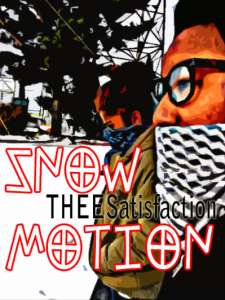
REVIEW: Snow Motion (THEESatisfaction)

Snow Motion (THEESatisfaction)

Avant-garde hip-hop is usually something of a mixed bag. There’s some sh*t that points an obvious and welcome finger into the future (Dabrye’s experimental Two/Three is a decent example) and other stuff that is undeniably creative but just too weird to be an effective advancement (some of Busdriver’s songs come to mind). Like most modern art, determining the worth and personal enjoyment of such music is a better experience when allowing yourself to feel your way through the music, personal preferences and expectations aside. It is, after all, meant to be progressive and by common nature therefore not entirely accessible.

The problem with such music is that its typical stylings rarely result in a fun listening experience. Quite often it requires listening at night, in a darkened room, and usually by yourself, otherwise there’s a chance you won’t “get it”. That’s why THEESatisfaction’s Snow Motion is such a welcome addition to the topsy-turvy sine wave that is hip-hop’s avant-garde. Group members Cat and Stasia have made a smart and convivial album that still manages to be decidedly not-of-the-norm. And you can even dance to most of it!

The central reason why THEESatisfaction is so immediately likable is because their funkiness is so familiar. We’re drawn to their recognizable cool. Cat and Stasia are like Missy Elliott’s funkier backstage cousins. The artsy and hip scenesters to Missy’s mainstream gloss ‘n glam who, unbeknownst to those who’ve just spied them, might actually be deeper and headier than their more popular cousin.

And when I say “deeper” I mean smarter, more conscious (damn, there’s that word again). Examinations of sexuality and blackness are the dominant themes here, though the approach to said issues are done serendipitously. It’s not an aggressive Dead Prez militancy, but more of a, “Oh what — you didn’t know this is my life?!”-type proposal. Though that doesn’t mean we’re meant to take it any less seriously. “PTSD (Post-Traumatic Slave Disorder)”, for example, is a heavy-handed meditation on what it means to be black and “written-off”.

Likewise with their sexuality. These girls are not just partners on the mic, they’re partners in life, too. And openly living as strong black women, who also happen to be bisexual, in a society that is loath to comfortably accept either, is a strong-enough statement in itself. The track “Bisexual” is a straightforward come-on. And, in fact so sexy, that any listener — male or female — wouldn’t mind being on the receiving end of Stasia and Cat’s aural explorations.

Production-wise, there’s a lot of intentionally placed dissonance, some harmonious (“Cabin Fever”) and some not so pleasant (“That’d Be Rude”); there’s traditional boom-bap (“Waltz”); and some space-disco (“Bisexual”). And it’s all done in a compact 20 minutes and with an ironic nod to the popular futurism that is so prevalent in a lot of contemporary hip-hop production.

The unfortunate low-point of this record is its audio quality. It’s pretty poor and, dare I say, amateurish. While this can be an endearing aesthetic to certain DIY bedroom-style hip-hop, it definitely detracts here. The futuristic drum ‘n bass would be better-served with higher-quality mastering. (To be fair, maybe my digital version of the album is the reason behind the low-quality. If someone out there knows anything about this, please let me know so I can re-evaluate.)

An interesting thing happened on the way to this review: I actually liked Snow Motion more and more each time I listened to it. There’s a fun yet serious vibe that offers a profoundness beyond just good party music. I’m sure at THEESatisfaction’s live shows, folks “dance, dance, dance” as they’re told to, but the deeper fathoms of the record necessitate a quiet listen-through on your headphones, too. The consciousness and resultant hip-hop sentimentality ultimately define the album, but it’s the progressive sonic leanings that add the vibrant color. The 206 should be proud to have this offbeat canvas hanging on its wall.

Album Reviews

REVIEW: Glamour (Fresh Espresso)

Glamour (Fresh Espresso)P Smoov and Rik Rude of Fresh Espresso are the guys you would most want to party with and the guys whom you would never trust around your girl. This social quagmire could certainly create some problems on a Saturday night, especially if your lady isn’t looking to be left home alone while you’re out carousing with the two guys who are quickly becoming the hottest hip-hop act in the city. Curiously, the social contradiction also mirrors my relationship with their debut album, Glamour: I simultaneously love and hate it. Read on to understand why…

The Hate Side

I think Fresh Espresso are a couple of posers. There, I said it. In their live shows, they own the stage like real rock stars, which (presumably) affords them the affinities of many women. And, while they may be taking said groupies out for a nice steak dinner after the show, their music would have you believe they can afford Filet Mignon at El Gaucho, when, in reality, it’s probably more like a nice sirloin at The Keg.

Which begs the question: Are they keeping it real?

The answer: Sometimes. Maybe. I think.

On one track, P Smoov isn’t ashamed to declare that he’s been homeless and had to resort to selling his mattress to pay the bills, yet on most others, he’s shooting off “Diamond Pistols” and riding in fast cars with topless women, presumably on his way down the California coast to a beach house somewhere in Malibu. These worlds are in direct contradiction to each other, yet this crew exists in both. I expected some tongue-in-cheek/nudge-nudge-type lyrical musings to offset all the Diamond Life talk, but there’s none of that. We’re allowed to believe they somehow have it both ways. Oh well, maybe there’s a simple explanation, like Rik Rude’s side hustle is investment banking or something.

The Love Side

These dudes are supremely talented, and they’ve created what might be, to date, the most mainstream-friendly rap album to emerge from Seattle. It’s an unapologetic slap in the face to the other section of 206 hip-hop that would prefer to remain progressive and conscious, a huge above-ground guilty-pleasure for a hip-hop fan like me who tends to spend most of his time underground.

Smoov’s production is incredibly glossy, the aural equivalent of what the lips on one of his groupie’s might look like. Some of the tracks are busy and over-produced (“The Lazerbeams,” “Vader Rap”) while others are just right (“Elegant,” “All Around The World”), but the majority of the album is top-shelf, high quality hip-pop, music you’d expect to hear on a rap album with mass-market appeal. On the boards, P Smoov is definitely not a faker or an amateur, he’s an absolute pro, and it shows.

Rap-wise, both Espresso boys have confidence and swagger for days, and both are competent on the mic. Rik Rude, who handles most of the rapping, is a seasoned emcee and his stream-of-conscious flow fits nicely over P’s slick beats. Sometimes, however, he sounds tongue-tied, like maybe he didn’t loosen-up his chops with enough Hey-Now-Brown-Cows before stepping into the booth. P Smoov actually holds his own alongside Rik. His high-pitched flow is natural and engaging, and often he’s more interesting to listen to than his partner.

Back To The Hate

Unfortunately, lyrically, there’s not much substance here. It’s mostly talk about women, sex, haters, women, coming up in the rap game, fast cars, and women. This crew will not be encouraging us to vote for a particular mayoral candidate and a lot of what comes out of their mouths is just hot air. But then, so is a lot of good party music.

And Back To The Love

My final analysis is, you need to own this album. If not for the quality of music, then for the “f*ck you, pay me” statement it makes to all other major urban centers across the country that produce the majority of popular hip-hop. This album proves that Seattle is more than backpacks and Birkenstocks, REI and snowboards. We can be cocky, too, see. Even if it takes a group like Fresh Espresso to blow some hot air up your ass to prove it.

Album Reviews

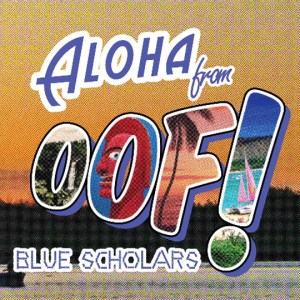
REVIEW: OOF! EP (Blue Scholars)

OOF! EP (Blue Scholars)So this is what it sounds like when Blue Scholars go on vacation. The highly-anticipated and much locally-hyped OOF! EP dropped on Tuesday and, much to the unsuspecting ears of this listener, surprises abound on this mostly-fresh bite of Hawaiian-style 206-rap.

For a short six-tracks (plus accompanying instrumentals), producer Sabzi breaks out his happy-vibe synths and basslines, and emcee Geo sets down his copy of The Socialist, straps on a pair of board shorts and flip-flops, and, with drink in hand, reminisces on his formative years spent in the nation’s 50th, and most beautiful, state: Hawaii.

OOF! is truly a vacation for the local rap duo, an exercise in departure, both for Sabzi’s normally thick, boom-bappish beats and Geo’s political and progressive rhymes. It’s only because the disc contains two of the best Scholars songs to date (“Bananas” and “HI-808”) that they’re excused from taking it too easy on this outing.

Even the most highly-respected artists sometimes casually digress from their normally esteemed routines. Think Brando in The Freshman; Hitchcock directing Mr and Mrs Smith; Michael Jordan when he played for the Wizards; etc. In Blue Scholars’ case, last winter’s set of performances in Hawaii combined with Geo’s history in the islands resulted in the perfect circumstances for assembling this set of party-rocking tracks that qualifies as an official departure from the group’s normally heavier-handed musical discourse.

Mix in an abnormally hot Seattle summer and a local hip-hop scene that is bubbling over — as of this writing OOF! currently sits at #2 on iTunes best-selling hip-hop albums — and it’s enough to have this blogger, and other fans like him, scrambling around The Town trying to get their hands on a copy of the limited-edition disc (supposedly only 808 were pressed). I was one of the lucky few to get one and, once I set to bumping it, I was more than a little surprised at what came out of my speakers.

On OOF! we hear the group do things we’ve never heard them do before. All of a sudden, they do dance tracks! (The cheesy and nearly unlistenable, “New People.”) They do reggae! (Excuse me, jawaiian music, on the tropical, “Cruz.”) They even do sexy! (Geo and Sabzi take turns saying “wassup” to the ladies in their best nice-guy voices on “Hello.”)

Thankfully, they also find time for real hip-hop on the spare but still bumping “Bananas” (with a verse previously spit by Geo at Chase Jarvis’ Songs for Eating and Drinking party), the back-in-the-day hip-hop appreciation anthem “Coo?”, and the totally knocking “HI-808,” the crowning achievement of OOF! and possibly the most addictive beat the crew has ever put on wax. It’s an eclectic and unexpected collection, for sure, and it doesn’t all go down smooth like a pina colada, but it does the job.

Normally, Blue Scholars is telling us to put our fists up, to stand for social justice and political change. On OOF! they’re letting us keep our hands down, inviting us to sip a fruity drink, and groove to the music however we see fit. Actually, I’m pretty okay with it — sometimes my arms get tired from all that hand-waving. I do, however, expect the duo to carry on previous tradition with their next full-length. Come 2010, it will be time once again to take up arms and mics for the revolution.

For now, though, I can get down with OOF! But perhaps Geo himself sums up my feelings best: “It’s cool…But it’s not what I’m used to.”

Album Reviews

REVIEW: From Slaveships to Spaceships (Khingz)

CD400Concept albums are always a tricky business. Rarely do they succeed in achieving a true sense of coherence, a completeness in actualizing the very “concept” they’re attempting to convey. Either they fall short because of straight-up weirdness, or inconsistencies that exist somewhere in the actual music (be it in production, lyrics, style, or what-have-you).

Because concept albums so often fall on their ambitious faces, to simply call Khingz’s second solo entry, From Slaveships to Spaceships, a “concept album” would be doing the record a disservice. It’s actually much more than that. If a music artist’s work is always inspired by something they either find valuable or have experienced in perpetuity throughout their lives, then a coherent expression of that in a single album is much less a “concept” and more a concrete expression of the artist’s reality.

From Slaveships to Spaceships certainly qualifies as an expression of Khingz’s life and experiences as a self-admitted social outcast. It’s only because science-fiction themes are so pervasive throughout that a critic like myself is excused when using the term “concept album” to help describe the record.

The album’s title and sci-fi terminologies aside, FStoS exists more on the terra firma that is Seattle’s South End than it does in the outer-reaches of our galaxy. It’s an honest expression of life as a person of color in The Town’s suddenly en vogue southern neighborhoods. Bitterness, confusion, and self-realization are all explored in dramatic fashion. Khingz (much like his brother Gabriel Teodros) is a sensitive dude. And, also like GT, restraint in his lyrics is not a problem he suffers from. There’s a valuable and uncommon connection between art and self-awareness here that makes for some heavy-handed sh*t, like the emotional tour de force of the title track. By the end of the song Khingz sounds like he’s lived enough trying times for a thousand lives.

Sonically, this album runs the gamut. From hyper-active beats emulating space battles (“Hydroplanin'” made me feel like I was stuck in the middle of a shootout between Stormtroopers and the Rebel Alliance) to the smoothed-out hip-hop valentine “Blaq Han Solo.” There’s an undeniable energy running through these beats; it’s equal parts thoughtful production and Khingz’s own crazy-versatile flow that act as the electrical current bringing each track to life.

Throughout this record, Khingz makes clear that he’s seeking his liberation from something. Could be the past. Could be liberation from the typical musical stylings that so often contribute to the stagnation of his beloved art form. Whatever. As a listener I was just happy that, by album’s end, he seems to have found what he’s looking for. As fans of hip-hop, we should be thankful that Khingz expresses his liberation through his music. It makes for “important” hip-hop in the most well-defined sense of the word.

Album Reviews