THE SIX: Featuring Gabriel Teodros

This post marks the inaugural edition of 206UP.COM’s THE SIX, a new interview feature on the blog where we focus on a single Town artist who has a recent project (album, single, video, etc.) either upcoming or already in the bag. The format is simple: Six questions are asked by 206UP.COM, six questions are answered by the subject. (Can you guess how we came up with the title?)

We’re incredibly pleased to feature Gabriel Teodros in the first edition. Yesterday, the Ethiopian-American MC dropped his new full-length, Colored People’s Time Machine, a world-wise collection of tracks that highlight his expansive roots and influences from various locations across the globe. Check for the record, here. Read on for more insight into the project.


Photo via Seattle Weekly.

1. What is the origin of the album title, Colored People’s Time Machine?

It came from a few places, one was this Ethiopian guy I met in DC who told a group of us it wasn’t until he moved to the US that time became a commodity, something that you can lose, something we count, and something we always chase. He said “Here time moves, but back home i move through time,” and it just made sense to me. Another origin is over 10 years ago the homie Orko Elohiem told another group of us he only believes there are two kinds of music in the world: Music that is timeless, and music for the time. Also, the term “CPT” has always has had a negative stigma, it implies people of color are always late. I wanted to take that term and completely flip it. All music is based on time and people of color are responsible for every musical movement this country has ever produced. With music you can travel to the future and let voices from the origins of this universe come up through you. So in short, music is our time machine. We’re not late, the way we move through time is just different. The concept of Colored People’s Time Machine embraces all of this.

2. The idea of one’s home is a dominant theme on CPTM. Is your definition of “home” that of a specific physicality, or is the concept more ambiguous than that?

Definitely a central theme, it’s said so many ways on the album, but “home” has come to mean a lot [of] places, and no place at all. Earlier this year my extended family in Toronto came up with the concept of “pieces of home” because we all seem to have pieces scattered all over the planet. This last year felt like I was constantly leaving home to go home no matter where I went. A lot of what home means is just the people we love. And as far as home as a place… I feel like every “place” that ever felt like home, at some point got jacked, and will never be the same.

3. What’s your favorite city or town other than Seattle?

Brooklyn/NYC, Addis Ababa, Toronto, the Bay Area, DC… These are the places I spent most of my time the last 12 months.

4. What was the last great book you read?

Octavia Butler’s Parable Of The Sower. and before that Nnedi Okorafor’s Who Fears Death. I HIGHLY recommend both.

5. Did you participate in any of the Occupy movements?

I didn’t. I did watch it in awe… And had loved ones on both coasts who were heavily involved.

6. Is there another Abyssinian Creole album on the horizon?

We’ve had an EP (produced by DJ Ian Head) recorded for a while now. How and when we’ll release it is a mystery to me! After Colored People’s Time Machine I have a group project with Meklit Hadero & Burntface entitled CopperWire Earthbound coming out on Porto Franco Records. I also have another solo project recorded with a producer from DC/Addis named AirME, and collaborative projects in the works with Suntonio Bandanaz & Thirdeyebling, and producer agentCB from Seattle.  Khingz recently released a solo project called Liberation Of The Monster with producer Rel!g!on out of Vancouver, and the new Hi-Life Soundsystem album dropped earlier this month too! Khingz has a huge year coming up with two more solo projects, one produced by BeanOne and another by Vitamin D, as well as a group project called OTOW Gang. There’s so much to look for from both of us! And we do feature each other on our projects all the time.

Interviews The Six

206UP.COM’s Top 10 Seattle Hip-Hop Albums of 2009

Contrary to what some prominent journalists and bloggers would have you believe, hip-hop in 2009 is not dead. At least not in regions like the Pacific Northwest, areas that aren’t traditionally associated with carrying hip-hop’s proverbial torch. While Seattle’s rock-oriented past certainly qualifies it as one of those regions, in 2009 The Six definitely showed it can at least fan the genre’s flame, if not assume a lead position for helping advance hip-hop even further into the 21st century.

It was not always like this, however. I remember back in 2005, browsing the hip-hop section at the (now defunct) Tower Records on lower Queen Anne and pulling a relatively unspectacular-looking CD from the shelf. That CD was Blue Scholars’ self-titled debut album. I’d never heard of Blue Scholars prior to that chance encounter, and I decided to take a gamble on the record. I hesitantly spent my twelve dollars on the CD (remember those?), basically on a whim and with a sliver of hope that I might find something to help rescue me from the doldrums of mainstream rap. See, I was getting so bored with the genre at the time that I was starting to turn my attention away from hip-hop and more toward indie rock. (As the Thornton brothers would say, “Eeyyyechh!”)

That Blue Scholars album eventually led me to Common Market; which led to Cancer Rising; which led to Abyssinian Creole; which led to Macklemore; which led to Grynch; which led to Dyme Def; which led to Sportn’ Life’; and on and on, eventually to me deciding to start this blog. I still credit that first Blue Scholars album for single-handedly renewing my faith in hip-hop music. Sounds rather dramatic, doesn’t it? Well, it was. In 2005, as far as I was concerned, hip-hop was dead, or dying. I realize now that that simply wasn’t the case. I was just looking for good music in the wrong place. I was spending too much time on MTV and BET, and not nearly enough time in the place where the art form was still being practiced with love and care: the underground.

The most incredible thing about Seattle’s hip-hop movement has been the relative speed at which it’s gained momentum. Blue Scholars dropped their debut in 2005, a mere four years ago. That was essentially the beginning of a sustained explosion. The next two years saw the further rise of Sabzi and Geologic, and then the emergence of others I mentioned above. The culmination of the decade’s Town movement has undoubtedly been 2009. This year we’ve seen an abundance of talented artists rise seemingly from out of nowhere. Who knew there was this much talent lurking under Seattle’s perpetually gray skies?

I credit Seattle’s hip-hop movement for my re-discovery of the art form. What began for me as an infatuation with golden-era NYC hip-hop and Cali-gangsta rap over twenty years ago, has become much more. More than just a pastime or hobby. It’s the music I ingest every day. The soundtrack to my morning commute and when I walk down the street at night. It’s something that I consume. Just as much as coffee in the mornings and football on the weekends, hip-hop music is part of my life. And I’m thankful that artists from my native city are the ones to have brought me back to the beats and rhymes.

Hip-hop: dead in 2009? I say f*ck that. As evidence to the contrary, I now submit the following list of Seattle’s best hip-hop albums of the year. Hip-hop is alive and breathing today — and not only that, it’s progressing. Here are 206UP.COM’s Top 10 reasons why:

10. OOF! EP (Blue Scholars)

An experiment of sorts by Seattle’s most nationally-relevant hip-hop group. I wrote previously that this is what it sounds like when Blue Scholars go on vacation. They accomplish their musical goals with mixed results. “Coo?” and “HI-808” are two of their best songs ever, but I still don’t like “New People” (though it has grown on me a little). Sabzi remains the best hip-hop producer in the Northwest. And Geo is one of the three best emcees. Now, can we have more of the normal Scholars revolution in 2010, please?

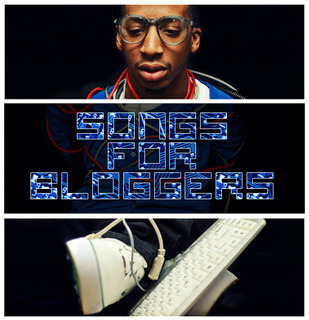
9. Songs for Bloggers (GMK)

An offbeat trip down the broadband wire, courtesy of talented up-and-coming rapper/producer, GMK. Songs for Bloggers charms upon repeated listens and verifies the unlimited potential of the Golden Mic King. On Songs, he takes the listener into the World Wide Web, poking fun at bloggers like me who enjoy the luxury of anonymity and the (sometimes) unfair categorization of rappers into niches that conveniently serve to fit our expectations. GMK is unique, though. A dual threat who is capable of going in any number of directions.

8. Ali’Yah (D. Black)

Ali’Yah represented a shift in tone and lifestyle for Sportn’ Life lead dog, D. Black. A man whose rap career began with aggressive, street-oriented rhyming seems to have made a 180-degree turn. He’s still aggressive and street-oriented but now moving in a different direction, urging his fellow soldiers to step away from the drugs and guns and toward the redeeming light of personal and social responsibility. There was a lot of uplifting hip-hop in Seattle this year and D. Black’s Ali’Yah proudly led the way.

7. Panic EP (Dyme Def)

The best Emerald City sh*t talk always comes courtesy the three bad brothas of Dyme Def. On this album, however, it’s sh*t talk with a purpose. Normally as confident as tigers in a room full of injured gazelles, Brain, SEV, and Fearce Vil are filled with a little trepidation given the condition of America’s financial system. The seven tracks on Panic are loosely built around a recession theme. They urge us to ease our “Foot up off the Gas” to save some scratch. But, in true Dyme Def fashion, they never tell us to stop partying.

6. Glamour (Fresh Espresso)

Easy to hate on and equally as easy to dance to, Glamour simultaneously represents all that is right and wrong with hip-hop. P Smoov and Rik Rude’s hipster musical stylings bring more folks into the 206’s glorious hip-hop sphere — and this is a good thing. The duo have virtually nothing of substance to say, however — and this is a bad thing. Doesn’t matter, though. The relevance of Fresh Espresso is firmly established in The Town, so soapbox bloggers like me can step the f*ck off, I guess. Plus, P Smoov’s already prodigious talent and still-to-be realized potential are undeniable.

5. Hear Me Out (Yirim Seck)

The most underrated Seattle hip-hop album of the year. An unexpected dose of raw and real, Yirim Seck is an everyman emcee that just happens to be more talented than, well, almost every man in the local rap game. Like an expanded and Northwest-relocated version of ATCQ’s “8 Millions Stories”, Yid Seck experiences more lows than highs on his debut album, yet still perseveres like a champion. Hear Me Out neatly captures the pathos of the struggling working class as well as the current unbounded optimism of the local hip-hop movement.

4. High Society EP (The Physics)

The trio of Thig Natural, Monk Wordsmith, and Justo captured lightning in a bottle on this EP. Simply put, they found sonic perfection for seven whole tracks. There isn’t another album in Seattle, let alone the entire country, that had me craving more after I got to the end than The Physics’ High Society. If their sophomore full-length delivers the way HS did, we might be looking at the group that could carry Seattle hip-hop (popularity wise) higher and further than any other.

3. From Slaveships to Spaceships (Khingz)

To listen to From Slaveships to Spaceships is to hear a man being liberated from his paranoia, self-deceit, doubt, and culturally-imposed expectations of who he “should” be. That’s all. Probably the most intensely personal hip-hop album of these ten, it’s a brave exercise in therapy on wax for Khingz, an artist who is always thinking of ways to express personal growth in his music.

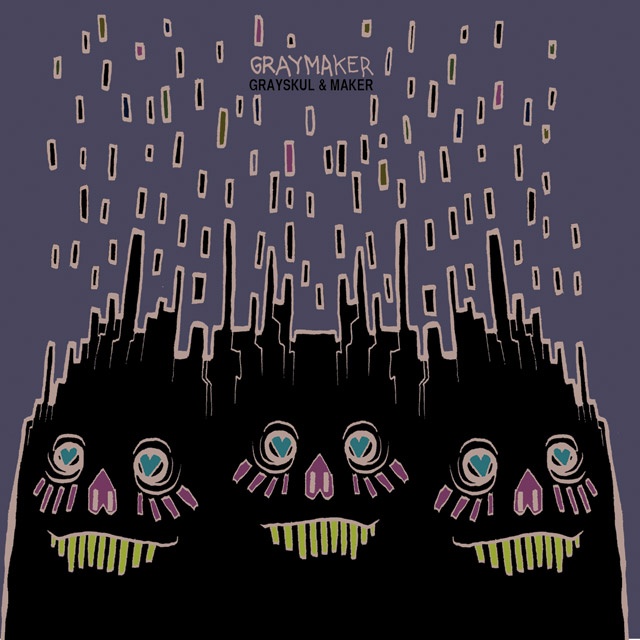
2. Graymaker (Grayskul)

The duo of JFK and Onry Ozzborn prove yet again that they are light years ahead of most other hip-hop groups. It’s difficult to keep pace when their philosophies and creative eccentricities are coming at you in so many scattered images and metaphorical tangents. Paired this time with producer Maker, a Chicago native, Grayskul unites the Northwest and the Midwest in a way only they are capable of. The moody production and dark-themed rhymes belie a hint of optimism that isn’t readily apparent but is ultimately responsible for some of the most lively hip-hop out of Seattle, ever.

1. Of Light/Self-Titled (Shabazz Palaces)

One of the five most creative and forward-thinking hip-hop albums of the decade. Everything about this album seems like it was pre-meditated. From the esoteric packaging, to the intentionally-veiled identity of the project’s main participant, to the deliberate pace of its “marketing” roll-out. Shabazz Palaces represents everything that is good about hip-hop. It casts a dark shadow over the genre’s vapid and disposable popular product, and illuminates hip-hop’s unlimited potential as a subversive course to self-awareness and urban pedagogy.

Three more for good measure…

Snow Motion (THEESatisfaction)


Self-Titled (Champagne Champagne)


The VS. EP (Macklemore and Ryan Lewis)


(And finally, a shout-out to They Live! I’m sure They LA Soul is dope, but I didn’t hear it in time for this list. Surely it’ll be a best of 2010…)

That’s all she wrote for 2009! More to come from 206UP.COM in the ’10.

Peace!

Album Reviews Views From the Peanut Gallery

REVIEW: From Slaveships to Spaceships (Khingz)

CD400Concept albums are always a tricky business. Rarely do they succeed in achieving a true sense of coherence, a completeness in actualizing the very “concept” they’re attempting to convey. Either they fall short because of straight-up weirdness, or inconsistencies that exist somewhere in the actual music (be it in production, lyrics, style, or what-have-you).

Because concept albums so often fall on their ambitious faces, to simply call Khingz’s second solo entry, From Slaveships to Spaceships, a “concept album” would be doing the record a disservice. It’s actually much more than that. If a music artist’s work is always inspired by something they either find valuable or have experienced in perpetuity throughout their lives, then a coherent expression of that in a single album is much less a “concept” and more a concrete expression of the artist’s reality.

From Slaveships to Spaceships certainly qualifies as an expression of Khingz’s life and experiences as a self-admitted social outcast. It’s only because science-fiction themes are so pervasive throughout that a critic like myself is excused when using the term “concept album” to help describe the record.

The album’s title and sci-fi terminologies aside, FStoS exists more on the terra firma that is Seattle’s South End than it does in the outer-reaches of our galaxy. It’s an honest expression of life as a person of color in The Town’s suddenly en vogue southern neighborhoods. Bitterness, confusion, and self-realization are all explored in dramatic fashion. Khingz (much like his brother Gabriel Teodros) is a sensitive dude. And, also like GT, restraint in his lyrics is not a problem he suffers from. There’s a valuable and uncommon connection between art and self-awareness here that makes for some heavy-handed sh*t, like the emotional tour de force of the title track. By the end of the song Khingz sounds like he’s lived enough trying times for a thousand lives.

Sonically, this album runs the gamut. From hyper-active beats emulating space battles (“Hydroplanin'” made me feel like I was stuck in the middle of a shootout between Stormtroopers and the Rebel Alliance) to the smoothed-out hip-hop valentine “Blaq Han Solo.” There’s an undeniable energy running through these beats; it’s equal parts thoughtful production and Khingz’s own crazy-versatile flow that act as the electrical current bringing each track to life.

Throughout this record, Khingz makes clear that he’s seeking his liberation from something. Could be the past. Could be liberation from the typical musical stylings that so often contribute to the stagnation of his beloved art form. Whatever. As a listener I was just happy that, by album’s end, he seems to have found what he’s looking for. As fans of hip-hop, we should be thankful that Khingz expresses his liberation through his music. It makes for “important” hip-hop in the most well-defined sense of the word.

Album Reviews