
The venerable Seattle quartet of Mic Flont, GT, Khingz (oops, I mean Ka.lil), and Jill Laxamana recreate the Dana Owens classic as an homage to Beacon Hill. Eric Miller and Mic Flont behind the lens, and Uce Wayne behind the boards.
Tag: gabriel teodros
NEW MUSIC: “Black Love” – Gabriel Teodros (feat. Sarah MK; prod. by SoulChef)
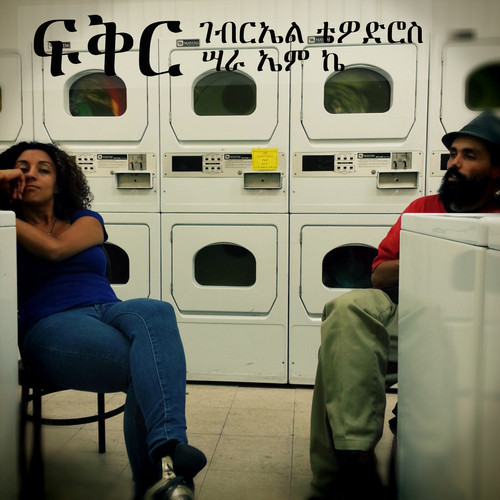
Sensual, proud and smooth as hell, Gabriel Teodros came through with a new joint: “Black Love”, featuring Sarah MK. SoulChef on the beat.
NEW MUSIC: “Humanoid Void” – Hightek Lowlives (feat. Gabriel Teodros)

R&B/electro outfit Hightek Lowlives dropped this gem this morning. “Humanoid Void” seeks to bridge the gap between the organic and the digital. If it sings in ones and zeroes, does it make a sound? Gabriel Teodros lends the cellular weight via deft guest bars.
206UP.COM YEAR END: The Best Seattle Hip-Hop Albums of 2012 – Top 10
More Town goodness from the last 365 days.
Today concludes our year end list of the Best Seattle Hip-Hop Albums of 2012. Yesterday was the Honorable Mentions and today is the Top 10. Holler at me in the Comments section or on Twitter. Expanding the debate is part of democracy. Just remember: I’m right and you’re wrong. Happy New Year!
(Click on the album covers for links to purchase or free download, where available.)
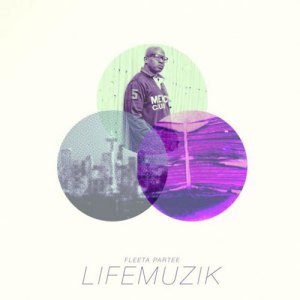
10. Fleeta Partee – Lifemuzik
Sportn’ Life Records co-founder and OG in the Central District rap game Fleeta Partee (real name, no gimmicks) enlisted the two best area producers for the majority of Lifemuzik, an 8-song EP full of hard-worn street knowledge. Vitamin D lends board work for over half the tracks, his keyboards and drums on “Inception” and “Part of the Game” sounding bigger and deffer than everyone else’s, except for maybe Jake One’s whose “Apathy (No Love)” captures a blues feeling in boom-bap form. As far as the well-traveled Fleeta Partee goes, his free-wheeling, old-school flow rejuvenates rap purists’ earholes the way a pair of fresh laces lends new life to sneakers. Are you feeling bogged down by all the vapid swag excursions through chattering high-hats and cheap synth? Lifemuzik is the remedy.

9. Nacho Picasso & Blue Sky Black Death – Exalted
There’s a small part of me that worries Nacho Picasso’s Exalted made this top 10 because of other blogs that put it on their year-end lists. The power of group think is a motherfucker. After all, let’s face it: over the course of four mixtapes Nacho has become somewhat of a one-trick pony. But damn what a trick it is. There’s certainly no one else in the Town that does what he does: the monotonic nihilism accented with wicked one-liners, all pulled to a degenerate end by the wobbly, hazy renderings by production partners Blue Sky Black Death. For Seattle, Nacho is the vital counterpoint to the easy party-rocking optimism of the city’s most visible rap stars. Macklemore is an expert jokester, sure, but like all great comics Nacho finds his humor in the dark recesses of his own psyche. When the pathos is threatening to overtake your soul, sometimes smoking, fucking and, of course, laughing, make for the only true medicine.
 8. Sol – Yours Truly
On Sol’s Bandcamp page, the rapper dedicates Yours Truly to “the human pursuit of deep understanding,” an endeavor the MC is no doubt currently pursuing on a post-college graduation trip around the world. Most of this album — the culmination of a series of shorter, free EP releases — is an attempt at universal appeal, heavy on the pop hooks and R&B melodies which serve to make it all just feel very…easy. But when you consider Yours Truly in the context of the artist’s statement, it makes sense: we’re more immediately bonded together when our commonalities are highlighted, hence the depth of understanding we can find when enjoying an album like Yours Truly together. This may sound annoyingly meta and shit, but the threads that connect us through musical experience don’t exist at the surface of listening, which is true even when an album as easily enjoyable as this comes along.

7. Macklemore & Ryan Lewis – The Heist
I’m super hyper-critical of Macklemore. Mostly because his puritanical rhymes are written and delivered so evidently as to diminish that vital trait which separates good poets from great ones: nuance. Then again, I agree with virtually everything the MC has to say on The Heist about marriage equality, white privilege and artistic integrity, three poignant topics that are sadly absent from about 90% of all other hip-hop I listen to. Plus producer Ryan Lewis conveys pop sensibilities in a manner that no other Seattle-birthed rap album featured so expertly this year, or perhaps ever.
I nitpick Ben Haggerty’s rap game in the same way I fixed upon every full-count, two-out, man-on-second strikeout by Ken Griffey Jr. in 1997 — you know, the year dude hit 56 home runs and won the AL MVP award. My criticisms of Macklemore are undeniable in the same way “Thrift Shop” undeniably moves butts and endears fans all over the globe. Is The Heist polarizing for a lot of rap heads? Sure. But the fact that this duo is killing the game right now while simultaneously causing haters to chatter is proof that they’re doing something right.
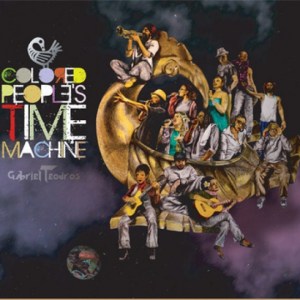
6. Gabriel Teodros – Colored People’s Time Machine
Seatown rappers went certified worldwide in 2012 and that’s word. But none of them in the fashion of Abyssinian Creole teammate, Gabriel Teodros. His Colored People’s Time Machine cuts a broad cultural swath with guest rappers from different countries rhyming in their native languages (English, Spanish, Arabic, and Tagalog, by my count).
While home is the central theme on CPTM, Teodros fashions the concept on his own terms, grappling with the intricacies of identity as a person of color and the realization that just because you were born in a specific place, it doesn’t mean that locale represents your cultural center. As always, the MC dons a critical, analytical cap, dropping piercing knowledge but always with love and a deft touch. As an ambassador to the rest of the rap world, Seattle can’t do much better than the homie GT.

5. THEESatisfaction – Awe Naturale
Cat and Stas of THEESatisfaction are no longer the Costco-employed “starving artists” of their earliest mixtapes, That’s Weird and Snow Motion. Both of those quirky hip-hop/R&B low-fi’s were recorded in the comfort of their own bedroom closet-turned recording studio and it endearingly showed. Neither is THEESatisfaction the little sister act of Shabazz Palaces, though the two forward-thinking groups do share a label home (Sub Pop) and a decidedly left-of-center musical spirituality. Awe Naturale was THEESatisfaction’s official debut and it garnered a ton of praise from both local and national outlets, much of it due to the quiet confidence of the group’s two members who are double threats in both rhyme and song. “Queens” is a funky, heady feminist groove that doesn’t name itself as such and was winning enough to garner a video treatment by the venerable dream hampton. Awe Naturale stands out, like Shabazz’s records, because it doesn’t sound like anything else in hip-hop.
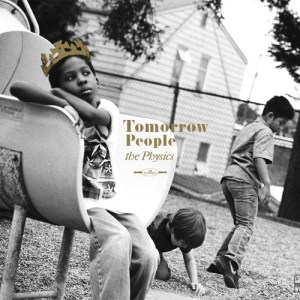
4. The Physics – Tomorrow People
Tomorrow People reaches for a broader context than The Physics’ previous album (last year’s outstanding Love is a Business) without sacrificing any of what makes the group so appealing. Soulful, funky and beautifully nuanced, TP is 13 tracks of grown-man/woman hip-hop. MCs Thig Nat and Monk Wordsmith are thoughtful, conscious and raunchy always right when they need to be. And producer Justo and don’t-call-them-back-up singers Malice and Mario Sweet put the finishing touches on each track so they shine at just the right angles. This is a crew with a rare nonchalance that never translates to dull, a sure sign of artists who truly know who they are. There is something for everyone on Tomorrow People. You could play this album for your grandma and she would probably love it, and I mean that in the best way possible.
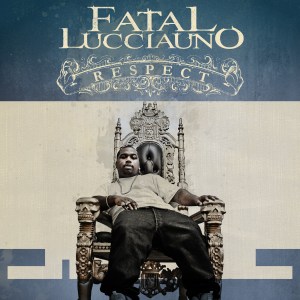
3. Fatal Lucciauno – Respect
Fatal Lucciauno’s stubborn refusal of the Seattle rap status quo is probably one of the most important statements made in the local arts. In a city home to the nation’s annual White Privilege Conference, it’s no surprise that the gregarious Macklemore has become Seattle hip-hop’s envoy to the rest of the world. That shit happened basically by default.
On the colder end of town, however, is where Fatal stages his operations. Hardcore and unforgiving to a fault, Respect is the other side of Seattle rap’s truth. It rejects even the militant-light stylings of acts like Blue Scholars and Gabriel Teodros, preferring to cast flickering reds and blues on the folks too preoccupied with basic survival than to be troubled with thoughts of the revolution. And in a year when we viewed all local rap through a Heist-colored lens, it’s important to ask ourselves: What percentage of those “Thrift Shop”-ers actually understood how their discovery of joy in a dirty bargain bin can be construed as yet another ironic luxury borne out of privilege?
It’s true we’re all better people when re-purposing perfectly useable disposed goods, feeding our souls with something truer than what is marketed to us. But Fatal’s Respect speaks on a different type of hunger: the one for things untarnished after a lifetime of languishing at the bottom.
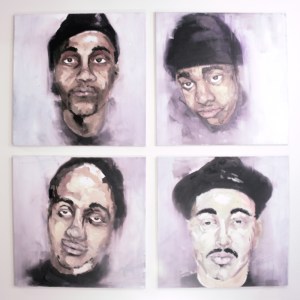
2. Kingdom Crumbs – Kingdom Crumbs
Cloud Nice teammates formed like Voltron for Kingdom Crumbs, a hazy, danceable, electro-funk departure which was by far the most fun Seattle hip-hop release of the year. Jarv Dee, Mikey Nice, Jerm, and creative mastermind Tay Sean managed to find unique swag in a diverse array of funk compositions, from the hippie smoke session “Evoking Spirits” to the stuttering swankfest “Ridinonthestrength.”
Cloud Nice have evolved into one of the most diverse and reliable rap collectives in Town and much of that is owed to Tay Sean’s virtuosic keyboard and drum programming. Kingdom Crumbs rides on the strength of its accessibility (dreaded word, I know) and its musical intellect, the two factors that most often determine the level of quality in pop music. In a year when pop stylings thoroughly influenced Seattle rap, determining the best release of the last 365 days often came down to a single question: Which album would I rather listen to on repeat? More often than not Kingdom Crumbs was the answer.
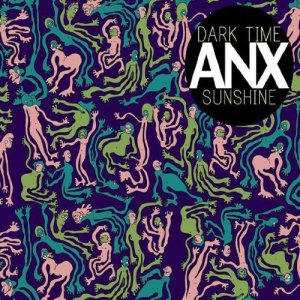
1. Dark Time Sunshine – ANX
You could never accuse Dark Time Sunshine’s music of being cheery, but on the group’s third album, ANX, Chicago producer Zavala allows enough cracks in his heavy, electro-organic compositions to let a little bit of sunshine in. Onry Ozzborn’s deadpan science drops are illuminated by tad brighter synths, driving breakbeats (which were all but absent on DTS’s previous two albums, Believeyoume and Vessel), and a few well-placed cameos (vocalist Reva DeVito on “Never Cry Wolf” and a livewire Swamburger on “Take My Hand”, for example).
ANX is also less claustrophobic than its predecessors, its aesthetic welcoming well-equalized car stereo speakers rather than just the strict confines of headphone cans. Dark Time Sunshine’s music has always aurally represented the variations in weather of the group member’s home cities: the frigid wind of Chicago, the lidded grey Seattle sky. But finally with ANX we have tunes that go equally well with our Town’s de facto cloud cover and this past September’s exquisite atmospherics.
Don’t get me wrong, everything that makes Dark Time Sunshine one of the best hip-hop crews working today is still here; much of ANX still heaves and sighs like a concrete robot and Onry hasn’t lost a touch of his scathing pessimism. But that glow you see underneath an electronic heart is evidence of an evolved sentience. ANX can be cold to the touch, but the soul under the surface gives off uncommon warmth. It’s this new layer of complexity that elevates ANX above Dark Time’s great past work and places it in a superior class over every other Seattle hip-hop album of 2012.
VIDEO: “Hip Hop & Science Fiction” – Gabriel Teodros at TEDxRainier
Seattle’s very own hip-hop genius speaks. Gabriel Teodros takes the high-brow TED talk to the community level.
VIDEO: “Agonia” – Bocafloja (feat. Gabriel Teodros & Hollis Wong-Wear)
Bocafloja is a Mexican MC with strong ties to Seattle by way of frequent collaborator and Town representative Gabriel Teodros. “Agonia” features assists from GT and Canary Sing’s Hollis Wong-Wear.
You are what you eat and we are increasingly unsure of what that is. Does Monsanto run the world? At least partially.
VIDEO: “Marathon” (live on The Underground Railroad) – CopperWire
CopperWire (Gabriel Teodros x Meklit Hadero x Burntface) came through for a performance and interview segment on The Underground Railroad, the legendary hip-hop show on New York’s WBAI radio. The first voice you hear in the interview (other than host Jay Smooth’s) is that of the SEA’s own Gabriel Teodros. A very nice look for CopperWire and hopefully the sign of even greater exposure for the groundbreaking crew.
VIDEO: “Phone Home” – CopperWire
The first video from CopperWire’s Earthbound (which dropped yesterday). I just wrote a little bit about this crew, go here to read it.
NEW MUSIC: Earthbound – Copperwire
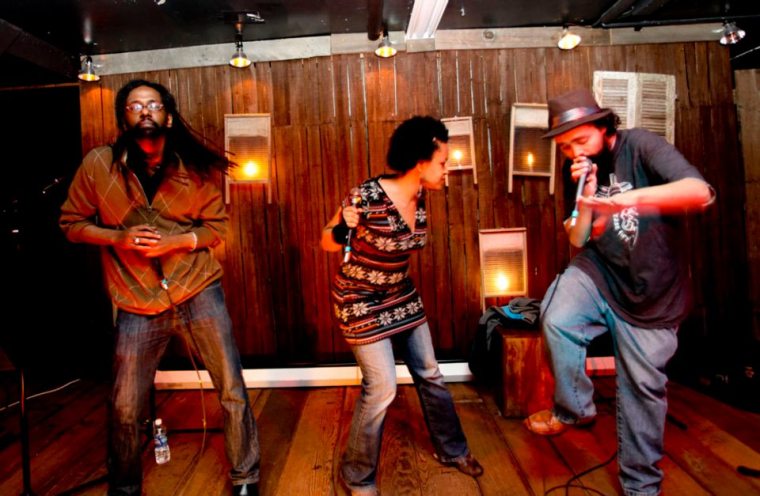
Image courtesy artist's website.
Meklit Hadero, Burntface and Seattle’s own Gabriel Teodros form the musical union/futuristic space narrative, Copperwire. Melding elements of hip-hop/R&B, social justice and science fiction, the trio is set to release their debut album, Earthbound, tomorrow.
Amidst the tales of hijacked spacecraft, time travel and extraterrestrial superpowers are hardcore beats, rhymes and melodies rooted very much in a fundamental concern for homo sapiens everywhere.
Keep tabs on the Copperwire’s music and travels, here.
REVIEW: Colored People’s Time Machine – Gabriel Teodros

Gabriel Teodros
Colored People’s Time Machine
Fresh Chopped Beats/MADK Productions; 2012
Score: HIGHLY RECOMMENDED
Telling Seattle rappers they’re not making an honest attempt at gaining visibility outside of their area code is a fairly common accusation nowadays. Truth be told, there’s a lot of Big Fish in Small Pond syndrome being passed around — that every MC comes through to every other MC’s video shoot is both the charming and tedious nature of the Seattle hip-hop community. The Six is a quaint environment in which to exist as a musician, but I would imagine the socked-in loom of the Pacific Northwest winter becomes the perfect metaphor for a restless MC feeling particularly confined to his or her own insular bounds of the region.
Gabriel Teodros’ new LP, Colored People’s Time Machine, serves as a direct affront to the notion that Seattle rap has yet to grow beyond its geographic margins. It’s a stark (albeit humble) answer to local music writers who’ve posited the conceit, as well as an inspiration of sorts to fellow artists who want to stretch their own boundaries, though not in the fashion that results in rap’s standard measures of fame and largesse.
Corporate capital has never been Teodros’ main pursuit, anyway. It’s more appropriate to call his hustle one for identity scratch, but not the type that wins you admission to clubs or free custom-made clothes. More like the kind that enriches your soul and the various communities you associate yourself with. You know, fairly inconsequential stuff. CPTM cuts the broadest cultural swath of any area rap record in recent memory, featuring guest appearances by artists rhyming and singing in their native languages (including English, Spanish, Arabic, and Tagalog). Recently an obsession with interplanetary commutation has infiltrated Seattle rap subject matter, but on this album Teodros favors good old-fashioned terrestrial navigation.
The central theme on CPTM is home. Many of the album’s tracks serve to extrapolate the concept, beginning with its definition as a specific physical location and extending outward to include less concrete ideas. Though Gabriel reps strongly for the Pacific Northwest, “Alien Native” describes a regional upbringing in which a sense of belonging was never fortified. He documents physical and spiritual movements through other US cities (Las Vegas on “Babylon by Bus” and Brooklyn on “Saturn’s Return”) and other countries like Canada and Ethiopia, that served to define his identity. Teodros grapples with the same paradox that many other people of color in America do: That one’s birthplace here does not, by default, represent one’s cultural center.
He and his brethren essentially remain strangers in a strange land, relying on serendipitous collisions with others who share similar experiences to assist in a perpetual search for belonging. Colored People’s Time Machine is the fortunate product of happenstance and focused directive from an MC that values his community, wherever it may be found.
 A SEATTLE HIP-HOP BLOG