Learn Your History (I Am)

My earliest memories of hip-hop in the 206 begin with Sir-Mix-A-Lot and Kid Sensation. It’s sad, I know, but I’m an 80’s Baby who grew up in the San Juan Islands, a place that, when you’re young, seems light years away from the foreign metropolis that is Seattle, Washington.

Back then, my Seattle points-of-reference were limited to Mariners games, Red Robin and movie theaters, three things I was severely deprived of in my formative years. Hip-hop music and culture was available to me, but only in its mass-market form. I wasn’t close enough to the city to touch the underground. If I had been, I’d probably be a more learned student of the earliest Town movements.

Thankfully we have the internet, where the history of anything is available to those willing to spend time looking. Here are two pieces of Seattle-area hip-hop lore, some brick and mortar carved right from the foundation.

Cocaine Blunts Interview with Jake One and Mike Clark

Click on the photo above for an interview with Jake One and Mike Clark (former host of Rap Attack on KCMU) courtesy of Cocaine Blunts. (Thanks to Andrew Matson, aka The Bulletproof Critic, for Tweeting this yesterday!)

UPDATE (9.24.09): And here’s part two of the interview.

1250 KFOX Facebook Page1250 KFOX was one of the earliest outlets for hip-hop music in Seattle. Click the logo above to open up the time capsule (you gotta have a Facebook account to view). Make sure to check out the very first link, “Emerald Street Boys Nasty Nes Intro” and peep the comments — hip-hop is a family affair for some artists.

Respect the foundation!

Interviews Views From the Peanut Gallery

Float On Cloud Nice

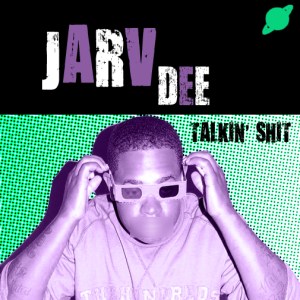
Talkin Sh*t EP (Jarv Dee)

The Cloud Nice collective stay on their grind. Download Jarv Dee’s Talkin Sh*t EP here. It’s rude, crude, and often funny brag-rap. A little amateurish, sure, but it’s the thought that counts. Some of the basement-style beats are filthy — like the Cloud Nice crew sprinkled dirt on their Casios before they made ’em.

And while we’re at it, here’s Helladope’s free download, Strickly 4 My DJz mixtape, too.

Hooray for free music!

Downloads

REVIEW: Ali’Yah (D. Black)

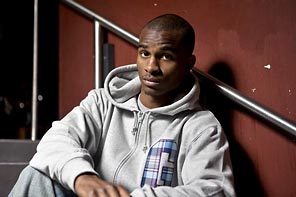
Ali'Yah (D.Black)

The personal and musical metamorphosis of D. Black is a revelation around the 206 these days. In the span of time between the rapper’s debut album, The Cause and Effect, and his latest LP, Ali’Yah, a transformation seems to have taken place in the young man’s heart, mind, and soul which has much to do with assuming new grown-up responsibilities (marriage and the birth of a child) and, as Black has made very clear in recent interviews, a spiritual awakening that’s granted him new perspectives and motivations on why he does what he does.

Regardless of what you believe personally, the overarching force that gives Ali’Yah its potency is the same rare phenomenon that provides all great music their particular validations: honesty. On his new record, D. Black believes firmly in what he’s doing, which is making music for his children, family, and community without fear of contributing negatively to the advancement of those loved ones. He wants to make responsible music for the betterment of his people. In this sense then, Ali’Yah is a soaring achievement.

The seeds for this revolution were planted in The Cause and Effect which, for all its boastfulness, negativity, and hurt, still contained glimmers of both optimism and recognition of why the old D. Black was full of so much anger. That album’s best tracks were, by far, the introspective ones (“This is Why”, “Survive”) which seem to have paved the way for Ali’Yah, a record that can literally be played anywhere. I would feel equally comfortable bumping this album in my car, around small children, or even in church.

Positivity is the rule of the day here. There is no cursing. All the references to bullets flying are accompanied by a call to those responsible to put their burners down. Tales of graphic street violence are omitted and, in their absence, Black has put-forth challenges to the community to better itself (“Keep On Going”). Spiritual growth is also a major theme throughout Ali’Yah and, while not overtly preachy, Black isn’t ashamed to show reverence for the most high on “Close to Yah” (featuring Sportn’ Life labelmate, Fatal Lucciauno).

And, while Black doesn’t shy away from braggadocio, here it’s accomplished more humbly, less as a way to inflict gratuitous verbal beatdowns on wack-ass rappers (which, incidentally, isn’t necessary — it’s obvious D. Black is one of the best emcees in Seattle) and more as a way to progress his positive message. “The Return” is an edict that serves to announce his grand re-entrance to the game while simultaneously calling-out those fake studio gangsters that poison the art form and culture of hip-hop.

Musically, there isn’t one track that stands head and shoulders above the rest, which is actually okay. Albums that endure over time often stand on their conceptual completeness, a trait that Ali’Yah possesses. You probably won’t see a hit single come off this album but there is a satisfying cohesiveness that’s absent on most hip-hop records. Overall, the production is soulful, with a lot of sung hooks (local favorite Choklate blesses a track), but not at the expense of traditional boom-bap, which is to be expected from the likes of Jake One and Vitamin D who handle most of the arrangements.

It’s probably unfair to compare The Cause and Effect to Ali’Yah because they’re such starkly different albums, but the association is unavoidable. While The Cause contained all the traditional elements of aggressive, street-oriented rap, a secondary listen today — in light of what Black has accomplished on Ali’Yah — reveals a tired sound, an almost lethargic Black compared to the new version who is so obviously energized and excited about a new direction.

Perhaps the greatest accomplishment of Ali’Yah is that the rapper, even though he has so blatantly eliminated the guns, drugs, and women (aka, the “realness”), has not lost his credibility. In fact, he seems to have gained more of it. The word “ali’yah” means “ascent” in Hebrew. Here, D. Black has ascended beyond what other rappers have not, surpassed expectations built by his first album, and become a torch-bearer for what hip-hop music is truly capable of.

Album Reviews

Disney-Style Kid Pop Meet Brainstorm, Prick!

Justin Bieber

+

Brainstorm of Dyme Def

=

Uhh, yeah, this one threw me off just a tad. Take a listen and tell me what’chu think. It’s a song called “One Time” by a lil’ Canadian pop singer named Justin Bieber (top) and featuring Renton’s finest, Brainstorm.

Here’s the download and here’s the (ridiculous) video — sans Brain, thank heavens.

Is it a mixtape remix? A child star’s pre-meditated attempt at capturing street-cred? A possible career-turn for Brainstorm? I remain skeptical, but I’m giving B the benefit of the doubt here. (The kid is down with Usher after all, so you can’t really hate…Can you?)

(WARNING: Under no circumstance should you listen to this song more than twice in a row, as it’s grade-A certifiable kiddie-pop crack and the hook will get stuck in your brain [ha!]. You’ve been warned.)

Downloads

Take Friday Off, You’ll Need the Recovery Time

Tonight, at The Crocodile…

D. Black Ali'Yah Release Party

And Thursday (9/17), at The Showbox @ The Market…

Method Man & Redman at The Showbox @ The Market

It doesn’t get much better than this one-two punch. And big-ups to the Sportn’ Life family for doing it big on both bills.

In related news: I’ve listened to about half of D. Black’s Ali’Yah. So far it’s predictably uplifting and powerful. There’s something extra-special at work when a hip-hop artist consciously sets out on a mission to uplift his community. This is a case where the message is far greater than the music. As always, a review is on its way so stay tuned.

Live Coverage

REVIEW: Self-Titled (Champagne Champagne)

Champagne Champagne

The three dudes that make up the group Champagne Champagne (emcees Pearl Dragon and Thomas Gray, and DJ/Producer Gajamagic) must find themselves in a weird space these days. Their shows are usually populated by twenty-something hipsters of the fairer complexion, rocking out with their cocks out, overjoyed at being at a hip-hop show, and certainly proud to tell their unlucky (and much less-cool) co-workers the next day about how “real” the experience was. Yet there’s this verse, from “Soda & Pop Rocks,” the very first thing Pearl spits on Champagne Champagne’s self-titled debut album:

You can see me leapin’
My words creepin’
Slowly
Now they know me
When my whole influence was
“Rollin’ With The Homies”
First off
One of the best to ever touch off
You can see me touchdown anytime
Randy Moss

You can take what you git from it
My words influenced by
The slums and they love it
Hip-hop no hipster
Words flip back you can see I rip through
Haters innovator rock paper scissor
See me as I
Cut up my nigga!

Take note, white hipsters, this is not your music. (Pearl even says so!) This is black music — a cousin once or twice-removed from Jimi Hendrix, Living Colour, and Outkast. Witness the emphasis of the N-word, not meant to make you feel down with the cause, but as a proud (however polemic) declaration of blackness. The word’s strong assertion made me feel uncomfortable and alienated from the track, which is exactly how anyone who is not black should feel. So, while the demographics of the audience probably accurately represent the consumers of Champagne Champagne’s music, the joke’s ultimately on you hipster motherf*ckas. Pearl’s city “isn’t pretty, it’s gritt-y.”

Fresh Espresso, the other Seattle hip-hop group that most closely resembles Champagne Champagne, probably faces fewer such dilemmas. While FE’s music is far more party-friendly (virtually no references to blackness that would inconveniently clutter their feel-good vibe), the afro-eccentricities of Champagne Champagne add a welcome layer of complexity to their music. Without it, there would only be the left-field hip-hop punkiness of the sonic arrangements and little to no traceable DNA leading them back to the revered architects of black music mentioned above.

Not that the hipsters are all in the wrong for digging this sh*t, they should. The group is, after all, called Champagne Champagne, a moniker that bestows upon them the responsibility for starting the party. And this does sound like party music. Live hip-hop is more about the beats than the lyrics anyway, anyone who attends the shows can attest to that. The distorted bass at the beginning of “Soda & Pop Rocks” sounds like a mic’ed-up human heart sitting on top of an 808 kick drum. It’s not only the best track on the album, but also Champagne Champagne’s official declaration of non-whiteness in a city full of white fans — nonetheless, I’m sure it rocks the hell out of their parties.

After the opening track, things immediately get more complicated. Is “Molly Ringwald” really a heartfelt tribute to falling in love with girls who look like the innocent sweet-sixteener? Or is it a perverse acknowledgment of the white-girls-who-love-black-men phenomenon that only Spike Lee has been brave enough to flesh-out in front of the general public? Pearl’s heartbroken vocals suggest the former (“I left a message but she never called me back”), while Gajamagic’s sinister production suggests the latter.

Later, Pearl lightens-up a little and does his best Andre 3000 impression on the guitar-driven, “Hollywood Shampoo,” and further tributes are paid to the fairer sex as the pitfalls of showbiz-life and love are lamented and celebrated on “Cover Girls” and “What’s Your Fantasy.” The production trends toward hippie futurism, and contains all the references to space and aliens that would be expected from such music. Yes, the hip-hop UFO thing is getting tired and it’s been done better before, but Champagne Champagne uses the levity in such themes to elevate the music to the upper reaches of that particular quality.

Finally, while “Soda & Pop Rocks” is the group’s declaration of identity, “Radio Raheem” is the frontman’s heart, exposed and bleeding for all to see. On it, Pearl raps about the shooting death of his older brother, Samuel Curry, by an off-duty Seattle police officer. The song plays its ironic and tragic part in inextricably linking the rapper’s proud declaration of blackness to the all-too-frequent instances of police brutality that grievously help define the black experience in America. Indeed it’s a heavy track, yet a vital addition to an album that would, however regrettably, be incomplete without it.

Album Reviews

I Don’t Like Reggae (But I do Dig Spam Musubi!)

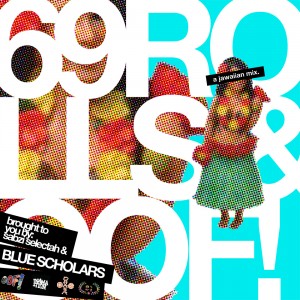
69 Rolls & OOF! (Blue Scholars & Sabzi Selectah)

Didn’t get your fill of Jawaiian-style hip-hop from the OOF! EP? Then check for the Blue Scholars/Sabzi Selectah 69 Rolls & OOF! mixtape, here.

I’m one of those rare dudes who’ve never been into reggae. Maybe that’s why my college experience was so boring (that and I hate any sport that involves throwing a frisbee).

Downloads

The Good Sin Makes Sexy Time

"Turn You On" (The Good Sin)

Usually hearing crickets on a track (or in the audience) is a bad thing. Not here on The Good Sin’s, “Turn You On” (featuring TH, JusMoni and Tay Sean), the latest from the Cloud Nice camp.

It’s another sex joint, which usually translates to boring-as-hell, for me. This one’s catchy though. The crickets are used to signify night time, which is used to signify sexy time, which is amplified by JusMoni’s inviting vocals. It’s aiight and it’s free, so get it in here.

Downloads

Dyme Def Diversification

Dyme Def

The Three Bad Brothers from Renton offer up something different here — a little Cali dubstep flavor in ya ears on, “I Know” (download here).

Yeah it’s a tad off-kilter, but the braggadocio still flows like rainwater down Queen Anne Ave — prick.

(Shout to Hip-Hop 101 for the download.)

Downloads