What began as an ambitious endeavor (the genesis of yet another 206-dedicated hip-hop blog) turned quickly from a new labor of love into straight-up work. A regular nine-to-five coupled with two blogs (I keep a personal one as well, but I’ll never tell you where it is!) is nearly too much to manage, especially if you are a notoriously slow writer like me.
But anyway, I just read Charles Mudede’s column in The Stranger (titled “Renewed School”), in which he summarizes the year thus far in Seattle hip-hop, calling it the “most important” since 2005 (uhh, wasn’t that only like four years ago?). And, while I very rarely agree with the majority of what Chuck says, I still hold his opinions valuable and let them help shape what I am currently pumping into my ears.
That being said, I’ve only sampled a couple of the albums he mentions among the best of ’09, and certainly haven’t listened to enough to formulate adequate reviews. (For example, I’m super late to the boat on Fresh Espresso’s debut, Glamour, as well as Khingz’sFrom Slaveships to Spaceships, two local releases that are, for better or worse, very important to the 206 scene this year.) I’m an amateur operation here, yo! I already have my hands full with the new Grynch and Physics EPs!
Anyway, I’m going to take Mudede’s advice to heart and go “cop these joints” (to use the parlance of our times) and, after so doing, submit proper reviews. But first I think I’m ‘a start with GMK’sSongs for Bloggers. It’s short and sweet and only costs $5.94 on iTunes. (Anyone wanna hit me with freebies?? Pretty please??) I’ll be back later with my thoughts. Until then, tell your friends!
I grew up in a very rural, somewhat isolated community in Washington State. It’s amazing to me that hip-hop music of the early to mid-nineties from Brooklyn, Queens and the Bronx managed to reach my adolescent ears, especially given the facts that my house did not have MTV, high-speed internet was not yet available to Joe Consumer, and the number of radio stations in my town playing so-called “urban music” was limited to just one, that’s right: KUBE 93 — where you would be lucky to hear more than five different songs in one hour.
Yet even without the internet or cable TV, somehow I managed to get my hands on the earliest albums by groups like A Tribe Called Quest, De La Soul, and Black Sheep. Not surprisingly these are the groups whose music has endured for me, from age 13 to __ (age omitted). Why a relatively quiet, shy kid from the country felt some sort of connection to The Native Tongue Family’s brand of hip-hop is beyond me, but it has nonetheless become the gold standard that will define my taste in music forever.
All this to say, it wasn’t until much later that I learned of a group (actually more of a collective, composed of many different emcess and dj/producers) who was doing the same type of music, and located basically right in my own backyard.
Tribal Music was doing the jazz-inflected, alternative-style hip-hop similar to that of Quest and De La and all it would’ve taken for me to find them was a short trip down the I-5 corridor to the 206. I guess it’s not surprising that Tribal, a movement founded in a major metropolitan area, was influenced by those classic hip-hop acts in New York City, a place that defines the very word “metropolitan.” If Q-Tip could somehow manage to find his way into my bedroom speakers in rural Washington State, he damn sure was going to have an influence on a few cats in Seattle!
Still, the sound of A Tribe Called Quest was very specific to New York. When Tribal was doing its thing, there was no definitive “Seattle sound.” In fact, there was no nationally recognized Seattle hip-hop movement to speak of at all, unless you count the novelty that was “Baby Got Back.” (Which I don’t, by the way. Sir Mix-A-Lot, while certainly a pioneer in the Northwest rap music scene, did not constitute a legitimate “movement.” That is, unless you count the shaking of 10,000 assess at various wedding receptions across the country as a “movement.”)
I suppose the “movement” in Seattle was taking place where the best movements always begin: underground. Tribal Music was (and still is) definitively underground hip-hop.
Anyway, if you’re not hip to Tribal, then you’re in luck! Their 1996 compilation album, Do the Math, is available by FREE download here. I would contend that these guys did Native Tongue-style hip-hop almost as well as the founders themselves. It’s a shame they didn’t get more national shine for their work.
(Just one more thought: Hip-hop music is so often a very specific way of describing a very specific lifestyle in a very specific place. So why do so many people not affiliated with those specifics find such an affinity for it? Q-Tip and I were located at opposite ends of the country and at totally opposite ends of the lifestyle spectrum. I think maybe in the earliest years I was listening to Quest — and perhaps even to a greater extent groups like NWA — it was a purely voyeuristic experience that I was enjoying. Today, I can say that the rewards in listening to their music are different. There’s an actual desire to better understand the point of reference, the lives of the rappers that inspired the art. Hip-hop music, to me, is much more valuable today than it was yesterday.)
My Lady sent me this video. It’s Andrew Matson (music columnist for the Seattle Times) interviewing the rapper Grynch. Matson asks him about the critics who complain that Grynch does a whole lot of “rapping about rapping,” a similar critique I made in my review of his latest release, the Chemistry EP.
Grynch says that he raps about stuff he knows. It’s a nice honest answer and really the only thing we, as fans, can hope for from our favorite artists. Here’s hoping Grynch continues to blow up the spot in Seattle and beyond and that his growth as an emcee results in even better, more interesting rhymes.
(Hmm…the embed code’s not working on this video, so here’s the link to the webpage.)
I know this blog is supposed to be dedicated to Seattle-area hip-hop only, but excuse me while I digress for just a moment…
Mary J. may have the national title “Queen of Hip-Hop Soul” on lock, but Seattle’s got its very own local hip-hop soul queen and she goes by the name of Choklate. Her latest album To Whom it May Concern is simply astounding! (No need for hyperbole here either, folks. Just listen and you’ll agree.)
Anyway, she’s doing big things as evidenced by this free download. It’s a track called “Film,” produced by 2008 Red Bull Big Tune champ C-Sick. It features Nas on the vocals and none other than Miss Choklate on the chorus. Bump this!
More Choklate…
At Jazz Alley.
“Sun’s Out/Grown Folks” video.
Chok’s talented nephew, KD Cutz, chops up “Sun’s Out” and slaps us across the face with it!
Not sure how I missed this video, I’m definitely a little late on it. It’s Common Market’s “Escaping Arkham” off of The Winter’s End EP, filmed on Wall Street of all places!
The scenery has a special place in my heart (being a veteran Wall Street-er of sorts — though not in the Financial Industry, thankfully!). For a place infested by so much greed and dishonesty, it sure looks beautiful through the lens of director Zia Mohajerjasbi don’t you think?
Soon as I figure out how to install the Twitter widget on the blog, I’ll post it up. For now, though, here’s the announcement, direct from Prometheus Brown (aka Geo, aka Geologic, aka the emcee 1/2 of Seattle’s favored hip-hop sons, Blue Scholars) on their forthcoming EP, OOF!.
And I quote: “Plotting the OOF! EP Campaign. Official announcement coming soon but I’ll tell yall now: it’s dropping Aug. 25!”
The Physics, Grynch, and Blue Scholars all dropping new EPs this summer? I’m ‘a hafta ride around for days just to have enough time to bump all this sh*t. Mom, I need more gas money for the Caravan!
For now though, I’ll just take a stroll down “The Ave” (Memorial Stadium, Bumbershoot 2006, opening for Kanye — who was completely wack in concert that night, by the way):
Grynch’s still young career has been one of slow progression. On his debut album, This is What I do, the Ballard emcee unsuspectingly blazed onto the 206 hip-hop scene with an undeniable flow and knack for making solid, party-rocking hip-hop that sounded great bumped from your car on a hot summer day.
In subsequent releases including his latest EP, Chemistry, Grynch has taken a few steps forward in the complexity of his rhymes, but still not much has changed. His flow is still solid, his rhymes even more effortless and natural, and the beats are still big and sound great with the volume turned up loud. Grynch’s music is accessible West Coast hip-hop that should appeal to virtually everyone. So why do I still feel mostly underwhelmed?
Probably because the subject matter of Grynch’s rhymes remain fairly one-dimensional. He’s got the braggadocio down pat, which is always important in hip-hop. Emcees spend roughly 35% of their time listing the reasons why they are so dope. Grynch continues to follow this tradition on Chemistry.
He also remains focused on rhyming about his struggle in the game and the challenges he faces coming up. Again, it’s important subject matter, but the problem here is that Grynch is two full albums and two EPs in, and he’s still telling us about it. We’ve been knowing about the struggle, dude. It’s a little early to say it’s getting tired, but I often found myself tuning out the lyrics in favor of just listening to the beats.
And the beats, as on Grynch’s past releases, remain top-notch. They’re loud and full, and they sound great on headphones with good bass response. Standouts include the title track, which is an absolute Grade-A banger featuring One Be Lo and “A Dream Undeferred” the emcee’s altered take on the Langston Hughes poem.
Chemistry feels like a big release because it features the likes of One Be Lo and Seattle hip-hop royalty RA Scion and Geologic (and their cameos don’t disappoint). Unfortunately, however, Grynch just hasn’t taken that big step forward lyrically. He can rock a party better than most and the fact that he generally sounds incredible doing it allows him to get away with the repetition in his lyrics. Eventually, however, Grynch needs to show us more in order to stay relevant.
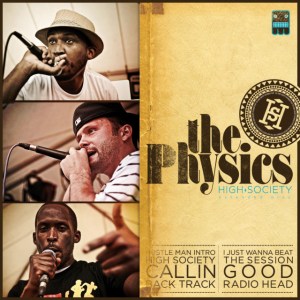
Fans of the smoothed-out Physics debut, Future Talk rejoice! The High SocietyEP is a little something to hold you over until the trio’s next full-length comes along. And, just like their debut, you can groove along to High Society with your headphones plugged in, or in your car cruising down Alki Beach. Either option succeeds in delivering the new Seattle summer soundtrack for 2009.
The music on High Society is Seattle’s own updated version of early to mid 90’s Native Tongue-style hip-hop. The influences are all here, including the jazz inflections, laid-back flows, and straight-up J. Dilla/Ummah-style beats. Thankfully, the production respectfully imitates more than it mimics, which means the music is allowed to proudly display its roots while still remaining mostly fresh.
Standout tracks include “Back Track” which is specifically an homage to The Physics’ influences (Wu and Tribal are named) and “The Session,” an addictive fusion of jazz instrumentation and futuristic sound effects where the rhymes are delivered two and four bars at a time via a playful back-and-forth between all three members of The Physics and a catchy saxophone riff.
There is one annoying track, “I Just Wanna Beat.” Ugh, once again it’s the dreaded Sex Joint. You know, the one about picking up shorties at the club and taking them home “just to hit it?” We’ve all done it, we all know it happens, so why do rappers insist on making songs about it? (Actually, the track “Good” is based on the same concept, but at least it’s done cleverly and with a hilarious verse by Macklemore.) Anyway, that’s just a minor complaint among an album full of great music.
High Society is just an EP, so it’s easy to play through the whole record two or three times and not even realize it. The only thing really holding it back is its short length (better to keep fans hungry) and the aforementioned sex talk (typical, so — whatever). This is actually a pretty exciting release because it shows The Physics truly have the chops to succeed in the industry. They exist in a well-defined hip-hop niche but still manage to stand outside of it because of their raw talent. Their follow-up sophomore album can’t come soon enough.
Before I get into this rant about Mad Rad, I suppose I have to confess that I’ve never actually seen them live, nor do I own their album, nor do I have any idea about their level of respect for hip-hop culture, how they came to be involved in the art form, who they are as people, if I am actually distantly related to one of them, etc.
I just know that whenever I see one of their videos or listen to their music, I can’t help but think they’re a bunch of f*cking tourists. I get the whole white-boy rap sub-genre that exists in the music, and I understand the need for white kids to express their jones for hip-hop and that that expression sometimes manifests itself in the form of a collage (bastardization?) of less-than-awesome styles (Limp Bizkit comes to mind). What doesn’t sit well with me is when I feel like the culture is being exploited at the expense of an artist or group’s personal gain, and this is where my own personal hypocrisies come into play. For example: I hate Fred Durst, but not Kid Rock. I hate Vanilla Ice, but not Eminem. I hate MC Hammer, but not P. Diddy. Who should be performing hip-hop at this stage in its history is a matter of complete conjecture, so who am I to question someone’s right to participate in the culture? I’ll try to explain myself…
Hip-hop, to me, is like your grandfather’s old Chevy. Whenever he lets you drive it, you should treat it with the utmost respect because, ultimately, it is not yours to keep. You shouldn’t eat in your grandpa’s Chevy; you shouldn’t drink in your grandpa’s Chevy; you shouldn’t make out with your girlfriend in your grandpa’s Chevy, unless, of course, you ask him for permission to do so, and he says that it’s okay.
Everything I’ve been told and read suggests that Mad Rad puts on a hell of a show. I understand they really get the crowd hyped, they have actual skills on the mic, and their production is on point (as much as a rap/punk/electronic collage of sound can be “on point”). I also know that they often behave like complete jackasses, getting themselves banned in local clubs, nearly destroying Chase Jarvis’ beautiful spread at his Songs for Eating and Drinking event, and generally causing hundreds of hipsters to lose their skinny-jeaned, coked-up minds in the streets of Capitol Hill.
So why must I hate? Probably for these reasons:
1. I’m not a member of a rap group, and they are. I can love hip-hop as much as anybody, but it doesn’t mean that I’m a particuarly active participant. I’m a consumer of the music, I pay for albums and shows, and I can hop in a car, put a CD on, and rhyme alongside my favorite emcee and think that I sound pretty damn dope (especially when the volume is turned all the way up). But I have never been in the studio, gotten in front of a mic and dropped 16 bars over a Jake One banger. And that will probably never happen. So why do I hate Mad Rad so much? The number one reason might be because I will never get to do what they’re doing.
2. I think hip-hop music ultimately belongs to the African-American community. If hip-hop was patented, it would be owned by the pioneers from the South Bronx. Of course, that would never happen because hip-hop, by its very nature, is a collaborative effort, and many non-African-American folks have come along in the game and done it well. In fact, arguably just as well, if not better than some of the music’s earliest founders. But that doesn’t mean true ownership has ever been transferred. I’m sure there are some pretty amazing Japanese chefs who can prepare Coq a Vin just as well as a French chef, but just because you’re Japanese cooking French, doesn’t mean you don’t have to be qualified.
And are Mad Rad qualified to be doing hip-hop the way they are doing it? Who am I to say? I guess my point is that when I see Mad Rad performing for their fans (who are majority white, hipsterish and presumably not the most learned fans of hip-hop culture), I get upset. Especially when Mad Rad is dropping lines like “smoke the dro/choke a ho.” Not that anyone should be able to get away with saying that and have it be okay, but when it’s coming out of the mouth of a white dude wearing ironic sunglasses and a gold chain? It sounds more like disprespectful parroting than a conscious attempt at what I can only presume is sarcasm.
In the end, I suppose the point of Mad Rad is to bring a different perspective to the genre. They appear to simply be a group of white men expressing their creativity and points of view as honest fans of the music. And, inherently, there is nothing wrong with that.
I guess I just wish they’d been required to attend a sort of Hip-Hop University where they first had to study the origins of the culture and earn a diploma before being able to release their first album. Come to think of it, the curriculum at Hip-Hop University would probably be useful for a whole gang of other hip-hop artists in the game today.
Probably the most important tool in helping propel the art form into the future, is a knowledge of the roots of its past. Mad Rad, in my opinion, haven’t properly traced those roots. They need to go back to Hip-Hop University. They need to ask their grandfather if they can ride in his Chevy.
Framework already said it on his classic debut, Hello World, but here I am saying it again to everyone in the 206 (and beyond) who just loves good hip-hop music.
First off, let me state that I am NOT a member of the local media. I don’t write for the Times, P.I., Stranger, Weekly, Seattle Sound, or any other publication out of the greater Puget Sound area. I AM JUST A FAN from the 206 (actually 360, originally) who appreciates good hip-hop music and who’s only desire is to share my thoughts with the reading public. (Ya’ll do still read, right? Like Geo said, “If you got time to take a sh*t, then you got time to read a book…” — or a blog!)
Secondly, I should also say that I have exactly ZERO personal relationships with any members of the professional Seattle hip-hop community. The extent of my relationship with Seattle emcees or producers goes as far as an occasional dap or a pound with a few favored artists outside of a venue. I don’t rap, I don’t produce, I don’t break. I don’t even put my lame-ass tag up on buildings with a black magic marker.
You may be asking yourself, how does this fool think he’s qualified to write about this sh*t then? Well, my friend, that’s the beauty of hip-hop culture. ANYone can participate. Folks like me who don’t have a musical bone in their body participate by listening and appreciating the message. You’ve seen it at shows. That dorky-looking white dude from Bellevue raising his fist in the front row at the Dyme Def concert? He’s participating. The dreadlocked homie from the Central bouncing his ass up and down at the Khingz show? He’s participating.
Hip-hop fans come in all shapes and sizes. The beauty lies in the fact that when a few thousand heads get to nodding to the beat, we are united in the rhythm. And when the music is turned down and people start talking, we have something to relate to. We might even learn a thing or two from each other.
That, my friends, is the power of hip-hop. This blog is my personal tribute to the culture and the spirit it creates. Enjoy!


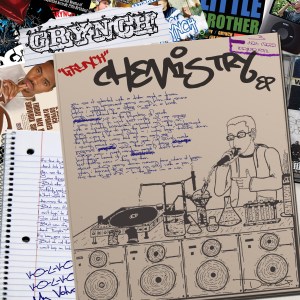 Grynch’s still young career has been one of slow progression. On his debut album, This is What I do, the Ballard emcee unsuspectingly blazed onto the 206 hip-hop scene with an undeniable flow and knack for making solid, party-rocking hip-hop that sounded great bumped from your car on a hot summer day.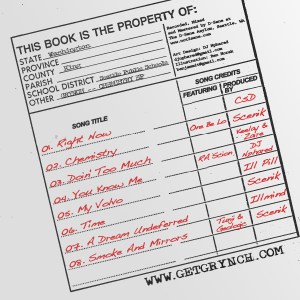
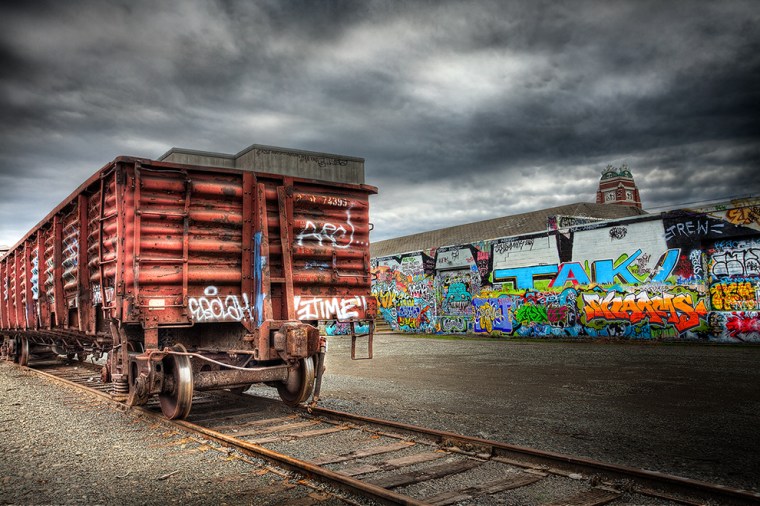 Framework already said it on his classic debut, Hello World, but here I am saying it again to everyone in the 206 (and beyond) who just loves good hip-hop music.
 A SEATTLE HIP-HOP BLOG