
One of the truly remarkable things about our local hip-hop community, is that artists from all walks of life can share the stage together and be heard, understood, and, most importantly, accepted, by an audience of fans that is sometimes just as diverse as they are. The relative smallness of Seattle has a lot to do with that. It’s a place where a short, skinny, white kid from Ballard can rhyme alongside a tall, African-American dude from the South End and both are celebrated just because they sound great on a track together.
It’s not that fans in The Town don’t typify the artists (that’s just a natural reaction to different styles of music), but the community is so small that everyone is allowed to eat at the same table. Because of this, Seattle might be one of the least-marginalized hip-hop communities in the country. In this way, at least, we are truly “progressive.”
I hope Seattle’s inclusive nature helps to dispel the myth (usually held by casual or unlearned fans of the music) that you don’t have to be a gangsta, or surrounded by the gangsta lifestyle, in order to be a legitimate hip-hop artist. White kids can laugh knowingly and rap along to “My Volvo,” and then hopefully pause and listen carefully to a track like “This is Why.” The true power of hip-hop is displayed when it unites us through familiarity in the music, our heads “nodding in agreement” despite our differences that keep us divided. Of course, the music itself doesn’t solve all our problems borne from society’s ills, but at least it opens the door for dialogue. It’s our job as conscious listeners to step through.
All that being said, everyone still knows that the gangsta aesthetic plays a huge role in the lives and careers of many artists. Some just borrow the image to fit their desired style (always to the detriment of the culture), and some artists have lived through it, or are living it for real.
Here are two perspectives from local emcees that have lived it, survived it, and are now imparting their knowledge from their experiences:

The first is an interview with Khingz from the hip-hop lifestyle blog 12ft Dwende.
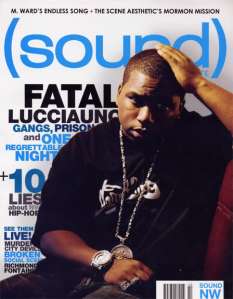
The second is a video interview and performance by Fatal Lucciauno from Sound Magazine.
One final thought:
“Gangsta rap” is a tricky piece of terminology. Mainstream media and the music business have removed virtually all societal value from that style of music, boiling it all down to an easily-marginalized brand of rap that has been happily commodified and put on sale, and yet simultaneously blamed for contributing to negative stereotypes and teenage violence. And, while pundits are not always completely wrong to criticize its shortcomings, gangsta rap has been stripped of its power to inform. Too many artists are quickly qualified as “gangsta rappers” and then summarily dismissed as nothing more.
It’s important to note that neither Khingz nor Fatal Lucciauno are “gangsta rappers” in the commonly-defined sense of the term, but both speak about issues related to that walk of life.
 A SEATTLE HIP-HOP BLOG