
REVIEW: Yours Truly – Sol

Sol
Yours Truly
Self-released; 2012

Score: RECOMMENDED

Sol doesn’t care if his music goes pop. It’s the first thing he says on “Paint,” the decidedly upbeat Imogen Heap-sampling track from his sophomore full-length, Yours Truly. It’s a good thing, too, because with this record the accomplished (and still rising) Seattle MC has a terrific collection of songs that succeeds in connecting the universal pleasure principles of pop music with legitimate hip-hop artistry. Spinning through Yours Truly for the second time I couldn’t help but think this is what Lupe Fiasco’s Lasers should have sounded like.

Sol’s early 2009 debut, The Ride, introduced the EMP Sound Off! finalist and University of Washington student (now graduate) to the area hip-hop scene. His gravelly register and laser-precise technical ability helped him to stand out from a sudden rush of similarly-aged MCs looking to get on in the spontaneous combustion that was the Puget Sound rap scene. With the subsequent Dear Friends trio of EPs, Sol took a definitive turn away from the underground boom-bap that dominated The Ride and moved to a more soulful mix of R&B and blunted pop-rap.

The culmination of that transition is the 12-track (plus one bonus) Yours Truly. You can blame Sol’s affinity for weed or his advancing maturity (probably a bit of both) for the easy-going sensibilities of this album. Like all intelligent and skilled MCs, Sol has learned his life and career don’t hinge on spitting the best bars or realest shit ever written on each subsequent verse; consistency is important, too. Establishing a relationship with his listeners is what Sol values most here. He plays the part of both critic and member of his particular generation on “2020,” urging his peers to shed what he perceives as an identity-threatening ambivalence and stand for something. He also loves the ladies, or, more accurately, the ladies love Sol. On the whimsical “Ugly Love” (featuring Shaprece) he recognizes his status as one of the city’s circumstantial rap sex symbols and uses (presumably) learned experiences to both celebrate and lament the profits of his cachet.

My estimation is that Yours Truly will be a hit among close followers of Seattle hip-hop, especially with the younger set that leans toward the more Clear Channel variety. That’s just fine of course — equal representation is important in establishing a holistic listening environment, after all. Heads who don’t favor this brand of vodka can rest in the edification of a track like “Rap Life.” The standout Jake One-produced banger is a reminder that Sol’s hustle is rooted deeply in the hip-hop fundamentals and, at the very least, his growth sprouts from an unadulterated love for the art. Yours Truly is quality, independently-produced music with the artist’s full stamp of approval, and if that’s synonymous with “honesty,” then the effort is always above reproach.

Album Reviews

REVIEW: Colored People’s Time Machine – Gabriel Teodros

Gabriel Teodros
Colored People’s Time Machine
Fresh Chopped Beats/MADK Productions; 2012

Score: HIGHLY RECOMMENDED

Telling Seattle rappers they’re not making an honest attempt at gaining visibility outside of their area code is a fairly common accusation nowadays. Truth be told, there’s a lot of Big Fish in Small Pond syndrome being passed around — that every MC comes through to every other MC’s video shoot is both the charming and tedious nature of the Seattle hip-hop community. The Six is a quaint environment in which to exist as a musician, but I would imagine the socked-in loom of the Pacific Northwest winter becomes the perfect metaphor for a restless MC feeling particularly confined to his or her own insular bounds of the region.

Gabriel Teodros’ new LP, Colored People’s Time Machine, serves as a direct affront to the notion that Seattle rap has yet to grow beyond its geographic margins. It’s a stark (albeit humble) answer to local music writers who’ve posited the conceit, as well as an inspiration of sorts to fellow artists who want to stretch their own boundaries, though not in the fashion that results in rap’s standard measures of fame and largesse.

Corporate capital has never been Teodros’ main pursuit, anyway. It’s more appropriate to call his hustle one for identity scratch, but not the type that wins you admission to clubs or free custom-made clothes. More like the kind that enriches your soul and the various communities you associate yourself with. You know, fairly inconsequential stuff. CPTM cuts the broadest cultural swath of any area rap record in recent memory, featuring guest appearances by artists rhyming and singing in their native languages (including English, Spanish, Arabic, and Tagalog). Recently an obsession with interplanetary commutation has infiltrated Seattle rap subject matter, but on this album Teodros favors good old-fashioned terrestrial navigation.

The central theme on CPTM is home. Many of the album’s tracks serve to extrapolate the concept, beginning with its definition as a specific physical location and extending outward to include less concrete ideas. Though Gabriel reps strongly for the Pacific Northwest, “Alien Native” describes a regional upbringing  in which a sense of belonging was never fortified. He documents physical and spiritual movements through other US cities (Las Vegas on “Babylon by Bus” and Brooklyn on “Saturn’s Return”) and other countries like Canada and Ethiopia, that served to define his identity. Teodros grapples with the same paradox that many other people of color in America do: That one’s birthplace here does not, by default, represent one’s cultural center.

He and his brethren essentially remain strangers in a strange land, relying on serendipitous collisions with others who share similar experiences to assist in a perpetual search for belonging. Colored People’s Time Machine is the fortunate product of happenstance and focused directive from an MC that values his community, wherever it may be found.

Album Reviews

206UP.COM’s Top 10 SEA Hip-Hop Albums of 2011: #5 through 1

206UP.COM’s Top 10 Seattle Hip-Hop Albums of 2011 concludes today with the list below, the blog’s five favorite local releases of the year. I hope you enjoyed the list and that it generates an active response in your brain — that’s really the sole reason we do these year-end list things, anyway. Everything is up for conjecture. If you have something to say, I want to hear it — the Comments section is there for you to use. As before, links to download or purchase are included, just click on the album covers.


5. The Good Sin & 10.4 Rog – Late

Producer 10.4 Rog’s beatific sense of rhythm and electronic adornments made for the perfect counterpoint to The Good Sin’s grounded, low-pitched raps on getting by financially and romantically when success with both endeavors seems fleeting. I recall downloading this free album right around the time Odd Future’s proverbial cream was rising to the top and, upon listening, was happy to experience a different type of hip-hop escape: Finding a relatable and comfortable space of existence between Rog’s airy atmospherics and Sinseer’s lyrics on the everyday struggle. For most listeners in Seattle, this was a formal introduction to both producer and MC. Late set an incredibly high standard for these promising young artists whose stars are still rising.


4. Khingz – Liberation of the Monster

A relocation to Vancouver, BC has not changed the allegiance or focus in subject matter of the South End’s most self-aware rapper, Khingz. Liberation of the Monster was the best collection of tracks the MC has released since 2009’s remarkable From Slaveships to Spaceships. Canadian producer Rel!g!on was responsible for all of the beats, a Pacific Northwest re-working of the SoCal gangsta aesthetic found on 1990s albums like Dogg Food. While Khingz may forever associate himself with that style of rap nostalgically (like many us who came-of-age in the 90s), he’s decidedly more responsible and progressive in his rhymes. His course is set on a better future, a destination borne from a dubious past. On tracks like “Monster’s Lib” and “Hard to Say,” the MC is so diffuse in his rhyming it’s hard to keep up with the words. You would be too if you had the rare combination of artistic acumen and social enlightenment of this rapper.


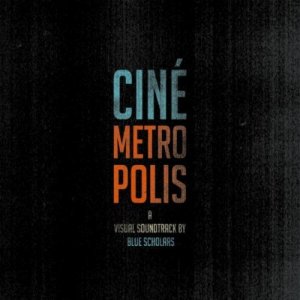
3. Blue Scholars – Cinemetropolis

Even Shabazz Palaces’ debut LP Black Up didn’t ignite the local hip-hop landscape initially the way Blue Scholars did with their third full-length album, Cinemetropolis. Behind the strength of a Kickstarter campaign that generated a pre-album release $62,000 in donations in six weeks and a subsequent 33-date national headlining tour, Geo and Sabzi remained Seattle rap’s sentimental favorite (until the next Macklemore drops, anyway).

Producer Sabzi developed a new sound for the group: A bass-heavy mix of heady synth and tropical rhythms. And MC Geo wove his love for cinema and social justice into conceptual lyrics that succeeded in entertaining and provoking thought. As the members of Blue Scholars age, it seems like their fans are getting younger, which bodes well for the future. If the youth are independently choosing to support acts like this, then maybe there is hope for the coming generation.


2. The Physics – Love is a Business

A giant leap forward for Seattle hip-hop (and R&B for that matter). The Physics’ Love is a Business was the long-awaited follow-up to the group’s first LP, Future Talk, a record that held many promises for those heads still living in rap’s Golden Era. Love is a Business did have much in common with its predecessor, but also moved beyond with a wholly-conceived sound that was more soulful and refined thanks especially to don’t-call-them-back-up singers, Malice and Mario Sweet.

LIAB represents Seattle hip-hop in its most fully-grown incarnation. Thig Natural, Monk Wordsmith and Justo placed themselves contextually in that realm of maturity where one is still young enough to enjoy a Tuesday night jump-off encounter, but not without a hint of regret at having to face the coming work day on little to no sleep. In these mens’ lives, the intersection of their art, professional careers and romantic engagements are inseparable, each one informs the other. If there’s any justice in the musical universe someday The Physics will make beats and rhymes for a living, and this album’s description of their current existence will serve as a fond reminder to them of when life was a little less charmed.


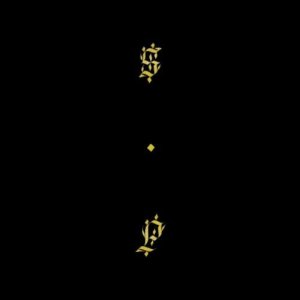
1. Shabazz Palaces – Black Up

At this moment in time, it’s impossible to place Black Up into appropriate hip-hop context. But that’s because (and any theoretical physicist will tell you this) time itself is merely an illusion. Similar to the career of Shabazz Palaces’ primary motivating force, Palaceer Lazaro (earthly name: Ishmael Butler), the sounds on Black Up ascend to the stratosphere, only to dissipate and fall invisibly to the terra firma where the music is reformed into new lyrical notions and sonic movements. The sounds here are transient, but everything in Butler’s past seems to have been pointing to this moment.

If you had to pinpoint an origin for Black Up, you would say its spirit is rooted most firmly in Africa. The Palaceer’s words stay tethered to a motherland but course off in many directions, just like peoples disseminated (by choice and by force) across the globe. As I type this, Shabazz Palaces is spreading its ethereal sound across parts of Europe, and will likely move beyond that continent. How fortunate we are in Seattle then, to be able to call our city SP’s corporeal home. I don’t think many people in The Town realized a spirit like Shabazz’s existed in their midst. Seattleites (and the world), take note: If that’s cream you’re putting in your coffee — don’t. Better to drink the elixir Black.

Album Reviews Best of 2011 Downloads

206UP.COM’s Top 10 SEA Hip-Hop Albums of 2011: #10 through 6

Today continues 206UP.COM’s countdown of the Top 10 Seattle Hip-Hop Albums of 2011. See yesterday’s post for the Introduction and three standout releases that didn’t quite make the cut. Today’s post features albums 10 through 6. Tomorrow (Thursday, 12.22.11) we’ll post 5 through 1. Thanks for reading!

(Click on the album covers for links to download or purchase.)


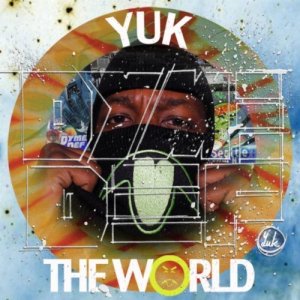
10. Dyme Def – Yuk The World

Here we have the trio of Brainstorm, S.E.V. and Fearce Villain behaving in the way we’re accustomed: Mixing top-shelf brag rap with sobering tales about growing up hard in the South End. It’s been over four years since Space Music, the area’s official introduction to the Three Bad Brothas from Renton. Since then, the crew has been missing a key component to their hustle: The production of BeanOne, whose lively trunk rattle serves as the perfect delivery vehicle for the three MCs’ sharp witticisms. Thankfully Bean is back here, providing the majority of the framework in which Dyme Def gets busy. One complaint: Yuk The World is too long, but that’s only because Dyme Def’s real voice hasn’t been heard in some time. Consider this a year-ending takeover attempt by one of the SEA’s most important groups in history.


9. Nacho Picasso – For The Glory

Emerging from a Cloud (Nice, that is) of weed smoke and comic book sound effects is Nacho Picasso. Even blazed-up and squinty-eyed this dude is more clever than your average MC, dropping punchlines quippy enough to win the affection of both your girlfriend and high-brow music publications. For The Glory‘s arrival on the scene correlates perfectly with the sonic trends going on in the greater rap arena. Production duties were handled by Blue Sky Black Death, whose hazy take on the Cloud Rap aesthetic fits in nicely next to the genre’s currently favored albums. The star here is inarguably Nacho himself, though. Holding a Marvel comic book in one hand and a Dessert Eagle in the other, the man otherwise known as The Tat in the Hat is poised to introduce his specific branch of Seattle rap to the rest of the nation.


8. Art Vandelay – They’ve Got My Number Down At The Post Office

MC Ricky Pharoe and producer Mack Formway are Art Vandelay, an affiliate of the left-of-center Black Lab Productions camp. On They’ve Got My Number Down At The Post Office they question the honesty of our government, point shotguns at their televisions and generally wonder indignantly how anyone in their right mind could see worldly goings-on as anything but a degradation of all that is beautiful and just. “Art Vandelay” is a self-delusion perpetuated by Seinfeld‘s George Costanza — a lie in the form of a heroic archetype that helps George feel better about his otherwise mundane existence. Pharoe is calling us the liars on They’ve Got My Number: We’re fools to think for even a second that anything is all good. Oh well, at least when the world begins crumbling down around us we’ll have Art Vandelay’s soundtrack playing in the background, telling us so.


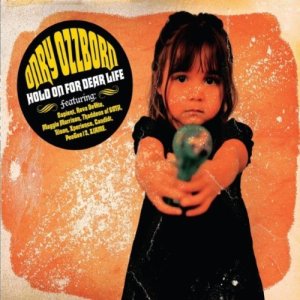
7. Onry Ozzborn – Hold on for Dear Life

I think Seattle forgets how great an MC Onry Ozzborn is. That’s probably because his creative output sneaks by in the same way his monotonic flow inserts subversive social commentary and unique turns-of-phrases into our collective unconscious. Last year’s Dark Time Sunshine project with Chicago producer Zavala was the region’s rap genius lurking in the proverbial shadows. DTS was the one laughing at silly rappers driving by in rented whips, the fakers’ who used their own beautiful sisters and cousins as stand-ins for video models too expensive for their shallow pocketbooks.

Onry might not be a rich man himself, but when it comes to industry respect he has an abundance. From a musical standpoint, Hold on for Dear Life was the most experimental release from the MC to date. It played in bright electronica, post-dubstep pop and the familiar gothic gloom specific to Onry’s infamous crew, Grayskul. If and when the Seattle hip-hop weather affects other regions on a greater scale, it will be OG MC’s like Onry Ozzborn casting the tell-tale Northwest cloud cover.


6. Prometheus Brown & Bambu – Walk into a Bar

What began on mostly a freebie lark ultimately turned into this 10-track for-profit album with some of the best production value around. Prometheus Brown (known traditionally to Seattle as Geo, of course) and Los Angeles’ Bambu pay homage to their island origination on Walk into a Bar which was released on Bambu’s label (Beatrock Music) and aimed squarely at the Hawaiian Islands, a favorite tour destination for the two MCs. As per standard, Geo and Bambu choose their words carefully always using them to uplift and inform rather than degrade and dispirit. “National Treasure,” for example, is important commentary on gender politics and features a beat from Vitamin D whose drums somehow always sound bigger than everyone else’s.

Album Reviews Best of 2011 Downloads

206UP.COM’S Top SEA Hip-Hop Albums of 2011: Introduction & Honorable Mentions

Image by Emma Looney.

The calendar tells me it’s nearing the end of December and hence begins 206UP.COM’s countdown of the best Seattle-area hip-hop albums of the last twelve months. Today the blog features the requisite Honorable Mentions. (Which we all know is just a mechanism designed to appease indecisiveness and waffling on behalf of the writer — guilty as charged.) Tomorrow the blog will feature the 10 through 6 positions, and on Thursday it will conclude with 5 through 1. If you’re a frequent reader of this blog, there should be no surprise as to the record that will top this list. (Hint: I am undoubtedly not the only one who will place it at the apex…)

The crew that occupies the top spot is indicative of one important signifier regarding 206 hip-hop: The artists who have been doing it the longest in this Town are still the ones doing it the best. Recently Seattle has had two acts embark on wildly successful national-headlining tours, both featuring 30+ dates each. But there’s only one act currently holding down an international tour, and it’s the dazzling brainchild of one of the city’s “old heads.” This bodes well for us. Seattle is a location with relatively little rap tradition, but the last five years have seen exponential growth to the point where there are too many acts to fill venues and not enough interested listeners to promise success for everyone. We’ve reached the musical equivalent of what chemists call “supersaturation.”

Seattle rap must now grow outward in order to truly succeed, and the man doing it the biggest is the only one the local community should trust to carry the torch (regardless of what Sir Mix-A-Lot says). His is a demeanor that perfectly represents what Seattle is about, his point-of-view one that is vastly under-represented (both in Town and out of), and his creative acumen advanced enough to stay relevant in an ever-shifting musical landscape that requires deft alterations in sound and a healthy dose of intrigue to hold listeners’ short attention spans.

Younger rappers, take heed: This sh-t right here is a marathon, not a sprint, regardless of what these flash-in-the-internet-pan MC’s are telling you. You’d be wise to tie up your laces, keep your proverbial powder dry, and turn off that internal metronome for just a moment for some good old-fashioned note-taking. Time for you to listen to Black.

And with that, here are 206UP.COM’s (OTHER) Top Seattle Hip-Hop Albums of 2011 (the Honorable Mentions):

(Note: Links to purchase or download are included. Just click the album cover image.)


Avatar Young Blaze – The Iron Curtain

With each subsequent release, Avatar Young Blaze shows the promise that lurking somewhere in his ever-plotting mind is a top-notch trap masterwork waiting to be unleashed. Not to say that The Iron Curtain isn’t excellent. It is. And it’s the best he’s ever sounded on the mic. With more optimism in his lyrics (living in sunny SoCal will do that to you) and an expanding musical palette, Av has become a valuable Central District representative to the West Coast and beyond. Check out the track “UK Grime,” which sounds like it was concocted in a basement out in East London. It’s the only Seattle rap song of 2011 that made me want to break sh-t.


Kung Foo Grip – Capitalize

From the land of pristine suburbia (otherwise known as Kirkland) comes Kung Foo Grip and their decidedly un-sterilized update on underground Golden Era rap. The term “old soul” can’t be more aptly applied to these two underage MC’s (Greg Cypher and F is H) who found upstart success as on-the-scene battle rappers. They’ve since moved beyond the corner into high-quality studio productions like Capitalize‘s get-lifted “Def Yoda pt. 3,” a celebration of youth and their own unequivocal dopeness.


Hi-Life Soundsystem – Hi-Life Soundsystem

MC Khingz has been doing it for more than a minute around Town and everyone knows him as the thoughtful, science fiction-loving word-nerd (I mean that in a good way). He’s as comfortable embracing his own high-level mic prowess as he is learning the city’s populace on how f-cked up their racial and gender constructs are.

Hi-Life Soundsystem is the collaborative endeavor (with MC B-Flat and producer Crispy) that sought to temporarily shed the dreaded “conscious” label that’s been attached to Khingz in favor of his strobe-lit party-rocking sensibilities. “Death of the Party” was the best Seattle club jam of the year. It consistently brought the house down on the dance floor but Khingz and B-Flat couldn’t help turning their verses into something of a cautionary tale directed at folks who perpetually overdo it. This is music for party-goers who can appreciate their festivities without needing to overindulge.

Album Reviews Best of 2011 Downloads

REVIEW: Yuk The World – Dyme Def

Dyme Def’s new full-length album, Yuk The World, features the track “Fresher in my Kicks” which is, for my money, the best song the group has ever done. It was a little surprising to see it included here because it’s old (at least by rap standards) but it’s only right that it finds a proper home on an “official” DD release.

In this blogger’s estimation, the trio of Brainstorm, S.E.V. and Fearce Villain are the most important rap group currently operating in Seattle, and a track like “Fresher in my Kicks” is the reason why. Superficially the joint is just about shoes, a tribute to the ubiquitous hip-hop classics like Jordans and Air Force Ones. Turning the track over, however, and having a look at the sole reveals something more revelatory: A somber reflection on what the rappers’ kicks have carried them through, both physically and spiritually. For Dyme Def, shoes have been vehicles for expression, for fashion, for upping rep, and, more figuratively, as protection — a type of armor to lace up as preservation against a brutal outside world.

On YTW (and on the group’s first LP, Space Music) you find many sentiments like these. “Blaastin Off” is an optimistic dedication to finding something better, an escape from tribulations as caught in the rear-view mirror. “When it Rains” finds Brainstorm reflecting in the most literal terms possible on growing up without a father. This all sounds fairly dispiriting, so for those uninitiated to Dyme Def’s hustle it should be noted emphatically that this is a group that prefers to rap about good times, something they do better than anyone else in Town. (Much credit should be given to the group’s primary producer, BeanOne, whose drums on Yuk The World carry the most trunk-rattling knock of any local release this year.)

I’m of the belief that the majority of Seattle doesn’t have a real understanding of what goes on in the city’s South End. Maybe they do in theory, but the philosophical disconnect that exists between north and south of Jackson (or, more accurately, between light and dark complexions in any of Seattle’s geographic districts) is something that’s not bridged nearly as much as it should be.

Dyme Def expresses a vivid representation of this city’s stark divide in race and class. I remember a brief period of time spent working with high school kids in the South End, boys with stories that matched those of Brainstorm’s exactly. These particular young people laced up the same kicks as Dyme Def and for exactly the same reasons — yet more layers of armor for traversing life’s rugged terrain.

Yuk The World contains a dose of reality Seattle needs to hear: It is not all good, rap fans — even in your own backyard. But the one edifying thing about all this, and what Dyme Def themselves portray in their music, is that when everything around you seems covered in shit, the sweet stuff seems that much more syrupy. And right there alone is cause for celebration.

Album Reviews

REVIEW: Liberation of the Monster – Khingz

Click album cover to purchase at Bandcamp.

Town rap veteran Khingz is equal parts self-reverential and self-referential on his latest LP, Liberation of the Monster, a release backed by Vancouver, BC record label Wandering Worx Entertainment (home to rappers Moka Only and Planet Asia, among others). The entire project was produced by Rel!g!on, who favors decidedly West Coast-derived slap matched with chopped samples and liberal doses of aggressive keyboard — imagine a more forward-thinking version of the early Dogg Pound aesthetic.

Indeed Khingz makes immediate connections to his West and East Coast roots (the MC has spent considerable time on both geographic margins) on album opener, and Dogg Pound-referencing, “DPG in NYC.” On the track he threatens to “stomp through the city like Dogg Pound in N-Y,” certainly a lyrical salvo meant to highlight his considerable skills as an MC. That’s the self-reverential part.

On Liberation, we also see Khingz highlighting his own personal struggles, those derived from racial injustice, identity crises, and conflicts when his power as a man intersects with mutual gender reciprocity. It’s all heavy stuff, especially “For Colored Boys Who Consider Suicide,” a figuratively titled song that can’t be anything but autobiographical.

For those that follow Khingz, they know that he’s equal parts sci-fi nerd and reformed gang banger, at-odds identities for those that like to stereotype, but commonly-occurring mutual states of existence for heads that actually observe. The MC’s self-referencing habits (like those found on his excellent 2009 LP, From Slaveships to Spaceships) feel like rap therapy sessions for Khingz, and edifying moral support for listeners who find themselves in the same beautiful category as him.

Album Reviews

REVIEW: Take Care – Drake

The neighborhood of Forest Hill is a quiet, idyllic enclave in the central section of Toronto, Canada’s largest city. The district’s broad streets and leafy sidewalks are bordered by expansive single-family homes and an impressive collection of stately mansions that trend more toward Sotheby’s auctions than the pedestrian listings of Century 21. It was on these well-maintained municipal arteries that a young Aubrey Drake Graham presumably rehearsed a very early form of his now widely recognized helium-pitched MC flow, a style that has earned him various musical accolades and an equal number of less shiny endorsements from skeptics earnestly questioning the validity of dude’s lofty position in the rap game…

(Click here to continue reading at SSG Music.)

Album Reviews SSG Music Cross-Post

DOWNLOAD & REVIEW: Charles – Chev

Click album cover to D/L.

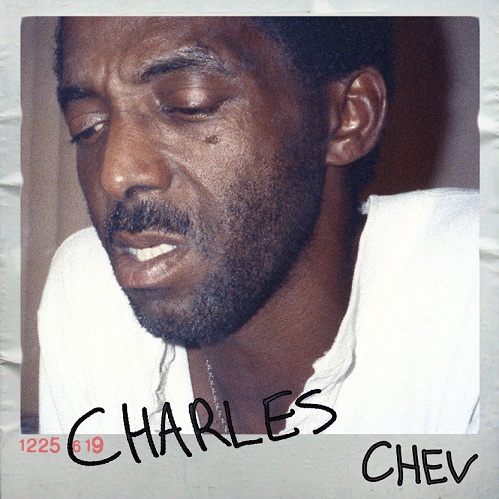
Somewhere inside Chev’s 17-track debut album is an outstanding eight to ten song EP, dying to get out. That’s not to say the long-time coming Charles is a disappointment. Rather it’s a greater reflection of an MC who’s had much on his mind for a minute now, too much to adequately express on a few standout guest shots on tracks by more established Town artists (summarized well by the rapper himself, here).

The first time Chev really caught my ear was on “Certitude” (a joint from Common Market’s 2008 Tobacco Road). His deep, commanding delivery added weight to Sabzi’s synth-heavy composition and his reality rap point-of-view counterbalanced RA Scion’s philosophical wanderings. There’s much more of that grounded perspective on Charles. Chev’s preferred lyrical topic is observations on the hustle, and the fact that he’s in the midst of his own makes him an expert. “Simple Math” is an engaging opening track with commanding head-nod courtesy of Jester. “Beau” pays tribute to lost lives and features a dusty jazz-inflected beat by Def Dee. My favorite song here, though, is the Sabzi-produced “Yesterday” which takes Chev’s nostalgic reflections and Hollis Wong-Wear’s swirling guest vocals, and plants them firmly in early 90s R&B territory.

Charles does go on too long, and Chev over-extends himself with the number of verses on a few tracks, but it’s hard to fault him for putting in work. If you’re first hearing him on this album, it’s his vocal aesthetic that will immediately grab you: a low-pitched, technically proficient flow. Chev’s is a fairly new voice in the local scene that resonates much louder than those of many more well-established ones.

Album Reviews Downloads

REVIEW: Flatland – Katie Kate

Click album cover to purchase at Bandcamp.

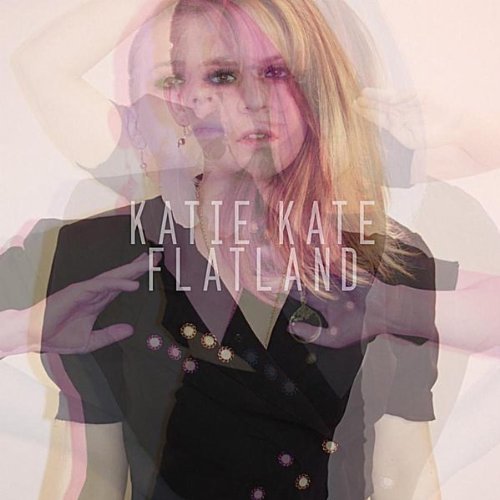
The lazy blogger in me wants to immediately throw Katie Kate into the suddenly ubiquitous White Girl Swag Rapper category. To do so, however, would not only be grossly inaccurate, but also majorly unfair to the artist. While Katie is (at times) guilty of parroting a steez that borders on the racially offensive, her style of electro-infused, party-oriented brag rap is ultimately a valuable addition to the Seattle rap scene, a mostly male-dominated expanse criminally devoid of female voices in general.

In the local context, Katie is the feminine answer to Mad Rad. The two acts incidentally share a label home at Out For Stardom, as well as a similar fundamental identity: that of the emotionally tormented (exhausted?) seven-days-a-week party purveyor. On Flatland, Katie Kate’s debut album, the MC/singer/producer makes it perfectly clear that she has problems and that the absolute best way to deal with them is to dance and sing her way through the strife.

On “Totebag” Katie fills a proverbial knapsack with emotional remnants from past loves, both tragically good and bad. A well-executed flip of those killer chimes from The Brothers Johnson’s “Strawberry Letter 23” is like a bittersweet sprinkle of stardust over the track’s synth-laden thump. Most of Flatland’s ten tracks are similarly charming exercises in rudimentary beatmaking. Katie employs a learned appreciation for bare-knuckle 808 knock and the endless array of effects at her synthesized disposal. The best example is “Hunting,” an industrial-grade dance workout that finds Katie on the prowl; it’s here that she’s at her most charming, toying with her sonic creation with deft switches between rapping and singing. Unfortunately she does neither exceptionally well…yet. Her attempt at lyrical miracles on “Uh.. No” leaves much to be desired and “Bodyout Princess” (an inane declaration of the artist’s unique identity and perhaps formal unveiling of the Official Katie Kate Tagline) is simply too far out-of-bounds for her, vocally.

Still, there’s much promising on Flatland. Katie, like the best electro-pop artists, is capable of finding the fleeting humanity within electronic music’s artificial constructs. Whether it’s the lovely reserve of her singing on “Houses” or the playful yet astute romantic observations on the echoing “Constellations,” a significant swath of Seattle’s music-loving populace can relate to Katie Kate’s point-of-view, and for this reason Flatland is an invaluable entry to the game. In a post-genre musical world like today, where some folks find themselves stumbling through (the grumpy rap purist set) and others drift seamlessly between genre amalgams (the wide-eyed youngsters), it’s mad scientist artists like Katie Kate who have the most to gain and the least to lose.

Album Reviews