REVIEW: Goblin – Tyler, The Creator

Comparing the music of Odd Future Wolf Gang Kill Them All to that of its hip-hop forebears has become quite fashionable. At this point in the group’s existence, critics have deconstructed the music in terms of rap sub-genre (“It’s horrorcore!”), hip-hop artists that have covered similar lyrical ground (“They’re like Eminem!”), and even through alignment with other genres that may not share rap’s musical aesthetic but find commonality in anarchic spirit (“A new version of punk!”). Comparatives are part and parcel of music journalism, but when they’re relied upon so heavily, as has been the case with Odd Future, the dreaded final analysis is usually that the subject is so derivative that nothing original can possibly be said.

(Click here to continue reading at SSG Music.)

Album Reviews SSG Music Cross-Post

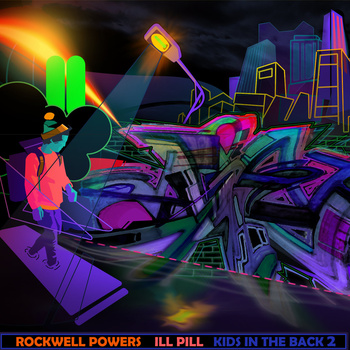
REVIEW & DOWNLOAD: Kids in the Back 2 – Rockwell Powers & Ill Pill

Click album cover for D/L link.

Tacoma’s Rockwell Powers is an MC who knows how to posture in a different way than most rappers. In a genre where ninety percent of lyrical content is based on finding creative ways to self-aggrandize, and astute critical analysis of artists is fundamentally rooted in their ability to convince listeners of an often false legend, an MC who finds comfortable space in admission of uncertainty is a rare and welcome participant in the game.

Kids in the Back 2, the second full-length offering from South Sound duo Rockwell Powers and producer Ill Pill, is a fierce sixteen track declaration of independence. One of the biggest steps toward true self-realization is the ability to admit the existence of the unknown; Rockwell spends a lot of time doing just that on tracks like the soulful “Life” (featuring Sol) and Jazz-inflected “Doubt” (featuring live instrumentation from the MC’s side project, 10th & Commerce). Powers raises substantive questions about love, religion, art, and life’s purpose. To his poetic credit, for such heavy-handed subject matter his raps rarely sound preach-y or holier-than-thou, a testament to lyrics that have an explorative, conversational tone.

While this is an MC clearly feeling his way through life’s uncertainties, it’s not to suggest dude lacks confidence in his music. On the contrary, of all the things in his life, microphone prowess seems to be the one he has most figured out. “I Got This” is straight-up battle rap, an assertion of dopeness with grand percussion and horn licks suitable for nobility. Rockwell keeps his flow steady and even, for the most part, but he sounds more emotive than in the past. Likewise, Ill Pill’s well-conceived production is further advanced than on the duo’s first album, 2009’s Kids in the Back. While that LP emphasized more traditional straight-forward boom-bap, KITB 2’s compositions feature greater complexity in both rhythm and melody. The thick, expertly sampled thump of “These Songs” and the industrial beauty of “Head Up” are highlights of 2011 Pacific Northwest hip-hop.

Experienced listeners of rap music know that aggression and amiability in lyrics are not mutually exclusive. The best artists allow those dualities, and others, to be revealed without pretense or apology — those MC’s are by far the most believable because, in the end, we’re all rooted together in a human condition composed of opposite natures and experiences. Kids in the Back 2 is an album that allows more room for exploring all of that. Some in hip-hop might call that a weakness. The irony is that those who would call it such, don’t understand what it takes to be strong.

Album Reviews Downloads

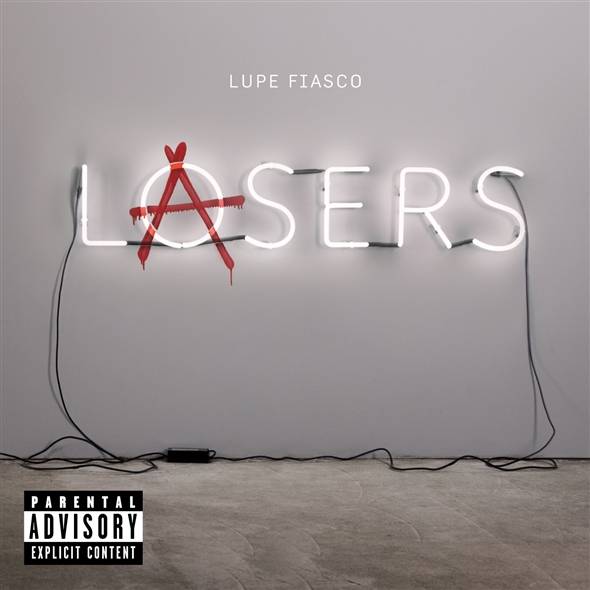
REVIEW: Lasers – Lupe Fiasco

Click album cover to continue reading at SSG Music.

Dear Lasers: Who are you and what have you done with the real Lupe Fiasco?

Many listeners unfamiliar with the major label drama that has swirled around the Chicago emcee (like the eponymous winds the city is nicknamed for) may pose this exact missive to the man born Wasalu Muhammed Jaco. And it would be a fair question. Fans who have devotedly tracked the ascent of Lupe Fiasco from his early success as a small (but well-connected) fish in a big pond to the quasi-underground rap savior who would single-handedly save commercial rap from itself will find themselves puzzled as they listen to Lasers.

Click here to continue reading at SSG Music.

Album Reviews SSG Music Cross-Post

DOWNLOAD & REVIEW: Late – The Good Sin & 10.4 Rog

Click album cover for D/L link.

After a week of listening to far too much Odd Future than is healthy for one human’s conscience to bear, it was incredibly mollifying on the dome to come across this gem, the 10.4 Rog and The Good Sin collaboration, Late.

Renton’s 10.4 Rog has built a steady rep for creating a diverse array of soundscapes that are influenced in equal parts by J. Dilla’s complex boom-bap and the electronic wanderings of Radiohead. The result of Rog’s genre amalgam trips are progressive, visceral renderings of hip-hop that feel more instinctual than intentionally crafted. Very few producers possess this aptitude which, in the end, isn’t about how nice someone is with Fruity Loops. Folks like 10.4 Rog and oc Notes do this sh-t based on hunches and less on the basis of study.

If Rog’s nine tracks on Late are the result of a naturally occurring head-in-the-hip-hop-clouds faculty, then emcee The Good Sin’s rich baritone is the anchor that keeps the songs tethered to the ground. There’s a brilliant dualism at work here: while the stark contrast in tone between Rog’s atmospheric instrumentals and Sin’s heavy voice is readily apparent, the two also work in perfect unison when Sin occasionally lets his mind and words wander inside the producer’s compositions.

For the most part, Sin is a cat still trying to find his voice, at least contextually. Dude can rap on most anything as his past drops and mixtape (Ready or Not) have shown, but listeners still don’t really know who he is. Late reveals the emcee to be a true poet who is equally comfortable exploring spoken-word’s ambiguous nebula (the album’s opening and closing, “Wake Up” and “Endpiece”) as he is rapping on concrete subjects like getting money and getting over (“Pages & Wages”). The Stranger’s Charles Mudede recently compared Sin’s rap ethos to that of Geo of Blue Scholars because of their similar working-class bearings. The comparison is appropriate in that vein, but Sin also possess a certain poetic now-ness to his style; a lyrical method that blends the esoteric and the concrete. It’s exciting to find that type of complexity in The Good Sin, who was previously most notable for his strong delivery.

Hip-hop is not typically something I listen to when laying in bed trying to go to sleep. While it’s by far my preferred musical genre, most of it is too immediate and glaring to be relaxing. Late is something much different, however. The album can be explored with a full ear attuned to the beats and rhymes, or it can be put on in the background and allowed to seep in little by little. It’s one of those rare pieces of music where my mind didn’t have to make the conscious decision to LIKE or DISLIKE. It just knew from the moment it filtered through.

Late is available for FREE download. Click on the album cover above or the Bandcamp link below.

Album Reviews Downloads

206UP.COM’s Top 10 SEA Hip-Hop Albums of 2010

As a hip-hop and baseball obsessed youth, I constantly formulated Top 10 Lists. Athletes, shoes, songs, movies — if it was rate-able, I was Top 10’in it, practically weekly. This is probably why 206UP.COM’s year-end list is my favorite post to write. Last year I waxed not-so-poetically on how, in 2005, Seattle’s underground rap scene single-handedly renewed my faith in the music. This year my affinity for Town rap became even tighter knit.

The albums, songs, free downloads, and videos that originated strictly in Seattle were enough to keep my hip-hop appetite satisfied through the whole year. Not to say excellent new albums by nationally known artists (Big Boi, The Roots, Kanye West, etc.) weren’t heavy on my playlist, or that the underground movements in other cities weren’t relevant. It’s just that hip-hop in the 2-0-6 is so grown now, more than it’s ever been, and the voices, perspectives and spectrum of sounds in our Town are talented and diverse enough to keep my ears fully attuned.

While there were some glaring omissions in 2010 (the new Physics LP being the most significant, for me), there were some other big advancements and unexpected surprises:

The emergence of La (formerly known as Language Arts) as a force to be reckoned with (at least on wax). This cat blew through like a Northeaster on his two LP’s, Gravity and Roll With The Winners, spitting outlandish braggadocio unlike any other rapper in town.

Two career-defining performances by Blue Scholars. The first was at the Bowery Ballroom in New York City, which I wrote about, here. At this show, the Scholars proved to the hip-hop world that they could hang in the Mecca, legitimizing their voice on a whole new level. (Macklemore’s opening performance was definitely notable, too.) The other show folks were buzzing about was the City Arts music festival performance at The Paramount, the first time a local hip-hop group rocked the venerable theater’s stage. Blue Scholars made history, nationally and locally, with these two shows.

This year also saw artists better known for their previously established collaborative endeavors break out with successful new excursions. JFK and Onry Ozzborn both dropped excellent LP’s independent of their legendary Grayskul partnership — JFK on the straight-up solo tip and Onry Ozzborn in collaboration with Chi-town producer Zavala. RA Scion reinvented himself with his Victor Shade project with producer MTK. And Gabriel Teodros and Amos Miller connected in Brooklyn, forming the impromptu collab Air 2 A Bird after being rebuffed in London on the eve of their world tour.

But enough with the recap. The following list represents what 206UP.COM sees as the best Seattle hip-hop albums of the year. There was no real science to compiling the list and, when it comes down to it, these things are matters of pure conjecture, subject to debate and relentless criticism of the people who made them (which this blog always welcomes, by the way). Enjoy the list and Happy New Year!

Honorable mentions:

JFK – Building Wings on the Way Down
LaRue – Saturn Returns
Avatar Young Blaze – Russian Revolution Mixtape

10. State of the Artist – SeattleCaliFragilisticExtraHellaDopeness

The album equivalent of a 2-0-6 hip-hop houseparty, by design SeattleCal wasn’t exactly an official debut LP for State of the Artist, but a showcase for much of the talent in the city. The three SOTA emcees were consistently outshone by their guests and a lot of times the lyrics didn’t seem to make any sense. As strictly a party album, however, there wasn’t one better.

9. Victor Shade – Victor Shade

The re-birth of RA Scion as the rap superhero Victor Shade saw a major shift in musical tone, but not a dramatic change in delivery or aesthetic. RA’s lyrics are still dense as hell and require close examination on paper in order to understand their meaning. It all sounded great, however, over MTK’s knocking production. RA Scion (aka. Victor Shade) remains the most professorial battle rapper in Seattle.

8. Air 2 A Bird – Crow Hill

A soaring achievement considering the bare-bones tools Air 2 A Bird (Gabriel Teodros and Amos Miller) had to work with when making this album in Brooklyn. In its creation, Crow Hill captured the very essence of hip-hop: eloquent poetics, masterful improvisation and a revolutionary spirit  (albeit on a quieter and more reserved scale). This album proves that hip-hop executed with class and panache can be just as effective as the bombastic variety.

7. La – Roll With The Winners

This “debut” album from the emcee formerly known as “Language Arts” featured expert throwback production by an unknown producer named Blu-Ray, whose heavy soul sampling sounds like The Alchemist on his most nostalgic day. The highlight, though, was La’s take-no-prisoners lyrical work. Hearing raw talent like this is akin to watching Allen Iverson play basketball for the first time. At this stage in his career La is still all fearless potential, but on paper he might already be the most technically sound rapper in the city.
6. Helladope – Helladope (aka Return to Planet Rock)

Helladope’s Tay Sean is far too young a cat to be making music with this much soul and expert tribute to the R&B and funk of yesteryear. Still, he accomplished the feat with ease. Along with emcee/vocalist Jerm, Helladope’s debut album offers a fresh take on the P-funk/G-funk rap amalgamation that originated in Southern California in the early 90’s. The sound is updated here with extraterrestrial gimmickry that amuses but isn’t essential to the album’s vibe.

5. J. Pinder – Code Red EP

This star-studded EP by Seattle ex-pat J. Pinder had a professional sheen equal to most major label releases. And it was free, to boot. Unsurprisingly, the folks who built the foundation of Code Red are either consummate hip-hop professionals or quickly on their way: Vitamin D, Jake One and Kuddie Fresh, among others. Pinder’s easy flow and accessible subject matter made this album easy to ride for.
4. Dark Time Sunshine – Vessel

Vessel exists in the same category as the number two album on this list, The Stimulus Package. The lyrical work is quintessential Onry Ozzborn (here reborn as Cape Cowen) but the production is a masterful concoction of headphone-oriented beats that only a cold soul from Chicago could assemble. Producer Zavala cultivates a terrain of rich electronica that feels organic, as if grown and harvested with the precision of robot farmers. The most sonically progressive SEA hip-hop album this side of Shabazz Palaces’ 2009 masterpiece.

3. Jake One & Freeway – The Stimulus Package

At first consideration it seemed strange to include this release featuring an emcee so deeply associated with the city of Philadelphia. Fifty percent of the album artist credit is from Seattle though so how could it be excluded? The obvious truth is Jake One had as much (if not more) to do with the quality of The Stimulus Package as Freeway. Jake has a knack for creating fresh ideas while staying inside the bounds of traditional boom-bap. Stimulus is his best and most cohesive collection of beats, ever.

2. Candidt – Sweatsuit & Churchshoes

Candidt’s long-delayed Sweatsuit & Churchshoes is a refreshing and dynamic package of West Coast B-boy rap. Every local young buck in the game should take this album as the new hip-hop gospel for the way it connects Old School and New. Candidt doesn’t sound like anyone else in the city and his willingness to experiment with new sounds while keeping strict West Coast principles earns SS&CS major props.

1. Def Dee & La (fka. Language Arts) – Gravity

Producer Def Dee caught lightning in a bottle with his masterful production work on this album. Gravity pays direct tribute to NYC Golden Era boom-bap and is unapologetic in its revivalist ideology. It also manages to sound fresh and timeless, however, and is the most musically cohesive album of these ten. Emcee La officially established himself as one of the best rappers in the city. He plays it cooler than on his proper solo debut, Roll With The Winners, but that’s because the music requires him to. Gravity stands firmly to the side of Seattle’s so-called “Third Wave hip-hop,” a position that’s especially important to the purist set. All the current innovation in local rap is a great thing, but so is the creation of more traditional forms like Gravity. It reminds everyone that hip-hop made in our isolated corner of the map is inextricably linked to the region of its genesis.

Album Reviews Best of 2010

REVIEW: “The Youth Die Young” – Mad Rad

Mad Rad has evolved into Seattle’s most disruptive force in live music. Ask anyone who has worked security at the six Capitol Hill clubs from which the crew was temporarily banned in January of last year–or local multimedia authority Chase Jarvis, whose dinner spread the foursome nearly ruined during its performance turn at his Songs for Eating and Drinking event. At some point in the last two years, every major music venue in the city has been knocked on its ear as a result of Mad Rad’s antics, welcomed or not. The group has evolved into the easiest band to love or hate, depending on your tolerance level for the asinine. On its way to becoming King of Disruption, Mad Rad has also burgeoned a local following that borders on the rabid and created some of the most dynamic pop music Seattle has ever seen.

(Click here to continue reading at SSG Music.)

Album Reviews SSG Music Cross-Post

REVIEW: “Sweatsuit & Churchshoes” (Candidt)

The two best Seattle hip-hop albums of 2010 are region-specific. Def Dee and Language Arts’ Gravity is cloned from the DNA of mid-90’s New York City boom-bap. It’s a perfectly-penned love note to a definitive sound and era when millions of hip-hop heads came of age. The second album, Candidt’s Sweatsuit & Churchshoes, is a refreshing exercise in West Coast b-boy funk. The main complaint with Gravity may be it doesn’t bring innovation to its source material, yet the same can’t be said about Sweatsuit & Churchshoes. Candidt’s sprawling 21-track workout manages to find fresh ideas within a variety of West Coast sounds that came before it. It has one foot in Old School History Class and one foot in the New School hallway; its breadth of modification and manner in which the two schools are bridged are the album’s greatest attributes.

(Click here to continue reading at SSG Music…)

Album Reviews Seattle Show Gal Cross-Post

DOWNLOAD & REVIEW: “The Blackest Brown EP” (D. Black & B. Brown)

Sportn’ Life’s D. Black partners with producer B. Brown for The Blackest Brown EP, the follow-up to 2009’s transformative Ali’Yah. Click the album cover below for the FREE download link.

Most of the recent talk surrounding D. Black has been about his metamorphosis from a gangsta-oriented street hustler (as embodied on his debut LP, The Cause and Effect) to a yarmulke-wearing holy man (as revealed on last year’s Ali’Yah). His “re-birth” is further documented on The Blackest Brown EP, a short nine-track affair that deals strongly in God and religion.

Black’s Jewish faith is even more pronounced now on tracks like “My Mitzvot” where we find Black not rapping, but singing (as he does on a number of tracks) over a simple acoustic guitar progression. And “Shabbat Table Cloth” might be the only hip-hop party track to be about, well, a Shabbat table cloth. The production is disappointingly bland and derivative but the track stands out because of the unlikely subject matter.

Black collaborates with other Town emcees on about half of the album. We hear about God from some artists who don’t normally speak on religion or faith. Grynch and SK expose their spiritual sides on the angelic “The Light.” The best track is “Special,” a soulful, rolling hip-hop gospel exercise, blessed by a commanding Fatal Lucciauno. Rap music about God is rarely effective when thinly woven, lyrically or compositionally, and “Special” benefits from two emcees who demand attention based on their voices alone.

When the elements are right, rap as gospel can stir the soul like a good church service. On The Blackest Brown EP, D. Black moves his congregation more than he puts them to sleep, which is a good thing. The Seattle hip-hop movement is benefiting from his new unique voice.

Click image for D/L link

Album Reviews Downloads

REVIEW: “Building Wings on the Way Down” (JFK)

JFK is an emcee who seems like he’s perpetually on the verge of becoming unhinged. It’s a self-inflicted condition caused by the combination of his frantic, usually rapid-paced flow and his penchant for spitting about all the bad sh-t that happens in life (or death, as is often the case when he’s traversing the spiritual world’s subsurface as one half of Grayskul, the rapper’s well-established collaborative endeavor with fellow Oldominion cohort Onry Ozzborn). On JFK’s solo debut, Building Wings on the Way Down, the man also known as Ninjaface settles into a comfortable space (at least for him) composed of personal reflection, adept societal observations, and relatable relationship anecdotes. Based on JFK’s subject matter, and despite the album’s title, the rapper seems grounded here–in a good way.

(Click here to continue reading at Seattle Show Gal…)

Album Reviews Seattle Show Gal Cross-Post

REVIEW: Seattlecalifragilisticextrahelladopeness (State of the Artist)

Seattle hip-hop still hasn’t found its definitive “sound.” Artists over the last two years have, for the most part, taken a get-in-where-ya-fit-in attitude toward determining their particular place in the 2-0-6 hip-hop sphere. The closest Seattle has come to forming its own unique rap persona was the so-called “conscious boom-bap” stylings of Blue Scholars, Common Market and Abyssinian Creole way back in the mid-aughts. (And yes, I say “way back” with tongue planted firmly in-cheek. The South Bronx, Seattle is not.)

(Click here to continue reading at Seattle Show Gal…)

Album Reviews Seattle Show Gal Cross-Post