
DOWNLOAD & INTERVIEW: Cheap Heat (Beat Tape) – Def Dee

Click image to D/L.

Producer Def Dee is one half of the hive mind responsible for 2010’s Gravity (the other half is the emcee La), a 2-0-6 handbook for Golden Era revivalists if there ever was one. 206UP.COM has sung the praises of the album enough already so I’ll say no more here.

Def’s new beat tape, Cheap Heat (available for the price of three clicks, here), is inspired by beat-centric instrumental collections of the same ilk. Beat tapes by bedroom producers with grand aspirations flow in and out of the 206UP.COM Inbox like tributaries into Lake Washington, which is to say there are many in existence, but few worthy of spending much time navigating. Cheap Heat is most definitely one of the latter.

Photo courtesy of the artist.

Def is clearly inspired by complex layers of rhythm and sound. His beats on this compilation ride the same rail as the other great metronomic minds — J Dilla, Madlib, Premier, and Seattle’s own Jake One and Sabzi, to name a few — which places him in very lofty company.

When separating the real hip-hop producers from the fake, the devil is often in the details, which Def’s beats have in spades. Subtle inflections in tone, well-placed breaks in the rhythm, and the effective interspersion of sound effects so as to add and not distract from the track’s overall vibe, are key. We’re talking about “smart” beat-making here which, judging by Cheap Heat‘s 29 tracks, is what Def Dee does.

Unfortunately, Seattle doesn’t know a whole lot about the producer — though his beats are grade A quality, his name is generally absent from the production credits of The Town’s “major” releases. So after Def hit up 206UP.COM with a download link to Cheap Heat, I hit him back with a few journalistic shots of my own and he was generous enough to agree to a brief interview.

First off, tell the readers a little bit about yourself. How old are you? Where did you grow up? What part of the city do you now call home?

My name is Dom but most people call me Def or Dee…surprisingly. I’m 21 years of age and was born in Seattle. When I was two my fam and I moved to the eastside where I lived for about 12 years or so. My Mom and I then moved to Oahu and I got to live in paradise for about a year and a half. Then In my junior year I moved back to Seattle to live with my Padre and been here since.

As a toddler I was up around the Madison Park/Central area so that definitely feels like home even though I was just a little guy. I been up by UW for the past few years so I suppose I’d call that home. But I think Seattle in general is home for me, I feel like anywhere I go in the town is home for the most part.

How did it come about that you started making beats?

Well, I first started DJ’ing before I thought about making beats. I got my first set of tables in the summer of sixth grade and just got obsessed over the fact that I could control and play/alter the music I listened to on a daily basis. So at that point I knew this was something I was gonna be doing for a long time. I had been put on to a lot of classic hip-hop records when I got the tables as well as soul/jazz/funk records from my mom and dad. My boy Pat Obrien-Smith started me off with Heltah Skeltah and Lord Finesse. I mixed and beat-juggled those two joints for like the first year I had the tables, haha. But I think the tables with the combination of records ranging from hip-hop to jazz to soul helped shape the way I think about hip-hop music. I got to study for a long period of time to know what I liked and disliked in songs and how I might be able to contribute to the culture. That’s when I felt I had to take it a different direction and start making my own music.

Your sound is clearly influenced by NYC boom-bap of the Golden Era. I hear J. Dilla and Madlib influences in Cheap Heat, but name some other artists that you listen to and who inform your style. Name one or two musicians/producers that you dig that might surprise folks.

I mean, the Golden Era was the shit I was listening to growing up and apparently I never grew out of it. I feel like the overall vibe and feelings you get from music today is a lot different than that of the music back when. Not saying “Golden Era this, Golden Era that” —  it’s just a certain emotion I think that the time provoked that’s missing today.

Dilla, Madlib, Preemo, Pete, RZA, Supa Dave West, Jake One, Vita, Nottz, 9th, Alchemist, are definitely the usual suspects for me and a lot of other producers out there and I definitely take inspiration from them on a daily basis. I can’t forget my mans Damu the Fudgemunk out of D.C.!

As for something that might surprise folks? I mean, Boney James got hits…haha!

What type of equipment or software do you primarily use to make your beats?

The equip I use is my MPC 2000xl, mixing board/hard disk recorder, Technics, a synth that I bought for 50 bucks off ebay and a few old Casio keyboards, not to mention the records. That’s it for now.

How did you connect with Language Arts (now known as, La)  for Gravity? How’d the creation of that album come about exactly?

I connected with La (pronounced Lah for those who still call him L.A.) through the dude Ronnie, aka One-Eighty. I was trying to put together a mixtape with artists from the town to get on my beats and La was the first dude I stepped to. I heard him on a DJ Premier beat and a Dilla beat and I was like, “Yo…this is the emcee I been looking for.” So I got his number from Ron, if I remember correctly. I gave him a CD with 24 joints on it, and he just told me, “Lets make an album.” That’s when Gravity took its first baby steps back in ’07.

What’s your general take on the SEA hip-hop scene? In your opinion, does it have a particular sound or style and if so, how do you think your sound fits into that? What specific SEA groups or crews are you feeling?

In my opinion, Seattle definitely has its own sound and style. If you go from Blue Scholars to Macklemore to Grynch to Sol to other local heads I do feel like there’s a reccurring theme/sound that a lot of people can relate to, which is dope because there has been a big following in the past few years, locally, which I feel is necessary first before we expect to blow up nationally as a city with dope music. As far as my music fitting in with that sound, I do feel my stuff takes a different direction but I hope I’m still recognized as a Seattle head with Seattle music.

What upcoming projects can folks look forward to?

You can definitely expect a lot more releases from me soon. I’m trying to put out as much material as possible before the world ends in 2012…just joking. But seriously though…Gravity 2 is something I’m trying to get rolling with La, and a 96 (Pickup) tape with the people I consider my fam. Few know what 96 is about and what we plan to do for the town but hopefully it’s something that will be recognized in the coming year. (And) a few more beat tapes I’m planning on releasing before 2012.

PEACE to 206UP.COM for taking the time to do this interview! Keep supporting that good music!
Downloads Interviews

INTERVIEW: THEESatisfaction (10.23.09, New York City)

THEESatisfaction 2

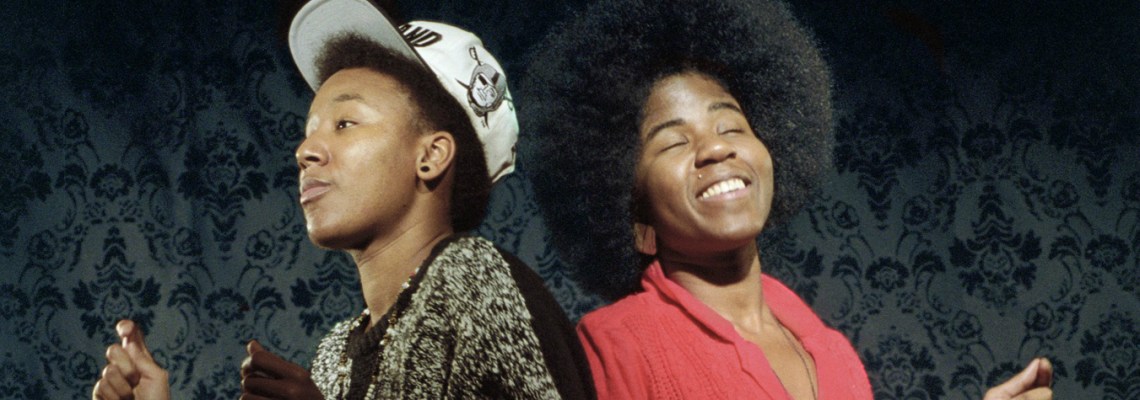
Seattle hip-hop had a nice showing at this year’s edition of the CMJ Music Festival here in New York City. Performing alongside Champagne Champagne — but not officially on the bill — were THEESatisfaction who actually came out to NY over a week before the October 24th CMJ show to network, chill with friends, and just enjoy everything this amazing city has to offer. The ladies of THEESatisfaction, Cat and Stasia, were gracious enough to reach out to me for an interview. These two women (girlfriends, for those that don’t know) are funny, charming, creative, and beautiful. And it’s apparent, after spending a little over an hour with them, that they’re in this hip-hop sh*t strictly for the love. I met them for lunch at a diner in the Financial District a few blocks from my work the day before they were scheduled to share the stage with Champagne Champagne.

Talk a little about how you came to be involved with CMJ. Did someone associated with the Festival hear you and ask you to be involved?
Cat: No, nothing like that. We’re doing CMJ through Champagne Champagne, because they asked us to do a song with them that we perform all the time called “Magnetic Blackness.” Basically we’re just like a family, so whenever we have an opportunity to do [that song] together, we do it. It’s a really great opportunity, we appreciate Champagne Champagne for letting us be a part of it. I’ve known Pearl for years, before THEESatisfaction and Champagne Champagne [formed], and Thomas [Gray] is like family. He’s like my best friend’s cousin.
Stas: Yeah, those are our brothers!

The stuff Pearl Dragon was doing before Champagne Champagne is much different than what he’s doing now.
Cat: He’s really creative. He and Thomas and Mark [aka DJ Gajamagic] are all really, really creative.

What’s your take on the Seattle hip-hop movement right now? It’s really blowing up.
Stas: I think it’s amazing. I remember a time when I didn’t listen to anything [from Seattle], except for Blue Scholars and Cancer Rising. Now there are shows every weekend, everybody is collaborating with each other. It’s like a huge family. People are on the move. Everybody is coming to Seattle to do shows. Wu-Tang has been here [a lot]. It’s just bringing more attention to Seattle. [Before] we’d have to go to Portland or LA to see a good show.

It does seem like there are very few prominent female acts in the spotlight, though. I mean outside of you guys.
Stas: I’m blessed to be an example and inspiration for more of them.

Do you think more female emcees are out there and just not receiving the proper exposure?
Stas: There are a lot of artists out right now.
Cat: A lot of female artists have been sheltered or pushed to the side.
Stas: Not just being a [female] hip-hop artist, just being a female musician of any kind [is difficult].
Cat: It’s starting to change, though.
Stas: Another prominent group is Canary Sing. They just did a show at The Rendezvous.
Cat: JusMoni, too.

So you guys are now in the Bay Area, right?

Stas: No, actually we’re just traveling.
Cat: We were going to move to the Bay, but we never even wound up going there, [laughs] just to LA. We came back to Seattle for a show and now we’re in New York.

How’s the life of a traveling musician?
Stas: I love it. It’s exciting. I knew I’d be a wanderer, nomad child, that got into all sorts of crazy shenanigans.
Cat: It’s cool. At some point you just realize there’s so much more to see.
Stas: It’s nice to have friends to stay with. We have friends in LA and friends out here that we’re staying with.

Musically, what’s your background? Are you formally trained or self-taught?
Cat: I’ve been in choirs forever and I studied Jazz in college.
Stas: I didn’t [study music]. But I’ve been around music all my life. My mom is a choir director and plays the piano, my dad plays the piano and has been in multiple choirs. I’ve been a poet for about eight years.

I was wondering about that. Your music seems inspired strongly by Spoken Word poetry.
Stas: Yeah, absolutely. We both do Spoken Word.
Cat: That’s how we met actually, through the Spoken Word circuit.

What venue?
Cat: It was Retro Open Mic night at U-Dub.

Did you both go to the University of Washington?
Stas: I did.
Cat: I went to Cornish. But I was always at U-Dub events. [laughs]

I read that your most recent album, Snow Motion, was recorded in a basement when you were snowed-in during the famous Seattle Winter of 2008.
Cat: Yeah.
Stas: We recorded [the songs] in a closet.
Cat: Some of the songs were recorded on Beacon [Hill], some of them were recorded in the house. It was crazy. That was all bad. We moved into this house, it was on 23rd and Madison [in the Central District] and it was sunny and nice and everything when we checked out the house. It looked nice in May or June, and then it got to wintertime, and the house had no insulation. And then the rats came. It was infested with rats. You wouldn’t want to leave your bedroom at night because there were rats running all through the house. There were holes under the bathroom sink and they would come in through the cabinets and they would get in our food. Our refrigerator stopped working three times.
Stas: Then our laundry machine stopped working.
Cat: Yeah, it just filled up with water. And then, it didn’t just freeze over, it was a solid block of ice.
Stas: We were working at Costco.
Cat: Pushing carts outside. Our buses weren’t running, so we had to walk halfway [to work], from 23rd and Madison to Downtown to catch the bus. If you didn’t come in, you’d get fired or written-up. They were really determined to be open.
Stas: We recorded [Snow Motion] because we were fed-up and depressed. We had family members passing away. One of our friends was murdered in February [concert promoter Tyrone Love], literally down the street.
Cat: It was a really tough time. We were working all the time, too. It was really hard to finish the album.
Stas: There was no sane place for us to be.
Cat: No there wasn’t, because we had to find somewhere else to live, too. We were working all the time. We’d always come home tired. We just had to decide what we were going to do.

For as much of a horrible time that was, Snow Motion come across, to me at least, as a really optimistic record. I read an article on a blog that said something like, “THEESatisfaction creates Snow Motion while they descend into madness.” But I thought it was a pretty coherent record, for the most part.
Cat: Thanks! [laughs]

So nowadays, the life of aspiring musicians sounds busy.
Stas: It’s pretty hectic. We book our own shows.
Cat: We don’t have a manager or anything. Everything is just us two, researching things and at the same time making music, trying to keep it fresh.
Stas: It’s challenging, but I couldn’t ask for more. I’m having the best time of my life. I’m having so much fun. I can’t imagine ever working at Costco again.
Cat: I’d rather work my ass off at this than work a corporate job again.

When do you find time to write?
Cat: We write all the time.

It’s not a process for you? Like, I must write at nine in the morning every day?
Cat: No. The whole thing is a process. From updating the website, to writing the press releases, to burning the CDs, to mixing it down. We try to let things just come naturally.

What’s the first hip-hop music you remember listening to?

Cat: First stuff was like A Tribe Called Quest and De La Soul. I have an older brother who’s 36 so he was putting me on to a lot of stuff.
Stas: I wasn’t even listening to hip-hop. My parents were only listening to gospel and r&b. I didn’t really get into hip-hop until Snoop Dogg and Death Row Records. That was my first exposure, that gangsta rap. Then, once I started seeking out on my own, I got into Tribe and De La.
Cat: I listened to only De La Soul and Tribe when my brother lived with us and then [after he moved out] it went back to jazz and, I don’t know what to call it: alternative folk music [laughs]. It was like hippie music, James Taylor and Joni Mitchell.
Stas: I remember my mom got a hold of my Doggystyle album cover. Remember the cartoon? She was like, “What is this?!”
Cat: I was like the prude kid. Like, “I can’t hear that stuff, it’s bad for my ears!” I didn’t know about 2Pac or Biggie, or most other rap other than De La and Tribe until I moved to Seattle. [Cat grew up in the Bay Area and Hawaii]. I listened to Chaka Khan, TLC, Technotronic. I know about hella random groups like Pet Shop Boys [laughs]. Lately, we’ve been switching it up, listening to all different kinds of stuff but we’ve always listened to a lot of different [music].
Stas: A lot of soul music.
Cat: Yeah, a lot of soul. Temptations, The Spinners, old Chaka Khan, Al Green. A lot of Michael Jackson and a lot of Jackson 5. I mean, we typically listen to Michael Jackson all the time, anyway. On our first mixtape [That’s Weird] we sampled Thriller.

Where were you guys when you heard he passed?
Cat: We were in our house on Beacon Hill and Stas got a text message or something. We got a text message and I was like, “This is a joke.” So we got on Twitter, we started googling everything, turned on the television and saw that he’d been hospitalized.
Stas: Then we started playing his music videos.
Cat: It was too much, it was very overwhelming. It’s still overwhelming.
Stas: I still haven’t watched the funeral in its entirety. I’ve been watching it on Youtube. I think I got maybe halfway through.
Cat: I don’t think so. I think you only got a third of the way through.
Stas: It’s still emotional.
Cat: It is. I watched [the funeral] on CNN while Stas was at Costco and it was really crazy. I didn’t think it was going to happen in my lifetime.
Stas: Nice shirt too! [laughs]

Yeah, that’s why I asked. [Cat is wearing a Michael Jackson t-shirt she purchased at a thrift store.]

So what’s next for THEESatisfaction?
Stas: We have a new mixtape coming out.

When?
Stas: We’re thinking December, January, February.
Cat: One of those three months! [laughs]
Stas: The beats are pretty much finished. We’re teaming up with OC Notes. We hooked up with him for this next mixtape. We’re trying something new.
Cat: It’s the first time [we’ve worked with just one producer]. It’s cool, especially when that person knows your groove and knows your sound and it fits. A lot of artists will just work with whoever, you know?

So, one more question. You’ve already experienced a small amount of fame in Seattle. What’s that been like?

Stas: I wish I could enjoy my life a little bit more. It’s weird. You have to watch what you say all the time. But I don’t, really. [laughs]
Cat: You just have to be yourself. Some artists are controlled by other people, their managers, their band mates, by their producers. For us, we have freedom. We can say, “I’m not feeling well today so I’m not going to that event.” I think that gives a different spin to it. It makes it a different experience. It doesn’t make it easier though, that’s for damn sure! People used to come up to us all the time in Costco. It was weird, the contrast between working at Costco and being on stage. There’s a different amount of respect people have for you when at work. There you’re just Joe Schmo. It’s like, “Go over there and fold those clothes!”
Stas: When we’re at shows it’s, “Can I get you a drink? Can I get your autograph?” At work it’s totally the opposite. You’re just a robot again.

Costco seems like a major formative experience in your recent lives. What else happened at Costco?
Cat: When I was at work one day, Justo [of The Physics] came in and was like, “Hey, what’s up?” We didn’t even really know The Physics.

Did you know who he was?
Cat: I’d heard of The Physics and seen their picture, but I was really tired at work that day, so it took me a second to put it together. [laughs]

Was that how the collaboration on “Radio Head” came about?
Cat: [Justo] came into the store just in general and recognized me and said he’d been meaning to get in contact with us. But yeah, that’s generally how it started. After that we went and got in the studio together.
Stas: That’s where we met Rik Rude from Fresh Espresso, too.
Cat: Yeah. We saw Sabzi in Costco. All of Seattle goes to Costco!

—–

Catch THEESatisfaction at their next show on 11.10.09 at Nectar:

THEESatisfaction at Nectar 11.10.09

And buy their album, Snow Motion, online here:

"Snow Motion" (THEESatisfaction)

Interviews Live Coverage

VIDEO: Blue Scholars Interview (The Long Pilgrimage)

Just viewed this video on Blogs is Watching (courtesy The Long Pilgrimage on Vimeo).

Blue Scholars is my favorite hip-hop group out of the 206. I make no secret about it. Of all the local acts, I relate the most to Geo and Sabzi’s brand of political-minded, progressive rap. My affinity and loyalties within hip-hop music are inextricably linked to my constantly-evolving view of what’s going on in the world around me. I’ve found that the music I favor on my iPod is a function of where my consciousness is in the world. I’m incredibly thankful that groups like Blue Scholars exist. They serve to further confirm certain value systems and principles that I’m steadily learning about and striving to adopt or, in some cases even, reject.

Interviews Video

Learn Your History (I Am)

My earliest memories of hip-hop in the 206 begin with Sir-Mix-A-Lot and Kid Sensation. It’s sad, I know, but I’m an 80’s Baby who grew up in the San Juan Islands, a place that, when you’re young, seems light years away from the foreign metropolis that is Seattle, Washington.

Back then, my Seattle points-of-reference were limited to Mariners games, Red Robin and movie theaters, three things I was severely deprived of in my formative years. Hip-hop music and culture was available to me, but only in its mass-market form. I wasn’t close enough to the city to touch the underground. If I had been, I’d probably be a more learned student of the earliest Town movements.

Thankfully we have the internet, where the history of anything is available to those willing to spend time looking. Here are two pieces of Seattle-area hip-hop lore, some brick and mortar carved right from the foundation.

Cocaine Blunts Interview with Jake One and Mike Clark

Click on the photo above for an interview with Jake One and Mike Clark (former host of Rap Attack on KCMU) courtesy of Cocaine Blunts. (Thanks to Andrew Matson, aka The Bulletproof Critic, for Tweeting this yesterday!)

UPDATE (9.24.09): And here’s part two of the interview.

1250 KFOX Facebook Page1250 KFOX was one of the earliest outlets for hip-hop music in Seattle. Click the logo above to open up the time capsule (you gotta have a Facebook account to view). Make sure to check out the very first link, “Emerald Street Boys Nasty Nes Intro” and peep the comments — hip-hop is a family affair for some artists.

Respect the foundation!

Interviews Views From the Peanut Gallery

The Whole 206 World Goes, “OOF!”

Alright then, I’m back on the blog after a brief hiatus. Went camping east of the mountains (that’s the Cascades) with The Lady and some good friends. Lots of good eating, swimming, and lounging around in 100-degree weather, but very little in the way of Seattle hip-hop. (Lake Chelan might have the only bars left in Washington that Fresh Espresso hasn’t played.) And, while it was nice to be away from technology for a while, it’s good to be back on the blog, once again connected and in-the-loop with the goings-on around town. So without further ado…

oofonlineflyer_5bux

Since it’s all about Geo and Sabzi today (and most likely tomorrow as well), I might as well hitch my wagon to the OOF! train and do my part to plug our favored sons of hip-hop in the 206.

The local rap giant that is Blue Scholars is once again coming down from the mountain to drop their highly-anticipated OOF! EP tomorrow. The limited edition disc will be available at the Capitol Hill all Caffe Vita locations. Get yours, son. All the information that’s fit to print is here on the group’s blog.

The Scholars crew is on their grind again, promoting the hell out of the EP, encouraging us fans to basically stalk them around The Town all day, and topping off the release date with a performance at local Hawaiian outpost Ohana, in Belltown. I’ll be there, hyped up on Caffe Vita espresso with loco moco in hand. Show your love, too!

I haven’t heard the entire EP yet, but if the first two pre-released tracks (“Coo?,” “HI-808”) are any indication, then it’s likely this disc may be the most light-hearted and party-rocking collection the crew has released thus far. Granted, my affinity for the duo lies mostly in the fact that they choose to be so intensely political and *ahem* conscious, but lighter subject matter is always welcome from any of my favorite hip-hop groups. It is party music, after all.

After I get in a few good listens, your faithful 206-UP!’er (that’s me) will be offering his always over-opinionated opinion. Until then, however, check out Andrew Matson’s (Seattle Times) review here. A-Mats also interviewed our favorite doods and both offered insight into the direction of the group, its evolving musical stylings, and the 206 hip-hop community in general. Peep those interviews here and here, they’re both worth reading.

More later — enjoy the sun and the OOF!

Breaking News Interviews Video Views From the Peanut Gallery

Seattle’s Far From Harmonious, But I’m Just Sayin’…

One of the truly remarkable things about our local hip-hop community, is that artists from all walks of life can share the stage together and be heard, understood, and, most importantly, accepted, by an audience of fans that is sometimes just as diverse as they are. The relative smallness of Seattle has a lot to do with that. It’s a place where a short, skinny, white kid from Ballard can rhyme alongside a tall, African-American dude from the South End and both are celebrated just because they sound great on a track together.

It’s not that fans in The Town don’t typify the artists (that’s just a natural reaction to different styles of music), but the community is so small that everyone is allowed to eat at the same table. Because of this, Seattle might be one of the least-marginalized hip-hop communities in the country. In this way, at least, we are truly “progressive.”

I hope Seattle’s inclusive nature helps to dispel the myth (usually held by casual or unlearned fans of the music) that you don’t have to be a gangsta, or surrounded by the gangsta lifestyle, in order to be a legitimate hip-hop artist. White kids can laugh knowingly and rap along to “My Volvo,” and then hopefully pause and listen carefully to a track like “This is Why.” The true power of hip-hop is displayed when it unites us through familiarity in the music, our heads “nodding in agreement” despite our differences that keep us divided. Of course, the music itself doesn’t solve all our problems borne from society’s ills, but at least it opens the door for dialogue. It’s our job as conscious listeners to step through.

All that being said, everyone still knows that the gangsta aesthetic plays a huge role in the lives and careers of many artists. Some just borrow the image to fit their desired style (always to the detriment of the culture), and some artists have lived through it, or are living it for real.

Here are two perspectives from local emcees that have lived it, survived it, and are now imparting their knowledge from their experiences:

khingz

The first is an interview with Khingz from the hip-hop lifestyle blog 12ft Dwende.

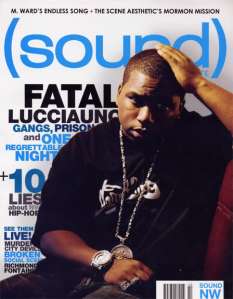
Fatal_SoundNW-Cover

The second is a video interview and performance by Fatal Lucciauno from Sound Magazine.

One final thought:

“Gangsta rap” is a tricky piece of terminology. Mainstream media and the music business have removed virtually all societal value from that style of music, boiling it all down to an easily-marginalized brand of rap that has been happily commodified and put on sale, and yet simultaneously blamed for contributing to negative stereotypes and teenage violence. And, while pundits are not always completely wrong to criticize its shortcomings, gangsta rap has been stripped of its power to inform. Too many artists are quickly qualified as “gangsta rappers” and then summarily dismissed as nothing more.

It’s important to note that neither Khingz nor Fatal Lucciauno are “gangsta rappers” in the commonly-defined sense of the term, but both speak about issues related to that walk of life.

Downloads Interviews Video Views From the Peanut Gallery