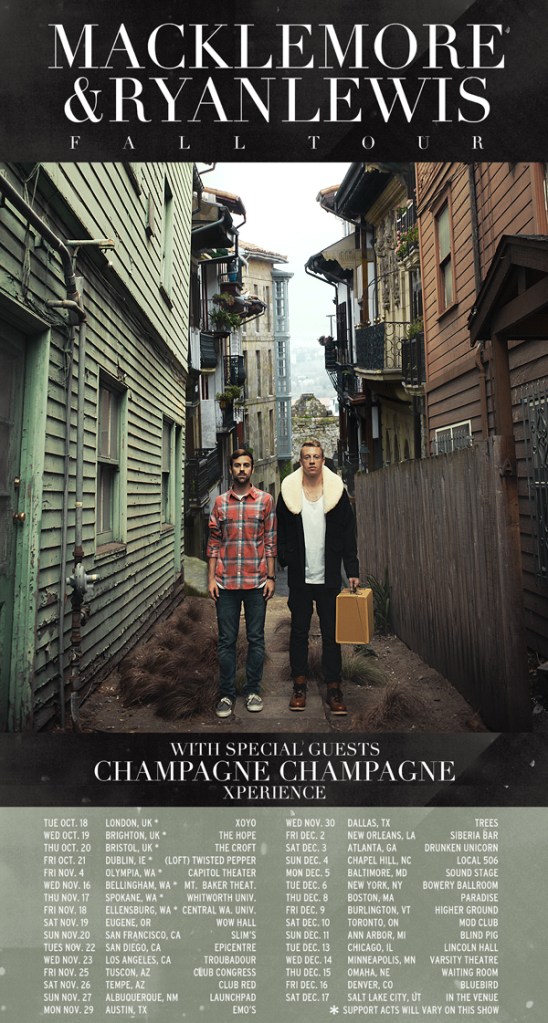
Bowery Ballroom, NYC. Bam. I’m there.
Not much to say about this. It’s really beautiful. Everything works. Macklemore is making the best music videos in Town these days. Here’s more proof in case you missed it.

Click image to purchase at iTunes.
The studio version of Macklemore and Ryan Lewis’ new single, “Can’t Hold Us” just hit the information highway. The ink is still hot over at XXL. Now that, Seattle, is how to drop a one-off.
Prepare for a bunch of old news. The 206UP.COM staff* is back from its fabulous European vacation and ready with a fistful of #LatePasses. First one gets spent on Macklemore’s epic video for his equally epic track, “Wings.” Direction duties by Stranger Genius Zia Mohajerjasbi.
* And by “staff” I mean, “me.” We are only one. The royal we.

Click photo to D/L.
I have never owned a pair of Jordans in my life. There, I said it. As a 33 year-old man who grew into adolescence addicted to baseball cards and pick-up basketball games in the summer, admitting to having never owned a pair of the most famous sneakers in the history of footwear still makes me oddly uncomfortable. Maybe because my lack of ownership means I never achieved that rep, that place in the awkward hierarchy of teenage boys reserved not necessarily for the ones with the most athletic prowess on the court, but the ones whose parents possessed the greatest financial means for supply, or the ones whose skills at manipulation or work hustle outpaced that of kids like me who valued the taste-making sneakers just as much as the next dude but lacked the necessary enterprise it took to obtain them.
Odd that in 2011, after over three decades of life on this planet and armed with a value system that allows me to put material things like Air Jordans into proper perspective, I still feel a twinge of unworthiness over never having owned a pair — the power of consumerism in this country doing what it was built to do. A few weeks ago, for old time’s sake, I tried some on. The IV’s, in a fresh gray colorway. And, as much as I wanted to buy them — to finally fill that void that had remained empty since I was a teenager — I didn’t do it. Something felt wrong. Out of place. Like the time had come and gone and it would never feel right to have them on my feet again, regardless of how many approving glances I might receive.
Macklemore and Ryan Lewis’ epic track “Wings” perfectly captures the folklore associated with Air Jordans. This song dropped about four months ago (#LatePass) and I only recently realized I hadn’t featured it on a post. So here it is: a compelling ballad to lost innocence. And a perfect reminder of the false power material objects hold over people. Even ones like me who never tasted that sweet possession in the first place.
(Read about the making of the “Wings” music video at director Zia Mohajerjasbi’s website, here.)
Press Play to listen to “Wings” by Macklemore and Ryan Lewis.
Photographer/multimedia doyen Tone posted this edition of “The Social Club” a couple weeks ago on his website. It was shot presumably back in September following Macklemore and Ryan Lewis’ exuberant opening set for Blue Scholars at Bowery Ballroom in NYC.
Check the visuals below for Macklemore and Ryan Lewis’ tribute to the late Dave Niehaus. Click here for my weepy nostalgia trip.
(It pains me to think Ken Griffey Jr.’s subsequent injuries had anything to do with the gang-tackling/dog-piling he received at home plate after Gar’s game-winning double. I’m sure that’s an unreasonable conclusion.)
I was worried about getting this post up before it lost its relevance. But after I thought about it a while, I realized that, just like the man the song is about, it never will. This especially goes for fans of the Seattle Mariners like me who came of age with hip-hop and baseball at the same time Macklemore did.
While Mack’s vivid memory is of listening to games late at night in the garage with his father, mine is of sitting in the backseat of my parents’ Ford LTD station wagon, a big yellow whale of a car with the old school fold-down seats in the very back. It was an unusually hot Sunday afternoon in the San Juan Islands and my father had just bought my brother and I some 1989 Donruss wax packs from the local market (yes, I grew up in a rural part of Washington State where we didn’t have a grocery store, we had a “market”). The packs were the kind where the sealant invariably left a greasy residual stain on the unlucky last card in the package, and the extra prize inside was a team sticker that I habitually peeled and affixed to my school books.
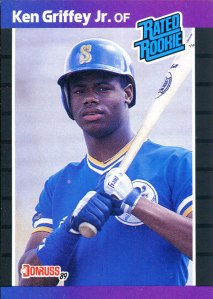
I was twelve years old and my brother was nine and that was the day I first learned who Ken Griffey, Jr. was when, after pulling the card pictured above from one of the packs, my dad instructed me to, “Hold onto that one right there, he’s going to be a great player.” Dave Niehaus’ voice was coming through on the car’s AM radio. Most likely he was trying to find the brighter side of yet another Mariners loss, and I probably wasn’t thinking as much about the game as the cards in my hands, my pre-adolescent, corduroy-shorted legs sweaty and stuck to the car’s cheap viny upholstery. In retrospect, it was a perfect day and one of very few that I remember so vividly.
Two days ago, as I sat on a New York City subway commuting to work, over two thousand five hundred miles away from my hometown, nestled deep into the cold Northeast winter, I listened to “My Oh My,” Macklemore and Ryan Lewis’ tribute to the late voice of the Mariners, on my iPod. And, though light years away from that hot sunny day on Lopez Island, I returned there again in my mind. And I nearly choked up, right there in the subway car. In the hardest city in America.
And therein lies the great value of sports. Of what are otherwise just collections of trivial games and waxy pieces of cardboard. I’ve come to realize that, even though I love baseball, it’s not the actual innings or the people who play them that ultimately matter. It’s the unbreakable bonds they form to a simpler time and a youth that can’t be relived. Bonds of fathers to sons (and daughters). And of grown-up children to their homes.
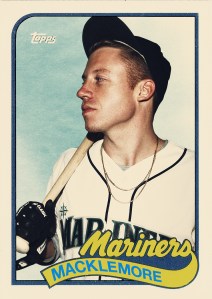
Click “Play” to listen to “My Oh My” by Macklemore & Ryan Lewis. Click here for the D/L link.

Contrary to what some prominent journalists and bloggers would have you believe, hip-hop in 2009 is not dead. At least not in regions like the Pacific Northwest, areas that aren’t traditionally associated with carrying hip-hop’s proverbial torch. While Seattle’s rock-oriented past certainly qualifies it as one of those regions, in 2009 The Six definitely showed it can at least fan the genre’s flame, if not assume a lead position for helping advance hip-hop even further into the 21st century.
It was not always like this, however. I remember back in 2005, browsing the hip-hop section at the (now defunct) Tower Records on lower Queen Anne and pulling a relatively unspectacular-looking CD from the shelf. That CD was Blue Scholars’ self-titled debut album. I’d never heard of Blue Scholars prior to that chance encounter, and I decided to take a gamble on the record. I hesitantly spent my twelve dollars on the CD (remember those?), basically on a whim and with a sliver of hope that I might find something to help rescue me from the doldrums of mainstream rap. See, I was getting so bored with the genre at the time that I was starting to turn my attention away from hip-hop and more toward indie rock. (As the Thornton brothers would say, “Eeyyyechh!”)
That Blue Scholars album eventually led me to Common Market; which led to Cancer Rising; which led to Abyssinian Creole; which led to Macklemore; which led to Grynch; which led to Dyme Def; which led to Sportn’ Life’; and on and on, eventually to me deciding to start this blog. I still credit that first Blue Scholars album for single-handedly renewing my faith in hip-hop music. Sounds rather dramatic, doesn’t it? Well, it was. In 2005, as far as I was concerned, hip-hop was dead, or dying. I realize now that that simply wasn’t the case. I was just looking for good music in the wrong place. I was spending too much time on MTV and BET, and not nearly enough time in the place where the art form was still being practiced with love and care: the underground.
The most incredible thing about Seattle’s hip-hop movement has been the relative speed at which it’s gained momentum. Blue Scholars dropped their debut in 2005, a mere four years ago. That was essentially the beginning of a sustained explosion. The next two years saw the further rise of Sabzi and Geologic, and then the emergence of others I mentioned above. The culmination of the decade’s Town movement has undoubtedly been 2009. This year we’ve seen an abundance of talented artists rise seemingly from out of nowhere. Who knew there was this much talent lurking under Seattle’s perpetually gray skies?
I credit Seattle’s hip-hop movement for my re-discovery of the art form. What began for me as an infatuation with golden-era NYC hip-hop and Cali-gangsta rap over twenty years ago, has become much more. More than just a pastime or hobby. It’s the music I ingest every day. The soundtrack to my morning commute and when I walk down the street at night. It’s something that I consume. Just as much as coffee in the mornings and football on the weekends, hip-hop music is part of my life. And I’m thankful that artists from my native city are the ones to have brought me back to the beats and rhymes.
Hip-hop: dead in 2009? I say f*ck that. As evidence to the contrary, I now submit the following list of Seattle’s best hip-hop albums of the year. Hip-hop is alive and breathing today — and not only that, it’s progressing. Here are 206UP.COM’s Top 10 reasons why:

10. OOF! EP (Blue Scholars)
An experiment of sorts by Seattle’s most nationally-relevant hip-hop group. I wrote previously that this is what it sounds like when Blue Scholars go on vacation. They accomplish their musical goals with mixed results. “Coo?” and “HI-808” are two of their best songs ever, but I still don’t like “New People” (though it has grown on me a little). Sabzi remains the best hip-hop producer in the Northwest. And Geo is one of the three best emcees. Now, can we have more of the normal Scholars revolution in 2010, please?
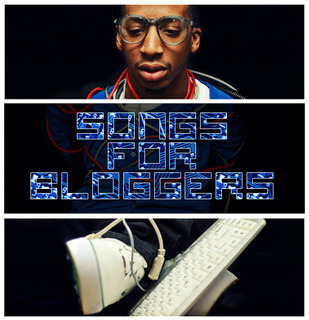
9. Songs for Bloggers (GMK)
An offbeat trip down the broadband wire, courtesy of talented up-and-coming rapper/producer, GMK. Songs for Bloggers charms upon repeated listens and verifies the unlimited potential of the Golden Mic King. On Songs, he takes the listener into the World Wide Web, poking fun at bloggers like me who enjoy the luxury of anonymity and the (sometimes) unfair categorization of rappers into niches that conveniently serve to fit our expectations. GMK is unique, though. A dual threat who is capable of going in any number of directions.

8. Ali’Yah (D. Black)
Ali’Yah represented a shift in tone and lifestyle for Sportn’ Life lead dog, D. Black. A man whose rap career began with aggressive, street-oriented rhyming seems to have made a 180-degree turn. He’s still aggressive and street-oriented but now moving in a different direction, urging his fellow soldiers to step away from the drugs and guns and toward the redeeming light of personal and social responsibility. There was a lot of uplifting hip-hop in Seattle this year and D. Black’s Ali’Yah proudly led the way.

7. Panic EP (Dyme Def)
The best Emerald City sh*t talk always comes courtesy the three bad brothas of Dyme Def. On this album, however, it’s sh*t talk with a purpose. Normally as confident as tigers in a room full of injured gazelles, Brain, SEV, and Fearce Vil are filled with a little trepidation given the condition of America’s financial system. The seven tracks on Panic are loosely built around a recession theme. They urge us to ease our “Foot up off the Gas” to save some scratch. But, in true Dyme Def fashion, they never tell us to stop partying.

6. Glamour (Fresh Espresso)
Easy to hate on and equally as easy to dance to, Glamour simultaneously represents all that is right and wrong with hip-hop. P Smoov and Rik Rude’s hipster musical stylings bring more folks into the 206’s glorious hip-hop sphere — and this is a good thing. The duo have virtually nothing of substance to say, however — and this is a bad thing. Doesn’t matter, though. The relevance of Fresh Espresso is firmly established in The Town, so soapbox bloggers like me can step the f*ck off, I guess. Plus, P Smoov’s already prodigious talent and still-to-be realized potential are undeniable.

5. Hear Me Out (Yirim Seck)
The most underrated Seattle hip-hop album of the year. An unexpected dose of raw and real, Yirim Seck is an everyman emcee that just happens to be more talented than, well, almost every man in the local rap game. Like an expanded and Northwest-relocated version of ATCQ’s “8 Millions Stories”, Yid Seck experiences more lows than highs on his debut album, yet still perseveres like a champion. Hear Me Out neatly captures the pathos of the struggling working class as well as the current unbounded optimism of the local hip-hop movement.

4. High Society EP (The Physics)
The trio of Thig Natural, Monk Wordsmith, and Justo captured lightning in a bottle on this EP. Simply put, they found sonic perfection for seven whole tracks. There isn’t another album in Seattle, let alone the entire country, that had me craving more after I got to the end than The Physics’ High Society. If their sophomore full-length delivers the way HS did, we might be looking at the group that could carry Seattle hip-hop (popularity wise) higher and further than any other.

3. From Slaveships to Spaceships (Khingz)
To listen to From Slaveships to Spaceships is to hear a man being liberated from his paranoia, self-deceit, doubt, and culturally-imposed expectations of who he “should” be. That’s all. Probably the most intensely personal hip-hop album of these ten, it’s a brave exercise in therapy on wax for Khingz, an artist who is always thinking of ways to express personal growth in his music.
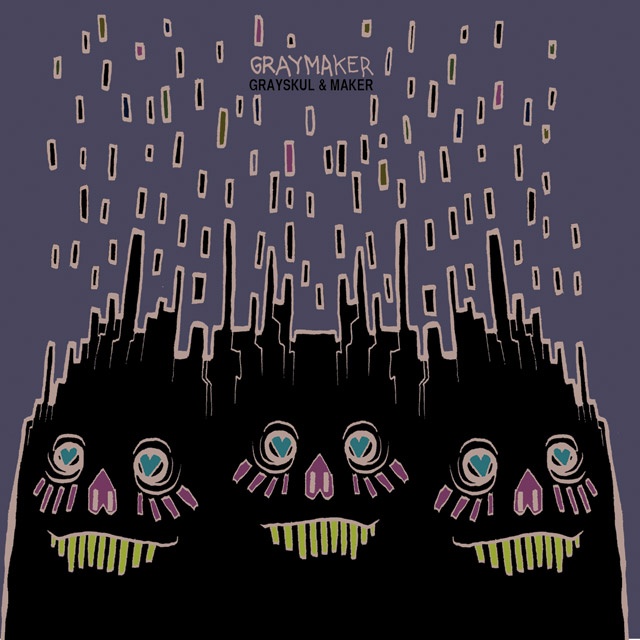
2. Graymaker (Grayskul)
The duo of JFK and Onry Ozzborn prove yet again that they are light years ahead of most other hip-hop groups. It’s difficult to keep pace when their philosophies and creative eccentricities are coming at you in so many scattered images and metaphorical tangents. Paired this time with producer Maker, a Chicago native, Grayskul unites the Northwest and the Midwest in a way only they are capable of. The moody production and dark-themed rhymes belie a hint of optimism that isn’t readily apparent but is ultimately responsible for some of the most lively hip-hop out of Seattle, ever.

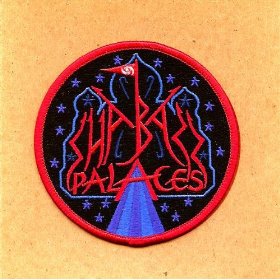
1. Of Light/Self-Titled (Shabazz Palaces)
One of the five most creative and forward-thinking hip-hop albums of the decade. Everything about this album seems like it was pre-meditated. From the esoteric packaging, to the intentionally-veiled identity of the project’s main participant, to the deliberate pace of its “marketing” roll-out. Shabazz Palaces represents everything that is good about hip-hop. It casts a dark shadow over the genre’s vapid and disposable popular product, and illuminates hip-hop’s unlimited potential as a subversive course to self-awareness and urban pedagogy.
Three more for good measure…
Snow Motion (THEESatisfaction)
Self-Titled (Champagne Champagne)
The VS. EP (Macklemore and Ryan Lewis)
(And finally, a shout-out to They Live! I’m sure They LA Soul is dope, but I didn’t hear it in time for this list. Surely it’ll be a best of 2010…)
That’s all she wrote for 2009! More to come from 206UP.COM in the ’10.
Peace!
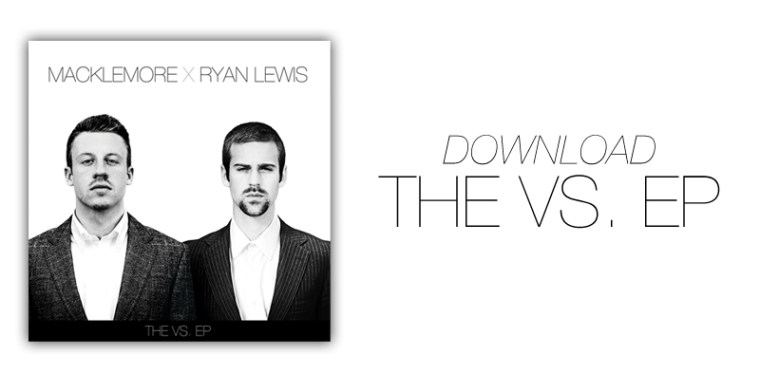
The VS. EP is available by free download. Click below for the link.
Macklemore makes music that’s nice to the ears and soul. He is at once confident, humorous, nostalgic, self-deprecating, and completely unapologetic for who he is. For these reasons, he’s one of Seattle hip-hop’s biggest nerds and one of its coolest cats. He’s the rapper other wannabe rapper nerds strive to be like. That is, if said nerds all had the gift of hip-hop gab like him which, alas, they don’t. They’ll just have to go on envying.
On his 2005 debut, The Language of My World, Macklemore showed he could bridge the gap between a white middle-class upbringing and hip-hop, without disrespecting the music’s origins. He found some quick success when he was “discovered” by Myspace co-founder Tom Anderson, and was a featured music artist on the seminal social networking site. It’s easy to accept Macklemore, a white man in a traditionally black and latino man’s game, because of the commitment he shows to the art form. Fair or unfair, white rappers typically have to work harder to be taken seriously, especially in mainstream hip-hop. The fact that Macklemore was willing to recognize and explore the implications of his race in a song like “White Privilege” showed a unique engagement and unspoken pledge to honor hip-hop’s racial history. It doesn’t hurt that Mack has found success as a performer in lily-white Seattle, a city that is eager to embrace hip-hop’s defiant tendencies especially if they’re delivered by someone who appears “safe”. This isn’t meant to criticize Macklemore (that would be faulty and completely unfair), it’s just an unfortunate condition of the racial atmosphere in Seattle. We are not as progressive as we would like to believe. But this is primarily an album review, not social commentary, so let’s get back on track…
The VS. EP marks Macklemore’s second proper album release. (He dropped The Unplanned Mixtape a few months ago as a primer to this.) The Language of My World was solid, sensible, underground hip-hop, and The Unplanned Mixtape continued in that vein, save for a few wacky excursions into comedic territory. VS, however, is a concept album of sorts, at least when it comes to its sonic arrangements. All production is handled by the talented jack-of-all-multimedia-trades, Ryan Lewis. Together, the duo made a conscious decision to dabble in dreaded rap-rock hybrid territory, a particular sub-genre littered with the carcasses of haphazard mash-ups and dubious commercial experiments. I’m happy to report, however, that while others have tried in vain to bridge the rap-rock gap, Mack and RL have created seven tracks of successful coalescence. VS doesn’t sound like something released in haste. It seems to have been well plotted from the start.
Lewis takes samples from well-known rock groups and combines them with hip-hop and electro dance beats, bass lines, and ornamentation. What Lewis attempts has been done before, but rarely with such good results. The lifted samples are blatant, but RL never lets the source material transcend the soul of the album which remains rooted in hip-hop. This isn’t a mash-up, it’s rap music comfortably co-existing with rock flourishes. For example, “Otherside” features an obvious lift from the Red Hot Chili Peppers song of the same name, an instantly recognizable guitar lick that, in the wrong producer’s hands, could have doomed the song. Lewis lets the melody complement the beat, however, and things stay cool. Likewise for “Life is Cinema”, where the defining vocal refrain (“I’ve got soul/But I’m not a soldier”) from The Killers’ Hot Fuss is used as a triumphant rallying cry for overcoming one’s deadly vices (in this case, Macklemore’s former substance abuse problems). And “Vipassana” employes The Moments’ “Love on a Two-Way Street” to a decidedly greater understated emotional effect than compared to the sample’s use in “Empire State of Mind”. Fittingly, the EP’s best tracks represent opposite ends of the experimental spectrum: “Crew Cuts” is a nostalgia-laced Seattle hard-rock posse cut, something that would sound at home on Damon Dash’s BlakRoc. And “Kings” (featuring Champagne Champagne) is an arena-sized Gladiatorial headbanger, with Thomas Gray emerging the victorious emcee.
All of the music works because of Mack and RL’s total commitment to the idea, which is really the greatest thing about Macklemore the rapper. He unabashedly embraces his creative instincts to the point where whatever he tries is sure to succeed. A song like “Irish Celebration” (a tribute to the rapper’s heritage) had the potential to be fairly corny and uninteresting to non-Irish folks, but with Mack’s passion and commitment behind it, it turns endearing. Macklemore is a capable battle-rapper and evocative storyteller, but on VS he’s mostly focused on introspection and confession. He describes his trials with substance abuse and the struggle to get sober in a near whisper that sometimes feels so intimate it’s uncomfortable to listen to on headphones. The song “Otherside”, a cautionary tale about syrup, feels like music as therapy. Anyone who’s ever tried to express a deeply personal part of their lives in artwork knows that that elucidation isn’t easy. It’s important to recognize Macklemore’s rhymes on VS for what they are: a brave and necessary release of the man’s inner demons.
I suppose one could say that Macklemore could single-handedly underwrite emo-rap in Seattle. That’s an unfair assessment of the man’s place in the game, however. To err is to be human, and to create a hip-hop confession of one’s transgressions doesn’t make you the official poster boy for emo-rap. (I hate that term, by the way.) Rapping about what you know is what “keeping it real” is all about. Lots of pretenders exist in the hip-hop game. Macklemore is not one of them.
 A SEATTLE HIP-HOP BLOG