THE SIX: Featuring Zar

Zar

[THE SIX is a regular interview feature on 206UP.COM with a simple format: One local hip-hop artist and six questions. For past editions click here.]

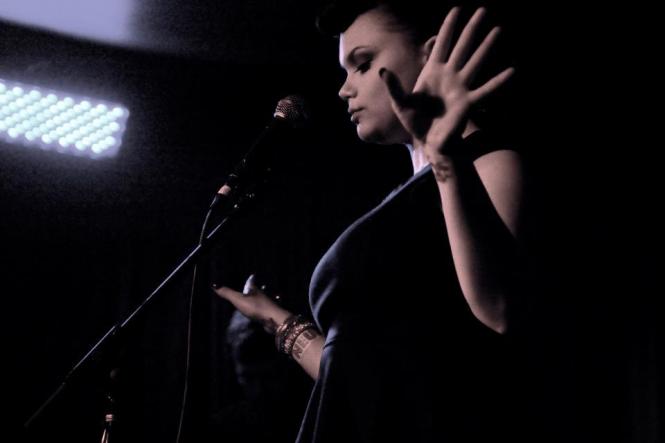
Zar is an up-and-coming Seattle MC who released a seven-song album back in January called Zulu Delta (Mello Music Group). The EP featured production by another local cat named Def Dee (that was this blog gushing about Def’s 2010 full-length collaboration with La, Gravity). Most folks, even inside this region’s boundaries, probably don’t know who Zar is yet, so let this edition of THE SIX be an introduction. I suppose you could qualify him as a throwback-type MC, though that assessment might not be accurate either given his limited run of publicly available material. Just know that Zulu Delta harkens back to rap’s famed Golden Era and succeeds with details by MC and producer that are only possible given a deep understanding of that particular aesthetic.

Let’s start with the basics because I don’t think a lot of people know who Zar is yet. Give a little background on yourself as an artist: your age, where you came up, how long you’ve been rhyming, and where you feel you currently fit in in the local rap scene. 

Born in Seattle raised in Renton breathing since 1991. Currently 21 years old. Origin: Zacatecas, Mexico. Rhyming over rhythms for seven years and counting. My intentions weren’t to fit in in the local rap scene, they were to try and reconstruct the image of a Seattle MC. I wanted hip-hop heads from all over the sphere to recognize Seattle for being able to bring something new to the culture.

How’d you get connected with Def Dee?

I met Dominic in Junior High [in] Redmond. Dom and my older brother Rudy were in the same grade, ninth. I was two grades younger. Everything else fell into play after Dom started mixing on his Stantons. I felt as if hip-hop followed Dominic and Rudy, and everywhere they went people around them would be influenced by the lifestyle. All of [a] sudden people at school were B-boys or graph artists, or knew how to rhyme.

Does the Zulu Delta EP firmly represent who you are as an artist? Meaning, do you have a steez that’s rooted in mid-90’s boom-bap, or does your musical personality extend beyond that?

I personally don’t think the EP represents ZAR to the 90[th] power, but that doesn’t mean I don’t like the EP or productions. Dom and I just wanted to put the EP out to get heads open to the idea of a new sound, the sound that Zar brings. Lyric-wise I haven’t even begun.

What are your thoughts on the so-called recent revival of Golden Era / NYC-style boom-bap?

When I think about the resurrection of hip-hop I think KRS-One; Steez Capitol (R.I.P); Badass, Joey; Wu still ill; Budden, Joe; Marciano, Roc; Lux Loaded; 5’9, Royce; Crooked i; Kung Foo Grip; Language Arts; and ALCAZAR.

What’s the biggest challenge or obstacle you encounter when trying to succeed as an independent hip-hop artist?

I would say the entire process is one big obstacle until I make it, and even then there [are] going to be obstacles. But if I had to just throw one out there I would say distributing our music on a larger scale.

Any upcoming projects you’d like to announce and/or tease for the readers?

I am currently working on a full length album with Def Dee and hope to complete a full length album with all members from The Nine Six (The96Tape).

Downloads Interviews The Six

THE SIX: Featuring Dice

Photo courtesy of artist's Facebook page.

Photo courtesy of artist’s Facebook page.

206UP.COM is happy to feature R&B singer/MC Dice in this edition of THE SIX. Reflections in Broken Glass is Dice’s recent album, a self-assured collection of mid-tempo grooves that deals heavily in matters of the heart. Love for your neighbor, your romantic partner, your self, and your ‘hood are all touched upon by the talented vocalist who operates at an easy and mellow pace. Contemporary R&B/hip-hop can often shoot off in aimless, haphazard directions these days. Reflections in Broken Glass is a calming influence among the chatter.

What’s the origin of your stage name, “Dice”?

I chose the name Dice when I was 14. Originally the full moniker was Pair-A-Dice. Literally, I was flipping through the dictionary one day reading the definitions of words [and] I wanted something with meaning — multiple if possible. Due to my tendency to be all over the place stylistically I didn’t want to be stuck in a box with my name, I wanted something timeless that expressed my variety. Under the definition of a die roll it said something [about] lacking predictability but not lacking cause or purpose, I felt it fit perfectly. I have old school homies that still call me Pair-A-Dice, but it got shortened to Dice over time and through casual use as a nickname by friends and family. My mom has even taken to calling herself “Mama Dice”.

Reflections in Broken Glass, like your past releases, is a more dynamic listening experience than a lot of local albums because you sing and rap. What did you originally start with, rapping or singing, and do you prefer one over the other?

I was raised in a musical household. My mother sang in an all female barbershop chorus throughout my childhood and her long term boyfriend played in a rock band. When with my mom it was all about oldies and Motown, with pops, everything from AC/DC to Bob Dylan; we would sing in the car and my mom would teach me how to harmonize. She got me involved in choir from a very early age, so there has always been singing. As for the rapping aspect, both parents were avidly against hip-hop/rap and I was for the most part not allowed to listen to it around either of them; that came later.

Who is your favorite R&B/soul singer of the moment?

I don’t have a favorite singer “of the moment”. Admittedly, I don’t listen to a lot of current music as the content doesn’t interest me much of the time. The vocalist, and writer, I have had the most recent listening infatuation with is Adele, though I’m giving both of [her] records a rest at the moment. For the record, Erykah Badu will likely be my favorite of all time, forever.

Reflections is appealing because it sounds so composed and well-intentioned — you’re moving at your own musical pace, not trying to cater to current radio expectations. Do you ever feel artistic pressure to drop a club track, or something that’s not otherwise consistent with your vision as an artist?

I feel that pressure constantly. Whether or not I allow it influence the music I make is another matter. “Celebration” was borne of that pressure. I felt I had nothing “feel good” that people could actually move to at a party or a show. The challenge for me was finding a topic I found suitable and uplifting without becoming cliche or corny, something gangsters and grandmothers alike could two step to in the same room. In regards to vision, that is the one thing I would never sacrifice. I have my musical morals, all artists do, mine are just based in the belief that my music can be detached from today’s pop music-palooza, still be relevant and garner a diverse following.

“Celebration” – Dice (prod. by DJ El Grande)

Talk a little bit about your relationship with Vitamin D. How do you two know each other and how did you come to work together?

Vita and I have known each other a few years now, I honestly don’t remember how we met. [Laughs] He is a great friend and mentor [who] has taught me a great deal about myself as an artist and [someone] I hold in high esteem musically, as so many rightfully do. The man’s ear is wild and it still makes me giddy when he DJ’s Hip Hop Kitchens. I had done some vocal work for a few town artists at the Pharmacy when it was still up and running, a while later we connected to record “Things I Couldn’t Say”, produced by Retro, and since then have gone on to work on many things, most recently Reflections, which he produced four joints for.

“Flat Tire” – Dice (prod. by Vitamin D)

Any new projects or shows coming up soon?

There are always new projects in the works, but nothing I’m ready to announce just yet. As for shows, the next few months are going to be busy, several shows and some traveling. Headed to Oakland March 3rd for a show with my WBMG family then back home for a March 8th evening at Lucid Jazz Lounge in the U-District with my band The High Rollers. I will be performing covers of some classics as well as my smoother original material. [It’s a] very intimate venue with limited seating so that will be a blast. [I’m] also juiced to be opening for Ryan Leslie at Neumo’s March 26th with my guys Nate Vibez and Zach Bruce, also with my band.

Interviews The Six

THE SIX: Featuring Fleeta Partee

Fleeta Partee

Photo courtesy of the artist’s website.

Last year I started what I hoped would become a regular feature on the blog called THE SIX, an interview feature with a simple formula: one artist x six questions = six answers that provided exclusive insight into the minds of those powering the 206 rap machine. I got as far as two interviews (Gabriel Teodros and Thaddeus David) before life took over, I ran short of time, and had to abandon the idea. (In case you don’t know, I run game solo over here and it’s strictly pro bono so sometimes shit goes that way.)

In any case, it’s a new year with new resolutions and I’m vowing to include more original content on 206UP.COM than ever before, so THE SIX is starting again in earnest. And what better way to reboot than with Fleeta Partee, a Central District O.G. of the Seattle rap game who’s been doing it for more than a minute, long before the Sharkface Gang-hoodied teeny bopper masses began loitering outside Showbox at the Market. There’s a deeper rap history in the Town to comb through and Fleeta is one of those qualified to help tell it. Read on for the rapper’s insight and go here to cop his latest EP, Lifemuzik.

I believe the 206UP.COM readership trends toward the younger set who might not know much about the deep history of Seattle hip-hop. So for those that don’t know, talk a little about when and how you came up in the local rap game and who some of your contemporaries were/are.

[I] came into the Seattle hip-hop game in the early 90s with a group called Shabazz Coalition. Back then you had mostly crews on the scene and not so [many] solo artists. Some of the most memorable names were Tribal, Source of Labor, Silent Lambs (who got me and Shabazz Coalition their first shows) and many more. Jake One was around boom-bappin’ back then, as well as Vitamin D laying the soundscape for Tribal. Seattle has had a hip-hop scene since the early beginnings of the culture. Even outside of the music you had aspects of the culture being represented. In fact some of my early influences in Seattle weren’t even rappers, they were graffiti artists and b-boy street crews. You had O2B (Out to Bomb), WWTC (World Wide Taggin Crew), J2C (Just to Crush), and DWTC (Down Wit The Crew) just to name a few.

What single artist would you say has influenced you the most over the course of your career?

The artist that has influenced my career? Man, that’s a trick question… [laughs] MCs always appreciate [other] dope MCs and what they bring to the table lyrically. It’s been so many dope cats over the years I’d be doing the culture an injustice if I singled out just one. I will say this though: I tend to analyze and admire the cats with staying power. This is music they said wouldn’t last long, and was labeled a trend. So when cats such as Nas, Jay-Z, Raekwon, or even producers like Jake One, Primo, and Dr. Dre are still around dropping relevant heat after 20 years in the game, I tend to admire and, in a sense, become inspired by their staying power. The game is a marathon, not a sprint. And with all due respect some of these hit songs on commercial radio, my kid could write. Hits don’t necessarily mean a cat will still be in the game for decades.

Are there any local artists that you’re feeling these days, in particular?

Local cats I’m feeling… Well with the town on fire these days a true hip-hop head would be hard-pressed not to find at least five he or she digs, so yeah I have a few. Any work my favorite producers lay down I’m diggin’: Vitamin D, Jake One. I can’t say enough about the drive and inspiration I get from their tracks. I’m feeling Fearce and Bean One. Me and Fearce collabin’ on some dopeness, as well as Bean. I’m feeling the Moor Gang movement. [That] Nacho Picasso cat is a fuckin’ rock star — probably the first true Seattle hip-hop sex symbol. I say that cause the boy got dimes in his fan base. The amazing thing is he’s attracting them while still makin’ hard music for the streets. Him, Jarv Dee and Gift of Gab are dope. Pinder is nice, The Good Sin, John Crown, my man Ish from Shabazz Palaces. Yirim Seck got a real nice flow — I got some work wit’ him too on the way. My man Tay Sean from Cloud Nice and Kingdom Crumbs stay pushin’ the envelope. I know I’m late [laughs] but I recently got into The Physics when they dropped that joint “So Funky”. Thig and Justo pulled me in on that one man. My guys Fatal [Lucciano] and Spaceman from Sportn’ Life bring it. I could go on and on… First and foremost man I’m a fan of Seattle hip-hop, so it’s many doin’ good work right now that’s helpin’ the town do what it do!

Your new EP, LifeMuzik, focuses heavily on issues and perspectives in Seattle that are rarely conveyed to the world outside of the 206 — namely those of the city’s marginalized populations. With Town rap blowing up nationally in the form of an artist like Macklemore, do you think people’s perceptions of what Seattle hip-hop truly is will be skewed?

What Macklemore is doin’ ya gotta respect from the business aspect of hip-hop. And guess what? He’s from Seattle so that makes it Seattle hip-hop! [laughs] It’s his voice and his form of expression — not mad at the cat one bit. So no I don’t so much worry that it skews the image, nationwide, of our scene. What it does is drive and motivate me to continue to bring my vision and my expression to the table for the world to digest and marinate on. I’m here to add balance to the mix — the yin to the yang. Seattle hip-hop is a representation of the city: very diverse, many different sounds, colors and creeds. In my mind that’s a beautiful thing. I rep what I rep, other artists rep what they rep. It’s something for everybody comin’ outta Seattle hip-hop!

What was the last great book you read?

The last good book I read was called The Business of Hip Hop. I bought it a while back and didn’t touch it for a while thinking it was some warped version of the truth. But once I got into it, it shed light on a lot of behind-the-scenes moves and brand-building I had limited knowledge of. [It] helped me look at the game from another perspective too. [There is] another one called Hit Men. Both are books about behind-the-scenes industry-isms and schisms — pretty insightful. I tend to read a lot, and usually more than one book at a time. It’s the Gemini in me. In fact a book helped to inspire a project I’m working on now. Can’t reveal the title [laughs] just stay tuned…

What are your upcoming projects folks can look forward to?

I got a few in the fire. Just stay tuned to fleetapartee.com and twitter.com/fpartee. I’m grindin’ man, so there’s joints in the vault stackin’, just a matter of when and how me and the team wanna drop ’em. Nowadays it’s all about that good ol’ timing. I’m proud of what I did in 2012 which makes me hungry for more. You’ll definitely be hearing from Fleeta Partee and the label Animal Houze Recordz this year and beyond. Like I said, stay tuned and appreciate the shine and facetime! Reign City rock, rock on!

Interviews The Six

VIDEO: “Marathon” (live on The Underground Railroad) – CopperWire

CopperWire (Gabriel Teodros x Meklit Hadero x Burntface) came through for a performance and interview segment on The Underground Railroad, the legendary hip-hop show on New York’s WBAI radio. The first voice you hear in the interview (other than host Jay Smooth’s) is that of the SEA’s own Gabriel Teodros. A very nice look for CopperWire and hopefully the sign of even greater exposure for the groundbreaking crew.

Interviews Video

THE SIX: Featuring Thaddeus David

Photo via artist's Myspace.

This week’s edition of THE SIX features Thaddeus David who last week dropped his solo project, Maven, via Members Only. You can get that for the price of four clicks, here. 206UP.COM will be back with more thoughts on the record, but for now we’ll let the MC tell it.

1. What’s the significance of the album title, Maven?

A “maven” by definition is someone who is an expert or connoisseur. A trusted person in a particular field. To me it’s something that I wear like a badge of honor. Something that I feel I am and will always be aspiring to be more of. It felt like the perfect name for the body of work and stage that I feel I’m at with my music.Plus I wanted people to do the research for themselves and figure out what I meant by the title or take [it for] their own interpretation.

2. What does the term “blowing up” mean to you?

Blowing up to me is taking what you’ve been doing and getting the right business or people invested in you and your future. Taking your passion and turning it into a financial situation that will hold you and your’s over forever. Whether it be getting signed, hitting a hundred thousand music video views, getting a verified Twitter or whatever that’s gonna make your gift into something you can eat off of. It’s that time period from what was to that.

3. If you were “cursed” to have to work with just one producer for the rest of your career, who would you want it to be?

If I had to work with one producer for the rest of my life it would be Kanye West probably. I’d need someone that’s timeless and can take what’s popular and turn it into a classic forever.

4. What’s your favorite Seattle music venue to perform in?

Whichever one has the promoter that’s willing to sock it to my pocket the most and pack that bitch out. Haha I dunno man. I feel like Neumos has the best sound. I’ve had my funnest times off of stage at Nectar. I’ve had my most fun on stage at Chop Suey.

5. What’s the next project we can expect to see from you?

The next project hmm…Probably my next solo project which will hopefully be an album for sale. But either way [it] will have all original production, no more beat tape beats. No one ever knows the beats typically or has heard them. I’ve done it throughout my career with the SOTA stuff up to Hank Moody & the Helluvastate shit too. But I don’t want to fuck with anything anyone can hold against me later. I had two really strong joints that I couldn’t put out on Maven because of Trox being on some super funny style shit. Shout out to him…I wanted to put ’em out anyways but MO’s not trying too. If it was up to me I’d leak ’em anyway.

6. Did you and your friends clean up after yourselves after the “Crown Royal” video shoot in your mom’s house? And if not, was she angry?

Haha me and momma t town have a great relationship. She’s not trippin’ over any of that shit. She was outta town when we shot that. But I cleaned up after. Can’t treat my mom like that. She’s all I got.

Interviews The Six

THE SIX: Featuring Gabriel Teodros

This post marks the inaugural edition of 206UP.COM’s THE SIX, a new interview feature on the blog where we focus on a single Town artist who has a recent project (album, single, video, etc.) either upcoming or already in the bag. The format is simple: Six questions are asked by 206UP.COM, six questions are answered by the subject. (Can you guess how we came up with the title?)

We’re incredibly pleased to feature Gabriel Teodros in the first edition. Yesterday, the Ethiopian-American MC dropped his new full-length, Colored People’s Time Machine, a world-wise collection of tracks that highlight his expansive roots and influences from various locations across the globe. Check for the record, here. Read on for more insight into the project.


Photo via Seattle Weekly.

1. What is the origin of the album title, Colored People’s Time Machine?

It came from a few places, one was this Ethiopian guy I met in DC who told a group of us it wasn’t until he moved to the US that time became a commodity, something that you can lose, something we count, and something we always chase. He said “Here time moves, but back home i move through time,” and it just made sense to me. Another origin is over 10 years ago the homie Orko Elohiem told another group of us he only believes there are two kinds of music in the world: Music that is timeless, and music for the time. Also, the term “CPT” has always has had a negative stigma, it implies people of color are always late. I wanted to take that term and completely flip it. All music is based on time and people of color are responsible for every musical movement this country has ever produced. With music you can travel to the future and let voices from the origins of this universe come up through you. So in short, music is our time machine. We’re not late, the way we move through time is just different. The concept of Colored People’s Time Machine embraces all of this.

2. The idea of one’s home is a dominant theme on CPTM. Is your definition of “home” that of a specific physicality, or is the concept more ambiguous than that?

Definitely a central theme, it’s said so many ways on the album, but “home” has come to mean a lot [of] places, and no place at all. Earlier this year my extended family in Toronto came up with the concept of “pieces of home” because we all seem to have pieces scattered all over the planet. This last year felt like I was constantly leaving home to go home no matter where I went. A lot of what home means is just the people we love. And as far as home as a place… I feel like every “place” that ever felt like home, at some point got jacked, and will never be the same.

3. What’s your favorite city or town other than Seattle?

Brooklyn/NYC, Addis Ababa, Toronto, the Bay Area, DC… These are the places I spent most of my time the last 12 months.

4. What was the last great book you read?

Octavia Butler’s Parable Of The Sower. and before that Nnedi Okorafor’s Who Fears Death. I HIGHLY recommend both.

5. Did you participate in any of the Occupy movements?

I didn’t. I did watch it in awe… And had loved ones on both coasts who were heavily involved.

6. Is there another Abyssinian Creole album on the horizon?

We’ve had an EP (produced by DJ Ian Head) recorded for a while now. How and when we’ll release it is a mystery to me! After Colored People’s Time Machine I have a group project with Meklit Hadero & Burntface entitled CopperWire Earthbound coming out on Porto Franco Records. I also have another solo project recorded with a producer from DC/Addis named AirME, and collaborative projects in the works with Suntonio Bandanaz & Thirdeyebling, and producer agentCB from Seattle.  Khingz recently released a solo project called Liberation Of The Monster with producer Rel!g!on out of Vancouver, and the new Hi-Life Soundsystem album dropped earlier this month too! Khingz has a huge year coming up with two more solo projects, one produced by BeanOne and another by Vitamin D, as well as a group project called OTOW Gang. There’s so much to look for from both of us! And we do feature each other on our projects all the time.

Interviews The Six

SHOW REVIEW & INTERVIEW: The Physics (Bowery Ballroom, New York City, 11.11.11)

(All photos are courtesy of Eleazar F. Teodoro, who was kind enough to allow me to post. Please check out his Flickr page, here.)

Two Friday nights ago at New York City’s Bowery Ballroom, a Seattle hip-hop lovefest went down. It was the final night of the Blue Scholars’ Cinemetropolis tour, the ninth day in a row of performances for road warriors Geo and Sabzi. Similar to the previous time they performed at this venue, there was a capacity crowd in attendance, at least half of which was made up of Seattle ex-pats like me, eager to turn the Lower East Side concert site into Manhattan’s own version of The Showbox (which it kind of is, anyway).

True to form, the duo put on a great set. They’ve developed and honed a live act that is second to none for Seattle hip-hop artists and, more importantly, on the strength of their personalities and music manage to capture the affinities of concert-goers not previously familiar with their material. I should know, I keep dragging my New York friends out to these shows and they invariably walk away shaking their heads at how good this Seattle rap sh-t is.

For me, though, the evening was all about seeing the Scholars’ supporting cast. Los Angeles underground rap soldier Bambu was the main guest star on the Cinemetropolis tour. Bam is a kindred spirit to the Blue Scholars’ ethos, an artist with much more on his mind than the music. Political ideals without forward momentum toward change may as well be inaction for these two acts whose social justice agenda plays at the forefront of their music. Consider also the numerous artistic collaborations over the years between Bam, Geo and Sabzi, and the team-up seemed even more like a natural occurrence.

Over the course of the 33 date tour, Team Scholars also invited various other guests with Pacific Northwest roots to the stage. At Bowery, Focused Noise’s recently NYC-relocated DJ Gen.Erik handled deck duties. Also in town were Grynch and Sol who played short sets.

And arriving in New York that very morning was The Physics crew (albeit one Monk Wordsmith short) who were there to rock for the very first time in the city. While Bambu gave the most riveting performance of the night, and Blue Scholars were clearly the seasoned veterans, it was Thig Natural, Justo, and Malice and Mario Sweet of The Physics, who had the most raw impact on the crowd. The quintet breezed through the title track from their outstanding sophomore album Love is a Business, took a musical trip south down the west edge of Lake Washington with “Coronas on Madrona,” and got all reminiscent on “Back Track” (where, it should be noted, Justo held down Language Arts’ verse with a lyrical dexterity not typically displayed by the group’s in-house producer). The Physics’ stage presentation was polished and professional. If they were nervous, it didn’t show. Before the group went on, I asked a preternaturally calm Thig Nat what they were going to do without his brother and fellow lyricist, Monk. “We’ll be okay. We’ll figure something out,” he said, cool as a Northwest Fall day.

The Physics were also the only SEA crew to specifically connect Seattle’s hip-hop roots to the very city that birthed the movement. Craig G, member of Marly Marl’s legendary Juice Crew, made a special appearance to spit his guest sixteen from The Physics’ new single, “The Recipe.” Craig explained briefly how he first became aware of this group from the Northwest corner of the map: a lady friend played some of their music for him one day and he commented to her on how “hard” it sounded.

Craig G’s presence felt like a real validation for this current generation of Seattle rap, a very small but significant piece of history for The Physics to take home with them as a reminder of how hip-hop succeeds in making this country (and the world) feel like a smaller place. The group finished off their set by re-introducing themselves by way of “Ready for We,” the “P-H-Y-S-I-C-S” refrain taking hold of the majority of the crowd. The Physics did exactly what they were supposed to do as opening acts: engage the audience and prime it for the headliners. Personally, I would have been fine if they’d stayed on for the rest of the night.

I’d been meaning to try and link up with The Physics since Love is a Business dropped, so when I received confirmation from Thig a few weeks back that they were indeed in the Bowery lineup, I asked him for an interview. He and Justo were gracious enough to abide. We met up downstairs in the bar about 30 minutes before wheels up.

When did you start working on Love is a Business? How long did it take start to finish?

Thig: We’ve been working on this album for like the last three years.

Justo: It was kind of an intermittent effort. Some of the songs are older than others, like a year and a half, two years old. And then toward the end, right when we were getting ready to release it, we recorded five songs within two months that [all] made it on the album.

What was the first song you completed for LIAB?

Justo: Probably “Coronas on Madrona.” [To Thig] Didn’t you write that in like 2008?

Thig: “Coronas on Madrona” I actually wrote in college.

Justo: That was like 2003 or 2004.

I’ve noticed that your musical output is much lighter compared to other Seattle acts. Do you guys intentionally curate the music you release more intensely?

Justo: We definitely try to be selective with what we put out. We believe quality is the most important thing in our music. And being that we have limited time, that results in us [releasing less]. We have really busy personal lives, so we don’t get in [the studio] as much as we’d like to. Hopefully that will change if we can get to the point where we just do music. That’s our goal, and then we can release more stuff. We’ve actually been recording a lot lately so the next project should come out fairly soon.

And what’s that project?

Thig: We’ve got two projects coming up. One is called Digital Wildlife. It’s more of an experimental project mixing together hip-hop, R&B and electro. We released a song earlier this year called “Fix You” that is in the vein of Digital Wildlife. We’re still working on that, we want to perfect it and make sure that it’s dope before we release it. And we’re also working on the next full-length hip-hop project which we’re going to release this summer. We definitely recognize the need to give people what they want more frequently so we’ll definitely do [more music] on a yearly basis.

With Digital Wildlife, did that concept come about because of all the current mashing-up of genres going on in music these days?

Thig: I feel like it was organic. When we’re in the studio, you know, we vibe out to beats. And certain beats make you wanna sing as opposed to rap. So we have a lot of songs that are sort of like that. We decided to put them together as one cohesive project.

You guys referenced your nine-to-five jobs. Love is a Business deals heavily in very relatable, everyday issues like relationships and work. How would you say your nine-to-five hustles inform your musical lives and vice versa?

Justo: We’ve been a group since like ‘97, and we didn’t release stuff to the public but we were always making music. It’s always had that personal touch, where we drew off our personal lives and spoke about that in the music. And now that we have these full time careers it’s just natural that we inject that into the music. We don’t play characters in this, we play ourselves and that’s what we’re doing. If we were just doing music for a living, the content [would] change.

How is Love is a Business being received outside of Seattle?

Thig: It’s been received really well. We’ve been going on this tour with Blue Scholars and people are really feeling the music. Even the more Seattle-centric songs. A couple people came up to me at the San Diego show and were like, “Man I was really feeling that song, it almost makes me wanna be from Seattle.” So I think people appreciate the love that we have for our town. And we’ve also been getting a lot of hits and purchases from around the world, like Germany, Africa, France, and other parts of Europe.

I think Love is a Business is a fully-conceived, mature album. It sounds like a record that a group might make three or four albums deep into their career. Thinking about where you guys are at in your lives, I think if and when The Physics blow up, it will be in a different way than a lot of these younger acts currently doing it, and it will be to a different type of audience. Does that sound accurate? Could you guys see yourselves somehow having to compromise your artistry for greater success?

Justo: We’re definitely gonna evolve. We’re always trying to get better and try different things. Hopefully we’re all gonna grow together and the people who listened to the same stuff we grew up listening to will be looking for new stuff. We’re from that era when downloading wasn’t as popular as it is with the current generation. Hopefully we can gain that crowd. As far as Love is a Business being a planned-out thing, we came up with the title [of the album] before we did like ninety percent of the songs on there. Especially with Thig and his content matter, he was trying to weave in different themes that had to do with love and business and how they interact.

How did the Phonte collaboration come about?

Thig: We opened for Little Brother in 2008. After the show we exchanged contact info and kept in touch over time. We hollered at him for LIAB and just made it happen.

Justo: I literally put his verse to about 25 different beats, so it went through its own evolution. As soon as we found the [final] beat, Thig wrote his verse.

Last question: What’s the last non-Seattle hip-hop album you’ve listened to, start to finish?

Justo: Big K.R.I.T.’s last mixtape, Last King 2.

Thig: I just listened to the new Drake album, but I definitely skipped a couple songs on there. Kendrick Lamar’s Section.80 was actually the last one I listened to.

Interviews Live Coverage Show Reviews

INTERVIEW: THEESatisfaction (New York, 8.25.11)

Photo courtesy The Stranger.

THEESatisfaction’s recent week-and-half long swing through New York City was hugely eventful. Group members Cat and Stas can thank both Mother Nature and their new label, Sub Pop Records, for that. They performed well-received shows at Bowery Ballroom, where they opened for labelmates the Handsome Furs, and were a featured act in the 14th Annual Black August Benefit Concert at S.O.B.’s the following week. And oh yeah, just for good measure they also survived the Virginia earthquake of August 23 and last weekend’s Hurricane Irene debacle.

(Click here to continue reading at SSG Music.)

Interviews SSG Music Cross-Post

DOWNLOAD: “Do You Have Time” – THEESatisfaction

Click image to D/L at Subpop Records.

Freshly-signed Subpop artists THEESatisfaction dropped this track last weekend (#LatePass). I consider myself lucky to have been able to meet Cat and Stasia back in ’09 during their foray to CMJ out here in New York City (where I live). Read the 206UP.COM Interview from that meeting, here.

Someday soon I’ll be able to say, “I met those girls back when they were recording mixtapes in closets and booking all their own shows!” THEESatisfaction deserves all the future success that is soon to come.

“Do You Have Time” – THEESatisfaction

Downloads Interviews Listen

INTERVIEW: Blue Scholars (Seattle, 6.18.11)

Photo by Canh Solo.

The second week of June was the center of the hometown promotional storm for Blue Scholars. In support of the group’s third LP, Cinemetropolis, Geo and Sabzi did no less than play three shows (two back-to-back album release parties at Neumos and one invitation-only Kickstarter appreciation show), dropped the album’s first music video for the track “Fou Lee,” appeared at an in-store special edition t-shirt signing at Seattle Stüssy, and played an on-air KEXP studio session with DJ Kevin Cole.

The group has remained steadfast in its musical independence, both in sound and from a business standpoint. And though Blue Scholars didn’t have the industry weight or promotional heft of a record label behind them with this album, its release felt no less important to the city of Seattle and its burgeoning hip-hop scene. This crew carries a lot of capital, creative and otherwise. It remains one of the most visible faces of Seattle rap on a national level and, judging from the overwhelming response to its Cinemetropolis Kickstarter campaign, continues to resonate with the entity that matters most: the fans.

I caught up with Geo and Sabzi backstage at Neumos, a few minutes before they played the second of two sold out shows at the venue.

Photo by Dave Lichterman for KEXP.

You guys seem really relaxed, almost in like a Zen state, with the release of Cinemetropolis. Are you guys at a place in your careers where you’re relaxed when putting out new material?

Geo: Yeah, definitely. That’s an interesting observation. I’d say it varies from one project to the next. But when it comes to the full length albums, we wouldn’t [normally] release it unless we were 100% cool with what we had. Not super perfectionist type shit, but just something that we feel represents where we’re at at that given point. We’ve always had the philosophy that we want our music to be a time capsule of where both me and Saba are at individually, at the time of creation of that album. I guess we do kinda exude a Zen approach because so much [tension] gets released by the time the record is presented to the public that we’re just like, “Hey it’s out there, man.”

Sabzi: [That’s] definitely how this record has gone.

Cinemetropolis sounds totally different than anything you’ve done before it. There was no fear of alienating your fan base?

Geo: No, if we did we would never release it. We are very aware of how different this record sounds from the last. If we took even, like, five minutes to sit and think about that and be worried about it, I would go fucking crazy. So maybe it’s like a defense mechanism to be like, “Hey man, whatever happens, happens.” When it comes time to release something, all those moments [of questioning] have already happened. I think what we’re always doing is trying to navigate through both our personal lives and our collective lives and then making sure the music is at the intersection of where we’re at. That’s why there’s a cinema influence. That’s why we didn’t go with a label. All of that is part of the story. If things are fucked up, we want it to be our fault and nobody else’s.

Speaking of navigating your personal lives, how have you dealt with being on opposite coasts? (Geo lives in Seattle and Sabzi has been splitting time between Seattle and New York.)

Sabzi: [The recording] was done here. It’s really not that different. When we first started making music in like 2001, I would make beats, upload it to FTP and Geo would download it.

Geo: We lived a five minute walk away from each other and we still made the first album mostly over the internet.

But New York has a different kind of energy. Sabzi, did you make the beats there or in Seattle? Was there a different type of creative process in the two cities?

Sabzi: I didn’t make them all out there. I made “Fin” in New York. I made “Oskar Barnack ∞ Oscar Grant” there. Half of it was Seattle and half of it was New York. I’d say tracks like “Hussein” and “Fou Lee” were template cuts for making the rest of the record, so we were already heading in that direction. When I moved to New York I didn’t have my record collection with me so that was a concrete factor that influenced the creative process. I didn’t have them to sample from, so every time I sat down to work it was all synth-based. I just don’t really think like that [about the recording environment]. I’m not saying there’s no influence, like I’m somehow above my environment which isn’t true at all, but it’s nothing I’m conscious of. As long as I have the same computer and, like, the distance between my chair and my computer and keyboard, it’s the same. And whatever I experienced that day will feed into it. There’s a lot more dancehall being played [in New York]. People have commented this record has a lot of island rhythms on it.

And what about from a writing standpoint? Does your environment affect how you write rhymes?

Geo: I mean, I’d like to think I have a visceral writing style and so that the experience of traveling and coming home, going out, jogging at Seward Park, riding the subways through Manhattan, I think I’m conscious of that. I’m thinking of rhymes as I’m going. And then you go into the lab to execute those ideas. If I’m on the train I can pull out my phone and record the thought and then that makes it onto the record. So for me, I’d have to say that influence [of being in New York and other locations] is definitely on the record more than any of the other stuff we’ve done before.

I wanted to ask you about two tracks, specifically. The first one is “Hussein.” Is it about Barack Obama?

Geo: It could be. [Laughs]

There’s a line, “What happens when you think patience always means wait,” which resonates because of the shift in optimism from his election in 2008, when so many folks thought it meant instant change for the better, to today when everyone is impatient, still waiting.

Geo: I was one of the people that, on one hand, was very critical of Barack and his message of hope and very idealistic things, knowing that he’s just one dude who’s talking all this good game, knowing that the system is set up so that he can’t change it overnight or even in four years. But then you can’t discount the fact that it is a historical moment for this country, at least symbolically. “Hussein” was the first song completed for the album. It was probably done by early ‘09.

The fact that this country even elected someone with that middle name spoke volumes, symbolically.

Geo: There were a lot of conversations about his middle name, man. It was a lightning rod. A carry-over from anti-Muslim hysteria, anti-Middle Eastern hysteria. In this country that name is so politicized. It evokes a reaction from everyone, whereas you go to other parts of the world and “Hussein” is just another name.

Sabzi: I think it spoke volumes to like, “Yo, this is how we’re gonna fix it. Like, we’re down! All done!” Electing him is not much different than adopting a Korean baby. It’s kinda like, “We’re hella ‘about the world!’”

I’m Korean and adopted. [Laughter]

Sabzi: Oh, for real? Yeah, but your parents aren’t celebrities.

No, they’re not. They’re definitely not celebrities.

Sabzi: You know what I mean though, right?

[Laughter] Yeah.

Geo: That’s exactly what the song is about. One thing that probably triggered the song the most, more than all the political stuff we’re talking about now that people in coffee shops everywhere talk about, is on Facebook that year [2008] people were changing their middle names to “Hussein” and in the “Political Views” people were writing, “Obama.” It’s somewhat of a triumph over Bush and [the] Neo-Conservatism that has dominated America for most of the last decade. It was like, we know who the enemy is and maybe it took that long to realize it. Maybe it’s just gonna take a little longer to realize who the people [are] that are gonna do something about it. For a brief moment people really gambled on the Democratic Party, via one dude, to be that. I think it’s very obvious that the “patience means wait” approach to politics is bankrupt, man.

Sabzi: For the record, I personally am really glad Barack Obama is the President. And I don’t give a shit if he changes anything ‘cause that’s not what he’s supposed to do. The President doesn’t really matter. You might as well just have him be tight. Like, let’s just have a cool-ass dude as the President. That makes a huge difference. If you travel internationally now, they’re like, “Whattup, man? You’re from America? Swag!” And it’s way more about “swag” than anything else. Just to be clear: thumbs up Obama, from me at least.

The other track I wanted to ask you about is “Seijun Suzuki.” I perceived the song to be about the Seattle hip-hop scene — not so much a shot at The Town, but more of a challenge, like: Who’s really trying to “make it?” What’s your general take on what’s going on in the Seattle rap scene right now?

Sabzi: Better than ever before.

Geo: Yeah, it is. It’s interesting you mentioned that. I would say it’s actually more of a statement on rap in general. I’ve developed a reputation of being that dude that every song I write is “about some shit.” I’m a Lil’ Wayne fan, man, as well as a Mos Def fan. So there’s the element that, on one hand, I am tired of “rap about rap” but I’m also a fan of “rap about rap” when it’s done in a manner that moves me. It’s not necessarily about a super-conceptual idea. I was thinking about this while I was watching [Seijun Suzuki’s] films. There’s a lot of criticism about Seijun Suzuki in his day about like, “This dude’s films ain’t about shit.” On the other hand there are people really over-analyzing his films when they were just low-budget Yakuza flicks. I thought that was interesting because they’re both right and they’re both wrong. But at the end of the day it was just the artist doing him. And I think this [track] is where I wanted to put the foot down and be like, “You know what, I don’t wanna rap about anything in particular on this song. We’re gonna pull a Seijun Suzuki up in this ma’fucka, man. I’m gonna touch upon a subject in one bar and then I’m just gonna rap about nonsense.”

But there’s that line, “The day we decided to make it like Jake and Vita,” that specifically references the two, arguably, most well-known industry dudes in the Seattle rap scene.

Geo: I’m glad you caught “Jake and Vita.” A lot of people thought I was saying “Che Guevara.” I threw Jake and Vita in there because, to me, I feel like there’s a perception of what success is and should be, and here are two dudes that have molded a sound and a scene, and a lot of the [artists] that we look up to know these cats. But to a lot of people, if you’re not out in front of the crowd or all up on TV, then you haven’t “made it.” To me, there are people who have “made it” [that aren’t like that]. And that’s connected to the hook, “Ain’t nobody winnin’ everybody’s scared of losin.’” I think there are a lot of people that want it but are afraid to really put themselves out there because they’re afraid who they really are is not gonna translate. So they do really well at emulating what’s out there. And that’s not just a hip-hop thing, that’s a music thing, a film thing, a life thing. We’re in a phase where everybody’s half winning.

You’re going on tour to promote Cinemetropolis soon, right?

Geo: Yes, the details I can give right now are it’s gonna be in September, October and November, give or take 30 dates. It’s our first headlining tour that’s longer than a regional run.

Will there be a New York date? The last show you played, at the Bowery Ballroom last September, felt triumphant not only for you guys but Seattle hip-hop in general.

Geo: Yeah, it was. It’s a moment that I don’t think can ever be captured again. It was crazy because we hadn’t put out a full length album in almost four years. All signs pointed to that show doing moderately well or even failing. Bowery is supposed to be one of the spots. You have to build your way up to it or you have to really be on some super hype shit, and we were neither. Everything fell into place. Half the crowd was from Seattle or had roots in the area. I’m grateful. That was probably one of my top five favorite shows.

Sabzi: I thought it was great. I’ve been to a lot of different events in New York from like Highline [Ballroom] to little parties at CV [an exclusive club on the Lower East Side of Manhattan] and we sold out Bowery and there were no scenesters there. So I think that’s really interesting. There are so many different sides to New York City and one of them is definitely like a town, like ours here. It was like the New York version of the fans that come here, who are real people, with real jobs, who live in the boroughs, who listen to music and good stuff, came through.  And I don’t hate scenesters, I actually think they’re really tight ‘cause I am one [laughs]. But I liked how we could sell that [show] out without needing that.

What’s up with the side projects? Geo, you have a new EP, Walk Into A Bar, coming out soon with Bambu.

Geo: It’s nine tracks, ten with the bonus track. Beatrock Music, who puts out Bambu’s stuff, took interest and is actually making it an official Beatrock Music release. [Bambu] is gonna be our main support on the fall tour. This is like our BFF Hawaii record. It’s like OOF two [laughs]. On one of our trips to Hawaii we had planned to do one or two songs with a Hawaii-based producer and give it to In4mation to throw on their blog, and we ended up doing three and did the rest over the internet. A lot of Seattle producers got involved and it became an actual project. It happened all because we literally walked into a bar our first night in Hawaii and decided to do a few songs.

Sabzi, you released a side project, Made In Heights, with singer Kelsey Bulkin last winter. Is there more to come from that collaboration?

Sabzi: We have another collection that’s already recorded. That’s what I’m doing in New York. If everything works out then I’d like to do one or maybe two more things with Made In Heights, perhaps like a full record and get a lot of New York people involved. Really take it in the opposite direction of everything I’ve done before. And then I plan to do plenty of solo stuff. Forever. For the rest of my life!

Interviews