206UP.COM’s Top 10 SEA Hip-Hop Albums of 2011: #10 through 6

Today continues 206UP.COM’s countdown of the Top 10 Seattle Hip-Hop Albums of 2011. See yesterday’s post for the Introduction and three standout releases that didn’t quite make the cut. Today’s post features albums 10 through 6. Tomorrow (Thursday, 12.22.11) we’ll post 5 through 1. Thanks for reading!

(Click on the album covers for links to download or purchase.)


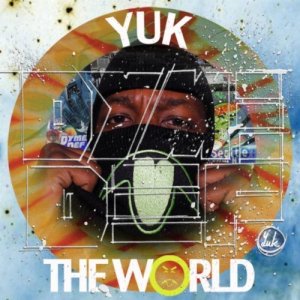
10. Dyme Def – Yuk The World

Here we have the trio of Brainstorm, S.E.V. and Fearce Villain behaving in the way we’re accustomed: Mixing top-shelf brag rap with sobering tales about growing up hard in the South End. It’s been over four years since Space Music, the area’s official introduction to the Three Bad Brothas from Renton. Since then, the crew has been missing a key component to their hustle: The production of BeanOne, whose lively trunk rattle serves as the perfect delivery vehicle for the three MCs’ sharp witticisms. Thankfully Bean is back here, providing the majority of the framework in which Dyme Def gets busy. One complaint: Yuk The World is too long, but that’s only because Dyme Def’s real voice hasn’t been heard in some time. Consider this a year-ending takeover attempt by one of the SEA’s most important groups in history.


9. Nacho Picasso – For The Glory

Emerging from a Cloud (Nice, that is) of weed smoke and comic book sound effects is Nacho Picasso. Even blazed-up and squinty-eyed this dude is more clever than your average MC, dropping punchlines quippy enough to win the affection of both your girlfriend and high-brow music publications. For The Glory‘s arrival on the scene correlates perfectly with the sonic trends going on in the greater rap arena. Production duties were handled by Blue Sky Black Death, whose hazy take on the Cloud Rap aesthetic fits in nicely next to the genre’s currently favored albums. The star here is inarguably Nacho himself, though. Holding a Marvel comic book in one hand and a Dessert Eagle in the other, the man otherwise known as The Tat in the Hat is poised to introduce his specific branch of Seattle rap to the rest of the nation.


8. Art Vandelay – They’ve Got My Number Down At The Post Office

MC Ricky Pharoe and producer Mack Formway are Art Vandelay, an affiliate of the left-of-center Black Lab Productions camp. On They’ve Got My Number Down At The Post Office they question the honesty of our government, point shotguns at their televisions and generally wonder indignantly how anyone in their right mind could see worldly goings-on as anything but a degradation of all that is beautiful and just. “Art Vandelay” is a self-delusion perpetuated by Seinfeld‘s George Costanza — a lie in the form of a heroic archetype that helps George feel better about his otherwise mundane existence. Pharoe is calling us the liars on They’ve Got My Number: We’re fools to think for even a second that anything is all good. Oh well, at least when the world begins crumbling down around us we’ll have Art Vandelay’s soundtrack playing in the background, telling us so.


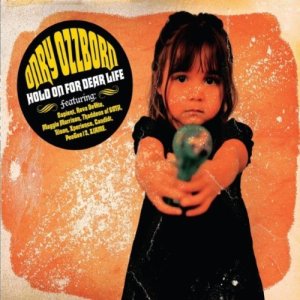
7. Onry Ozzborn – Hold on for Dear Life

I think Seattle forgets how great an MC Onry Ozzborn is. That’s probably because his creative output sneaks by in the same way his monotonic flow inserts subversive social commentary and unique turns-of-phrases into our collective unconscious. Last year’s Dark Time Sunshine project with Chicago producer Zavala was the region’s rap genius lurking in the proverbial shadows. DTS was the one laughing at silly rappers driving by in rented whips, the fakers’ who used their own beautiful sisters and cousins as stand-ins for video models too expensive for their shallow pocketbooks.

Onry might not be a rich man himself, but when it comes to industry respect he has an abundance. From a musical standpoint, Hold on for Dear Life was the most experimental release from the MC to date. It played in bright electronica, post-dubstep pop and the familiar gothic gloom specific to Onry’s infamous crew, Grayskul. If and when the Seattle hip-hop weather affects other regions on a greater scale, it will be OG MC’s like Onry Ozzborn casting the tell-tale Northwest cloud cover.


6. Prometheus Brown & Bambu – Walk into a Bar

What began on mostly a freebie lark ultimately turned into this 10-track for-profit album with some of the best production value around. Prometheus Brown (known traditionally to Seattle as Geo, of course) and Los Angeles’ Bambu pay homage to their island origination on Walk into a Bar which was released on Bambu’s label (Beatrock Music) and aimed squarely at the Hawaiian Islands, a favorite tour destination for the two MCs. As per standard, Geo and Bambu choose their words carefully always using them to uplift and inform rather than degrade and dispirit. “National Treasure,” for example, is important commentary on gender politics and features a beat from Vitamin D whose drums somehow always sound bigger than everyone else’s.

Album Reviews Best of 2011 Downloads

SHOW REVIEW & INTERVIEW: The Physics (Bowery Ballroom, New York City, 11.11.11)

(All photos are courtesy of Eleazar F. Teodoro, who was kind enough to allow me to post. Please check out his Flickr page, here.)

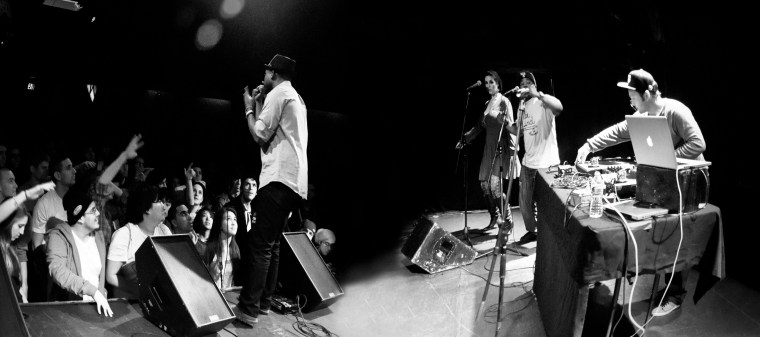
Two Friday nights ago at New York City’s Bowery Ballroom, a Seattle hip-hop lovefest went down. It was the final night of the Blue Scholars’ Cinemetropolis tour, the ninth day in a row of performances for road warriors Geo and Sabzi. Similar to the previous time they performed at this venue, there was a capacity crowd in attendance, at least half of which was made up of Seattle ex-pats like me, eager to turn the Lower East Side concert site into Manhattan’s own version of The Showbox (which it kind of is, anyway).

True to form, the duo put on a great set. They’ve developed and honed a live act that is second to none for Seattle hip-hop artists and, more importantly, on the strength of their personalities and music manage to capture the affinities of concert-goers not previously familiar with their material. I should know, I keep dragging my New York friends out to these shows and they invariably walk away shaking their heads at how good this Seattle rap sh-t is.

For me, though, the evening was all about seeing the Scholars’ supporting cast. Los Angeles underground rap soldier Bambu was the main guest star on the Cinemetropolis tour. Bam is a kindred spirit to the Blue Scholars’ ethos, an artist with much more on his mind than the music. Political ideals without forward momentum toward change may as well be inaction for these two acts whose social justice agenda plays at the forefront of their music. Consider also the numerous artistic collaborations over the years between Bam, Geo and Sabzi, and the team-up seemed even more like a natural occurrence.

Over the course of the 33 date tour, Team Scholars also invited various other guests with Pacific Northwest roots to the stage. At Bowery, Focused Noise’s recently NYC-relocated DJ Gen.Erik handled deck duties. Also in town were Grynch and Sol who played short sets.

And arriving in New York that very morning was The Physics crew (albeit one Monk Wordsmith short) who were there to rock for the very first time in the city. While Bambu gave the most riveting performance of the night, and Blue Scholars were clearly the seasoned veterans, it was Thig Natural, Justo, and Malice and Mario Sweet of The Physics, who had the most raw impact on the crowd. The quintet breezed through the title track from their outstanding sophomore album Love is a Business, took a musical trip south down the west edge of Lake Washington with “Coronas on Madrona,” and got all reminiscent on “Back Track” (where, it should be noted, Justo held down Language Arts’ verse with a lyrical dexterity not typically displayed by the group’s in-house producer). The Physics’ stage presentation was polished and professional. If they were nervous, it didn’t show. Before the group went on, I asked a preternaturally calm Thig Nat what they were going to do without his brother and fellow lyricist, Monk. “We’ll be okay. We’ll figure something out,” he said, cool as a Northwest Fall day.

The Physics were also the only SEA crew to specifically connect Seattle’s hip-hop roots to the very city that birthed the movement. Craig G, member of Marly Marl’s legendary Juice Crew, made a special appearance to spit his guest sixteen from The Physics’ new single, “The Recipe.” Craig explained briefly how he first became aware of this group from the Northwest corner of the map: a lady friend played some of their music for him one day and he commented to her on how “hard” it sounded.

Craig G’s presence felt like a real validation for this current generation of Seattle rap, a very small but significant piece of history for The Physics to take home with them as a reminder of how hip-hop succeeds in making this country (and the world) feel like a smaller place. The group finished off their set by re-introducing themselves by way of “Ready for We,” the “P-H-Y-S-I-C-S” refrain taking hold of the majority of the crowd. The Physics did exactly what they were supposed to do as opening acts: engage the audience and prime it for the headliners. Personally, I would have been fine if they’d stayed on for the rest of the night.

I’d been meaning to try and link up with The Physics since Love is a Business dropped, so when I received confirmation from Thig a few weeks back that they were indeed in the Bowery lineup, I asked him for an interview. He and Justo were gracious enough to abide. We met up downstairs in the bar about 30 minutes before wheels up.

When did you start working on Love is a Business? How long did it take start to finish?

Thig: We’ve been working on this album for like the last three years.

Justo: It was kind of an intermittent effort. Some of the songs are older than others, like a year and a half, two years old. And then toward the end, right when we were getting ready to release it, we recorded five songs within two months that [all] made it on the album.

What was the first song you completed for LIAB?

Justo: Probably “Coronas on Madrona.” [To Thig] Didn’t you write that in like 2008?

Thig: “Coronas on Madrona” I actually wrote in college.

Justo: That was like 2003 or 2004.

I’ve noticed that your musical output is much lighter compared to other Seattle acts. Do you guys intentionally curate the music you release more intensely?

Justo: We definitely try to be selective with what we put out. We believe quality is the most important thing in our music. And being that we have limited time, that results in us [releasing less]. We have really busy personal lives, so we don’t get in [the studio] as much as we’d like to. Hopefully that will change if we can get to the point where we just do music. That’s our goal, and then we can release more stuff. We’ve actually been recording a lot lately so the next project should come out fairly soon.

And what’s that project?

Thig: We’ve got two projects coming up. One is called Digital Wildlife. It’s more of an experimental project mixing together hip-hop, R&B and electro. We released a song earlier this year called “Fix You” that is in the vein of Digital Wildlife. We’re still working on that, we want to perfect it and make sure that it’s dope before we release it. And we’re also working on the next full-length hip-hop project which we’re going to release this summer. We definitely recognize the need to give people what they want more frequently so we’ll definitely do [more music] on a yearly basis.

With Digital Wildlife, did that concept come about because of all the current mashing-up of genres going on in music these days?

Thig: I feel like it was organic. When we’re in the studio, you know, we vibe out to beats. And certain beats make you wanna sing as opposed to rap. So we have a lot of songs that are sort of like that. We decided to put them together as one cohesive project.

You guys referenced your nine-to-five jobs. Love is a Business deals heavily in very relatable, everyday issues like relationships and work. How would you say your nine-to-five hustles inform your musical lives and vice versa?

Justo: We’ve been a group since like ‘97, and we didn’t release stuff to the public but we were always making music. It’s always had that personal touch, where we drew off our personal lives and spoke about that in the music. And now that we have these full time careers it’s just natural that we inject that into the music. We don’t play characters in this, we play ourselves and that’s what we’re doing. If we were just doing music for a living, the content [would] change.

How is Love is a Business being received outside of Seattle?

Thig: It’s been received really well. We’ve been going on this tour with Blue Scholars and people are really feeling the music. Even the more Seattle-centric songs. A couple people came up to me at the San Diego show and were like, “Man I was really feeling that song, it almost makes me wanna be from Seattle.” So I think people appreciate the love that we have for our town. And we’ve also been getting a lot of hits and purchases from around the world, like Germany, Africa, France, and other parts of Europe.

I think Love is a Business is a fully-conceived, mature album. It sounds like a record that a group might make three or four albums deep into their career. Thinking about where you guys are at in your lives, I think if and when The Physics blow up, it will be in a different way than a lot of these younger acts currently doing it, and it will be to a different type of audience. Does that sound accurate? Could you guys see yourselves somehow having to compromise your artistry for greater success?

Justo: We’re definitely gonna evolve. We’re always trying to get better and try different things. Hopefully we’re all gonna grow together and the people who listened to the same stuff we grew up listening to will be looking for new stuff. We’re from that era when downloading wasn’t as popular as it is with the current generation. Hopefully we can gain that crowd. As far as Love is a Business being a planned-out thing, we came up with the title [of the album] before we did like ninety percent of the songs on there. Especially with Thig and his content matter, he was trying to weave in different themes that had to do with love and business and how they interact.

How did the Phonte collaboration come about?

Thig: We opened for Little Brother in 2008. After the show we exchanged contact info and kept in touch over time. We hollered at him for LIAB and just made it happen.

Justo: I literally put his verse to about 25 different beats, so it went through its own evolution. As soon as we found the [final] beat, Thig wrote his verse.

Last question: What’s the last non-Seattle hip-hop album you’ve listened to, start to finish?

Justo: Big K.R.I.T.’s last mixtape, Last King 2.

Thig: I just listened to the new Drake album, but I definitely skipped a couple songs on there. Kendrick Lamar’s Section.80 was actually the last one I listened to.

Interviews Live Coverage Show Reviews

NEW MUSIC: Sophisticated Slap – MTK

Click album cover to purchase at Bandcamp.

One thing producer MTK isn’t, is subtle. Everything in his production warehouse — from the beats, to the synth, to the samples — are big, powerhouse workouts of hip-hop composition. Sophisticated Slap is a sampler collection of the nationally-sought local producer otherwise known as Matthew Crabtree. The collection, which at its best sounds like the sonic love-child of Just Blaze and Dr. Dre, features a few joints recognizable (previous tracks blessed by RA Scion, Bambu and Prometheus Brown) and others ready for brand new poetical adornment. MCs would be wise to drink their 5-Hour Energys before hopping on, however, as these beats are not conducive to lyrical cut-laying.

Audio

NEWS: Blue Scholars Fall Tour w/Bambu

The longest headlining tour Blue Scholars has ever done includes 29 dates across cities in the West, Midwest and Northeast. Check the list below for your town. Tickets on sale Friday, July 29.

09/14 – Vancouver, BC – 560 Nightclub
09/17 – Seattle, WA – Showbox Market
09/20 – Eugene, OR – Wow Hall
09/21 – Portland, OR – Wonder Ballroom
09/22 – Olympia, WA – The Royal Lounge
09/23 – Bellingham, WA – Wild Buffalo
09/24 – Belllingham, WA – Wild Buffalo
10/12 – San Francisco, CA – Slim’s
10/13 – Santa Cruz, CA – Atrium @ Catalyst
10/15 – Los Angeles, CA – Key Club
10/16 – San Diego, CA – Casbah
10/18 – Scottsdale, AZ – Chasers
10/19 – Albuquerque, NM – Launchpad
10/20 – Boulder, CO – Fox Theatre
10/21 – Denver, CO – Cervantes
10/22 – Colorado Springs, CO – The Black Sheep
10/23 – Ft. Collins, CO – Aggie Theatre
10/24 – Salt Lake City, UT – Kilby Court (early) & Urban Lounge (late)
10/26 – Boise, ID – Reef
10/27 – Missoula, MT – Top Hat
10/28 – Spokane, WA – A Club
11/03 – Minneapolis, MN – 7th Street Entry
11/04 – Madison, WI – Frequency
11/05 – Chicago, IL – Schuba’s
11/06 – Ann Arbor, MI – Blind Pig
11/07 – Toronto, ON – WrongBar
11/08 – Burlington, VT – Higher Ground
11/10 – Boston, MA – Paradise
11/11 – New York, NY – Bowery Ballroom

Live Coverage News

INTERVIEW: Blue Scholars (Seattle, 6.18.11)

Photo by Canh Solo.

The second week of June was the center of the hometown promotional storm for Blue Scholars. In support of the group’s third LP, Cinemetropolis, Geo and Sabzi did no less than play three shows (two back-to-back album release parties at Neumos and one invitation-only Kickstarter appreciation show), dropped the album’s first music video for the track “Fou Lee,” appeared at an in-store special edition t-shirt signing at Seattle Stüssy, and played an on-air KEXP studio session with DJ Kevin Cole.

The group has remained steadfast in its musical independence, both in sound and from a business standpoint. And though Blue Scholars didn’t have the industry weight or promotional heft of a record label behind them with this album, its release felt no less important to the city of Seattle and its burgeoning hip-hop scene. This crew carries a lot of capital, creative and otherwise. It remains one of the most visible faces of Seattle rap on a national level and, judging from the overwhelming response to its Cinemetropolis Kickstarter campaign, continues to resonate with the entity that matters most: the fans.

I caught up with Geo and Sabzi backstage at Neumos, a few minutes before they played the second of two sold out shows at the venue.

Photo by Dave Lichterman for KEXP.

You guys seem really relaxed, almost in like a Zen state, with the release of Cinemetropolis. Are you guys at a place in your careers where you’re relaxed when putting out new material?

Geo: Yeah, definitely. That’s an interesting observation. I’d say it varies from one project to the next. But when it comes to the full length albums, we wouldn’t [normally] release it unless we were 100% cool with what we had. Not super perfectionist type shit, but just something that we feel represents where we’re at at that given point. We’ve always had the philosophy that we want our music to be a time capsule of where both me and Saba are at individually, at the time of creation of that album. I guess we do kinda exude a Zen approach because so much [tension] gets released by the time the record is presented to the public that we’re just like, “Hey it’s out there, man.”

Sabzi: [That’s] definitely how this record has gone.

Cinemetropolis sounds totally different than anything you’ve done before it. There was no fear of alienating your fan base?

Geo: No, if we did we would never release it. We are very aware of how different this record sounds from the last. If we took even, like, five minutes to sit and think about that and be worried about it, I would go fucking crazy. So maybe it’s like a defense mechanism to be like, “Hey man, whatever happens, happens.” When it comes time to release something, all those moments [of questioning] have already happened. I think what we’re always doing is trying to navigate through both our personal lives and our collective lives and then making sure the music is at the intersection of where we’re at. That’s why there’s a cinema influence. That’s why we didn’t go with a label. All of that is part of the story. If things are fucked up, we want it to be our fault and nobody else’s.

Speaking of navigating your personal lives, how have you dealt with being on opposite coasts? (Geo lives in Seattle and Sabzi has been splitting time between Seattle and New York.)

Sabzi: [The recording] was done here. It’s really not that different. When we first started making music in like 2001, I would make beats, upload it to FTP and Geo would download it.

Geo: We lived a five minute walk away from each other and we still made the first album mostly over the internet.

But New York has a different kind of energy. Sabzi, did you make the beats there or in Seattle? Was there a different type of creative process in the two cities?

Sabzi: I didn’t make them all out there. I made “Fin” in New York. I made “Oskar Barnack ∞ Oscar Grant” there. Half of it was Seattle and half of it was New York. I’d say tracks like “Hussein” and “Fou Lee” were template cuts for making the rest of the record, so we were already heading in that direction. When I moved to New York I didn’t have my record collection with me so that was a concrete factor that influenced the creative process. I didn’t have them to sample from, so every time I sat down to work it was all synth-based. I just don’t really think like that [about the recording environment]. I’m not saying there’s no influence, like I’m somehow above my environment which isn’t true at all, but it’s nothing I’m conscious of. As long as I have the same computer and, like, the distance between my chair and my computer and keyboard, it’s the same. And whatever I experienced that day will feed into it. There’s a lot more dancehall being played [in New York]. People have commented this record has a lot of island rhythms on it.

And what about from a writing standpoint? Does your environment affect how you write rhymes?

Geo: I mean, I’d like to think I have a visceral writing style and so that the experience of traveling and coming home, going out, jogging at Seward Park, riding the subways through Manhattan, I think I’m conscious of that. I’m thinking of rhymes as I’m going. And then you go into the lab to execute those ideas. If I’m on the train I can pull out my phone and record the thought and then that makes it onto the record. So for me, I’d have to say that influence [of being in New York and other locations] is definitely on the record more than any of the other stuff we’ve done before.

I wanted to ask you about two tracks, specifically. The first one is “Hussein.” Is it about Barack Obama?

Geo: It could be. [Laughs]

There’s a line, “What happens when you think patience always means wait,” which resonates because of the shift in optimism from his election in 2008, when so many folks thought it meant instant change for the better, to today when everyone is impatient, still waiting.

Geo: I was one of the people that, on one hand, was very critical of Barack and his message of hope and very idealistic things, knowing that he’s just one dude who’s talking all this good game, knowing that the system is set up so that he can’t change it overnight or even in four years. But then you can’t discount the fact that it is a historical moment for this country, at least symbolically. “Hussein” was the first song completed for the album. It was probably done by early ‘09.

The fact that this country even elected someone with that middle name spoke volumes, symbolically.

Geo: There were a lot of conversations about his middle name, man. It was a lightning rod. A carry-over from anti-Muslim hysteria, anti-Middle Eastern hysteria. In this country that name is so politicized. It evokes a reaction from everyone, whereas you go to other parts of the world and “Hussein” is just another name.

Sabzi: I think it spoke volumes to like, “Yo, this is how we’re gonna fix it. Like, we’re down! All done!” Electing him is not much different than adopting a Korean baby. It’s kinda like, “We’re hella ‘about the world!’”

I’m Korean and adopted. [Laughter]

Sabzi: Oh, for real? Yeah, but your parents aren’t celebrities.

No, they’re not. They’re definitely not celebrities.

Sabzi: You know what I mean though, right?

[Laughter] Yeah.

Geo: That’s exactly what the song is about. One thing that probably triggered the song the most, more than all the political stuff we’re talking about now that people in coffee shops everywhere talk about, is on Facebook that year [2008] people were changing their middle names to “Hussein” and in the “Political Views” people were writing, “Obama.” It’s somewhat of a triumph over Bush and [the] Neo-Conservatism that has dominated America for most of the last decade. It was like, we know who the enemy is and maybe it took that long to realize it. Maybe it’s just gonna take a little longer to realize who the people [are] that are gonna do something about it. For a brief moment people really gambled on the Democratic Party, via one dude, to be that. I think it’s very obvious that the “patience means wait” approach to politics is bankrupt, man.

Sabzi: For the record, I personally am really glad Barack Obama is the President. And I don’t give a shit if he changes anything ‘cause that’s not what he’s supposed to do. The President doesn’t really matter. You might as well just have him be tight. Like, let’s just have a cool-ass dude as the President. That makes a huge difference. If you travel internationally now, they’re like, “Whattup, man? You’re from America? Swag!” And it’s way more about “swag” than anything else. Just to be clear: thumbs up Obama, from me at least.

The other track I wanted to ask you about is “Seijun Suzuki.” I perceived the song to be about the Seattle hip-hop scene — not so much a shot at The Town, but more of a challenge, like: Who’s really trying to “make it?” What’s your general take on what’s going on in the Seattle rap scene right now?

Sabzi: Better than ever before.

Geo: Yeah, it is. It’s interesting you mentioned that. I would say it’s actually more of a statement on rap in general. I’ve developed a reputation of being that dude that every song I write is “about some shit.” I’m a Lil’ Wayne fan, man, as well as a Mos Def fan. So there’s the element that, on one hand, I am tired of “rap about rap” but I’m also a fan of “rap about rap” when it’s done in a manner that moves me. It’s not necessarily about a super-conceptual idea. I was thinking about this while I was watching [Seijun Suzuki’s] films. There’s a lot of criticism about Seijun Suzuki in his day about like, “This dude’s films ain’t about shit.” On the other hand there are people really over-analyzing his films when they were just low-budget Yakuza flicks. I thought that was interesting because they’re both right and they’re both wrong. But at the end of the day it was just the artist doing him. And I think this [track] is where I wanted to put the foot down and be like, “You know what, I don’t wanna rap about anything in particular on this song. We’re gonna pull a Seijun Suzuki up in this ma’fucka, man. I’m gonna touch upon a subject in one bar and then I’m just gonna rap about nonsense.”

But there’s that line, “The day we decided to make it like Jake and Vita,” that specifically references the two, arguably, most well-known industry dudes in the Seattle rap scene.

Geo: I’m glad you caught “Jake and Vita.” A lot of people thought I was saying “Che Guevara.” I threw Jake and Vita in there because, to me, I feel like there’s a perception of what success is and should be, and here are two dudes that have molded a sound and a scene, and a lot of the [artists] that we look up to know these cats. But to a lot of people, if you’re not out in front of the crowd or all up on TV, then you haven’t “made it.” To me, there are people who have “made it” [that aren’t like that]. And that’s connected to the hook, “Ain’t nobody winnin’ everybody’s scared of losin.’” I think there are a lot of people that want it but are afraid to really put themselves out there because they’re afraid who they really are is not gonna translate. So they do really well at emulating what’s out there. And that’s not just a hip-hop thing, that’s a music thing, a film thing, a life thing. We’re in a phase where everybody’s half winning.

You’re going on tour to promote Cinemetropolis soon, right?

Geo: Yes, the details I can give right now are it’s gonna be in September, October and November, give or take 30 dates. It’s our first headlining tour that’s longer than a regional run.

Will there be a New York date? The last show you played, at the Bowery Ballroom last September, felt triumphant not only for you guys but Seattle hip-hop in general.

Geo: Yeah, it was. It’s a moment that I don’t think can ever be captured again. It was crazy because we hadn’t put out a full length album in almost four years. All signs pointed to that show doing moderately well or even failing. Bowery is supposed to be one of the spots. You have to build your way up to it or you have to really be on some super hype shit, and we were neither. Everything fell into place. Half the crowd was from Seattle or had roots in the area. I’m grateful. That was probably one of my top five favorite shows.

Sabzi: I thought it was great. I’ve been to a lot of different events in New York from like Highline [Ballroom] to little parties at CV [an exclusive club on the Lower East Side of Manhattan] and we sold out Bowery and there were no scenesters there. So I think that’s really interesting. There are so many different sides to New York City and one of them is definitely like a town, like ours here. It was like the New York version of the fans that come here, who are real people, with real jobs, who live in the boroughs, who listen to music and good stuff, came through.  And I don’t hate scenesters, I actually think they’re really tight ‘cause I am one [laughs]. But I liked how we could sell that [show] out without needing that.

What’s up with the side projects? Geo, you have a new EP, Walk Into A Bar, coming out soon with Bambu.

Geo: It’s nine tracks, ten with the bonus track. Beatrock Music, who puts out Bambu’s stuff, took interest and is actually making it an official Beatrock Music release. [Bambu] is gonna be our main support on the fall tour. This is like our BFF Hawaii record. It’s like OOF two [laughs]. On one of our trips to Hawaii we had planned to do one or two songs with a Hawaii-based producer and give it to In4mation to throw on their blog, and we ended up doing three and did the rest over the internet. A lot of Seattle producers got involved and it became an actual project. It happened all because we literally walked into a bar our first night in Hawaii and decided to do a few songs.

Sabzi, you released a side project, Made In Heights, with singer Kelsey Bulkin last winter. Is there more to come from that collaboration?

Sabzi: We have another collection that’s already recorded. That’s what I’m doing in New York. If everything works out then I’d like to do one or maybe two more things with Made In Heights, perhaps like a full record and get a lot of New York people involved. Really take it in the opposite direction of everything I’ve done before. And then I plan to do plenty of solo stuff. Forever. For the rest of my life!

Interviews

LISTEN & BUY: Walk Into A Bar – Prometheus Brown & Bambu

Click album cover for Bandcamp link.

Geo told me the title of his and Bambu’s new project, Walk Into A Bar, is not some sort of clever rap allegory, but rather what literally was happening at the precise moment dudes decided to do an album together. I think it’s weird that it took ’em this long considering how long they’ve been down — it’s not like either of them have better things to do. Kidding.

I haven’t even listened to this yet, so excuse me for writing without point-of-reference, but it just dropped today so I had to post. More thoughts later…

Downloads Listen

DOWNLOAD: “At It Again” – Prometheus Brown & Bambu

Click image for D/L link.

The first drop from Prometheus Brown and Bambu’s Beatrock collab, Walk Into A Bar. This partnership feels as natural as that organic sh-t growing in your backyard. Project hits pavement, beach sand and forest floor on July 6.

“At It Again” – Prometheus Brown & Bambu (prod. by MTK)

Downloads

DOWNLOAD: “Slow Down (Sabzi Remix)” (Bambu f/Prometheus Brown)

Yet another #LatePass. See what happens when yo ass goes on vacation? All the dope internet drops get overlooked…Maybe I need to hire a second-in-command, hmm…

Anyway, I just got around to hearing this one. Sabzi turns the beat into the star here, fierce-ing up the synths and playing up that sexy British dame to full effect. Oh yeah, Bambu and Pro Brown are still aight, too. Ha!

Click above for the D/L link.

And in case you missed the original (prod. by MTK)…

Downloads Video

VIDEO: “Slow Down” (Bambu f/Prometheus Brown)

This one sounds like a f*ckin’ LA street fight, and Bambu and Prometheus Brown use the track’s momentum against your punk-ass. Filipinos go hard, son.

(Also, Pro Brown kills him on his own sh*t. Sorry Bambu fans, but it’s true.)

Video